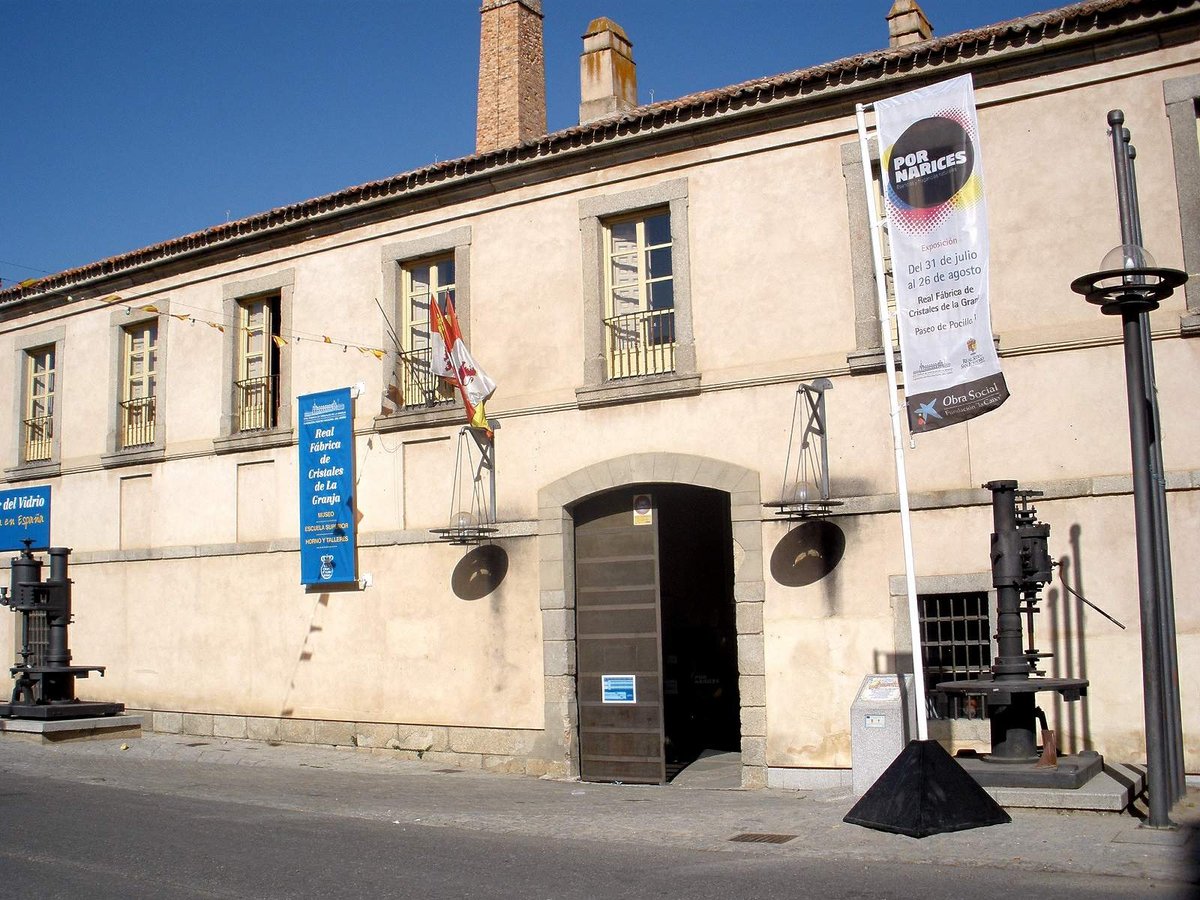

The Royal Factory of Glass and Crystal of La Granja was established in 1727 by Philip V of Spain. In 1728, the factory started operations. Ventura Sit installed a small oven at that time to manufacture float glass for the windows and mirrors of the Royal Palace of La Granja de San Ildefonso. Three glass factories were established - Spanish, French, and German - as European specialists with knowledge of the newest glass techniques joined the factory.
The best glass of Venetian type produced in the works dates from the last quarter of the 18th century. The factory was located 7 miles (11 km) south east of Segovia on the CL-601 road. Due to the Spanish War of Independence, the ovens were turned off in 1808. Ferdinand VII resumed work in 1815, and Bartolome Sureda y Miserol became director of the factory in 1822. The wares of the royal factory were exported to the Americas, causing financial losses to other countries who also exported glass.
Under the regency of Maria Cristina in 1833, the spaces were rented to individuals. By 1836, the factory, experiencing financial hardship, was taken over by the Royal Treasury. The Glass Technology Museum is now located in the old Royal Glass Factory building, designed in 1770 by Joseph Díaz Gamones.
Sources: Wikipedia, OpenStreetMap, Wikidata, Wikimedia Commons
Written by Nicolo Ciampini
Discuss this with the author and others
No comments yet. Be the first to start the conversation.