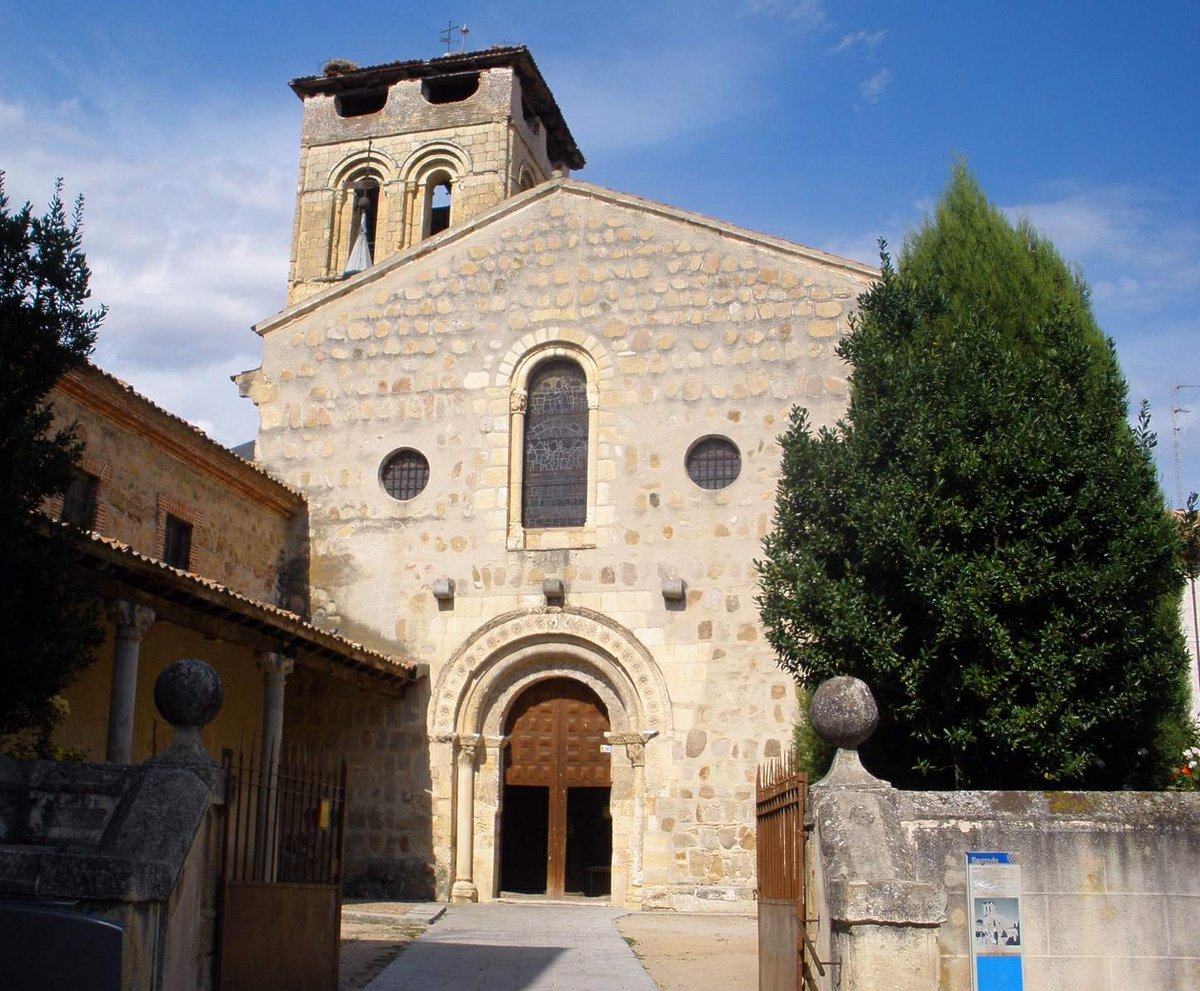

Venture back into the Middle Ages in this 12th-century church, uncovering secrets and marvels that reveal the charm of Segovia's historic city center. The Church of San Justo, located in the heart of Segovia, Spain, effortlessly stands out as one of the city's most striking buildings. Built in the 12th century, this Romanesque church presents a blend of architectural elements that are typical of the era. Its tower, one of the most prominent in Segovia, can be found near Plaza del Azoguejo, on the opposite side of the aqueduct.
Thought the church is small compared to some of the grander structures found in Segovia, it is still remarkable for several reasons. The church, initially constructed upon the remains of an ermita dedicated to Cristo de los Gascones, has two portals. One exterior portal is never accessed on the outside, as it is only visible from the interior of the church. The second portal is adorned with intricate murals from the late Romanesque period. The church itself is built with masonry, showcasing typical Romanesque architecture.
The painted walls inside the church are a stunning sight feast for the eyes. Depicting common Romanesque themes, they showcase the Pantocrator in a mandorla with the Tetramorph, biblical scenes, and scenes of the Crucifixion, the Descent from the Cross, the Last Supper, and the Arrest of Jesus. Woven into these scenes are elements of oriental inspiration, with representations of elephants, birds, and arabesques scattered throughout. The Cristo de los Gascones, a Romanesque statue from the 12th century, is another captivating feature of the church.
Highly venerated, the statue is said to have come from France and performed various miraculous meteorological feats (requesting rain in times of drought) and was narrated in the 17th century. The statue is still taken out in procession by the Royal Brotherhood of the Santa and Venerable Slavery and the Holy Burial of the Cristo de los Gascones.
Sources: Wikipedia, OpenStreetMap, Wikidata, Wikimedia Commons
Written by Nik Frost
Discuss this with the author and others
No comments yet. Be the first to start the conversation.