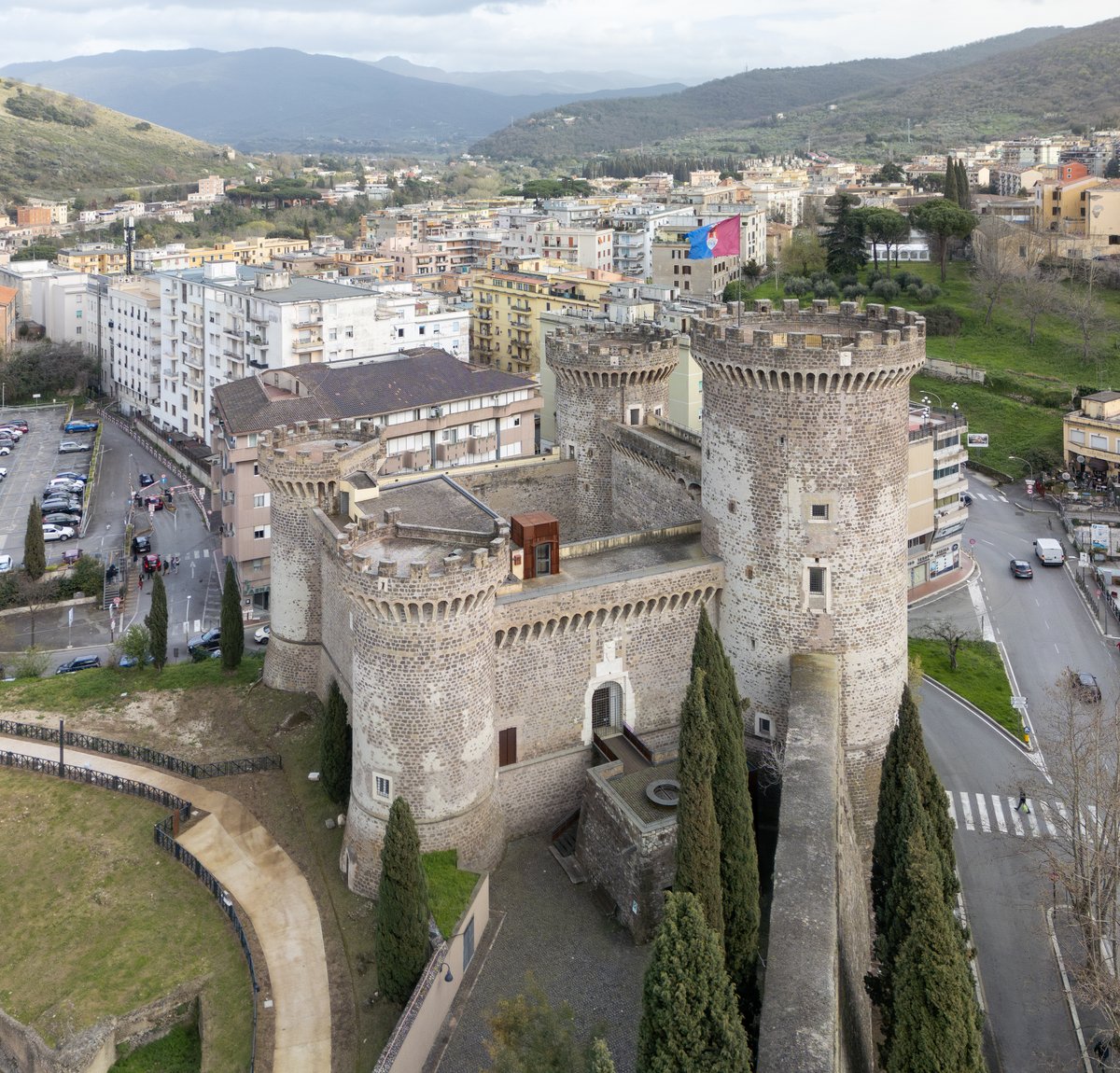

Rocca Pia is a 15th century fortress located in the heart of Tivoli city. Pope Pio II Piccolomini, in a visit to Tivoli in July 1461, initiated the construction of Rocca Pia to ensure loyalty from the city. The fortress was built to ensure safety from the outside, through strict surveillance of the access ways and the via Tiburtina, and at the same time averted the possibility of new internal conflicts. The Rocca was built in an urban area complex: the area to the east housed the remains of a necropolis of the Iron Age (IX–VI century BC), attributable to the first populations sabine who settled in the territory.
The construction of the complex was completed in the 15th century, with Sisto IV della Rovere or more likely with Pope Alessandro VI Borgia (the two minor towers) and minor modifications were made in the early 16th century with Pope Giulio II. Rocca Pia was occupied by the armies of the Republic of Rome from 1798 to 1799 and later adapted to a prison during the Napoleanic era. Rocca Pia was not used for a specific purpose for several decades and was not open to the public until December 15, 2018.
The main tower of Rocca Pia is 36.5 meters high and contains six upper floors. The second tower of Rocca Pia is 25.5 meters high and contains five upper floors. The two smaller towers of Rocca Pia, located towards the city, are 18 meters high and contain only three upper floors each. The façade of Rocca Pia still retains the original Gaelic merlatura. The Rocca Pia is depicted in the frescoes of the Camera degli Sposi of the Castello di San Giorgio (Mantua) by Andrea Mantegna.
Sources: Wikipedia, OpenStreetMap, Wikidata, Wikimedia Commons
Written by Nicolo Ciampini
Discuss this with the author and others
No comments yet. Be the first to start the conversation.