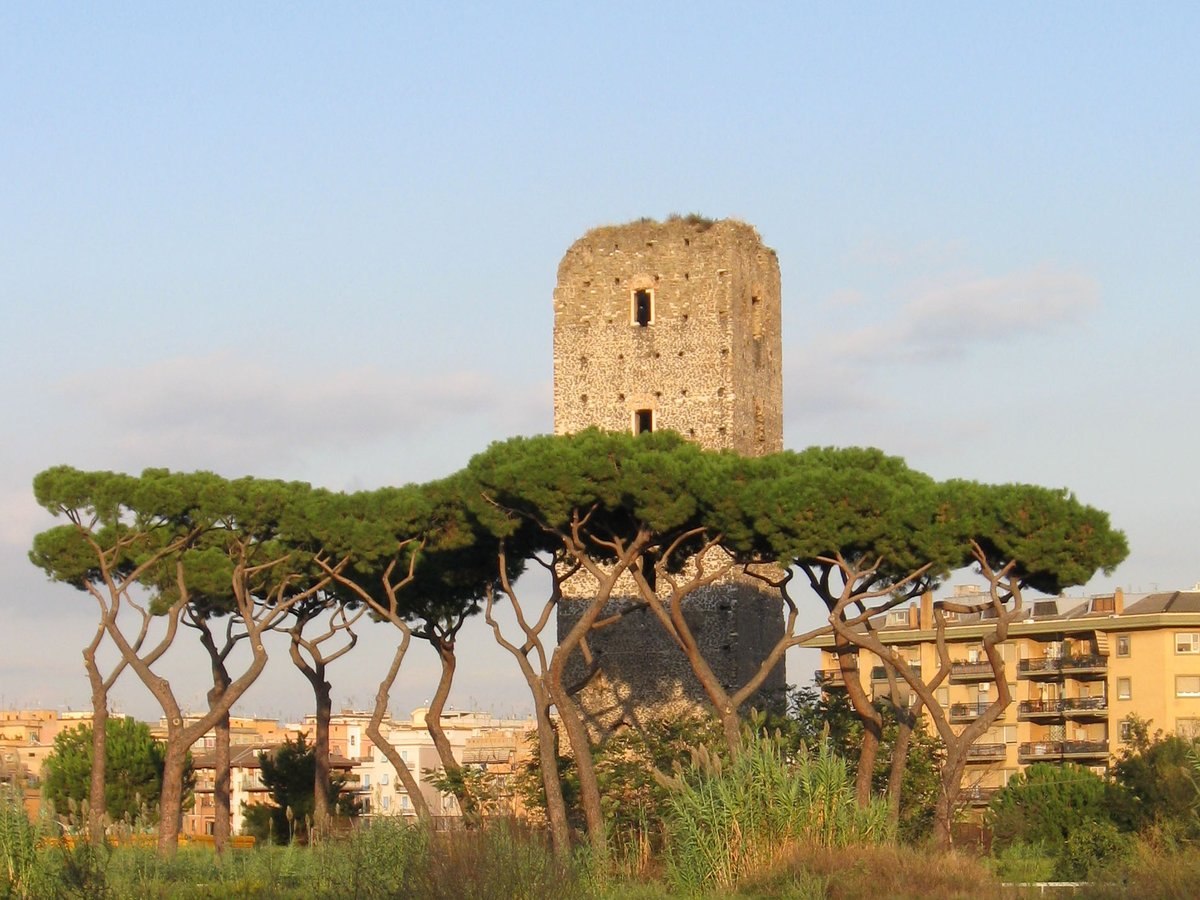

The Centocelle tower, known by some as the 'Torre di San Giovanni', stands in the sprawl of Campagna Romana, Rome. It's often mistaken for 'Torre Spaccata', another monument in Cinecittà Est, due to a name change in 1989 that muddied the waters. However, the 'Torre di S. Giovanni' label stems from its historical connection to the Basilica Lateranense during the Middle Ages, while it wasn't referred to as 'Torre di Centocelle' until the 16th century, following the Capranica family's acquisition.
'Centocelle' originates from a sprawling estate south of the via Casilina, encompassing the remnants of the imperial villa of 'Cento Celle' destroyed in 1927 to make way for the airport runway. Initially, only the vast flatland surrounding it was referred to as Centocelle, with the current neighborhood of Torre Spaccata and the military structures emerging later.
The tower is a relic of the casale, the first phase of the incasalamento (densification) of the Campagna Romana. Its age can be traced back to the late 12th century due to its distinct construction technique using irregular limestone slabs and pieces. Spanning roughly 25 meters in height, the tower is surprisingly well-preserved, albeit the overgrowth of weeds in the surrounding pine trees.
The tower boasts rectangular windows adorned with marble cornices and stone arches, as well as consistent rows of door holes. A wall surrounded it, though it's no longer visible, but can still be traced in 17th-century tax maps.
Sources: Wikipedia, OpenStreetMap, Wikidata, Wikimedia Commons
Written by Nicolo Ciampini
Discuss this with the author and others
No comments yet. Be the first to start the conversation.