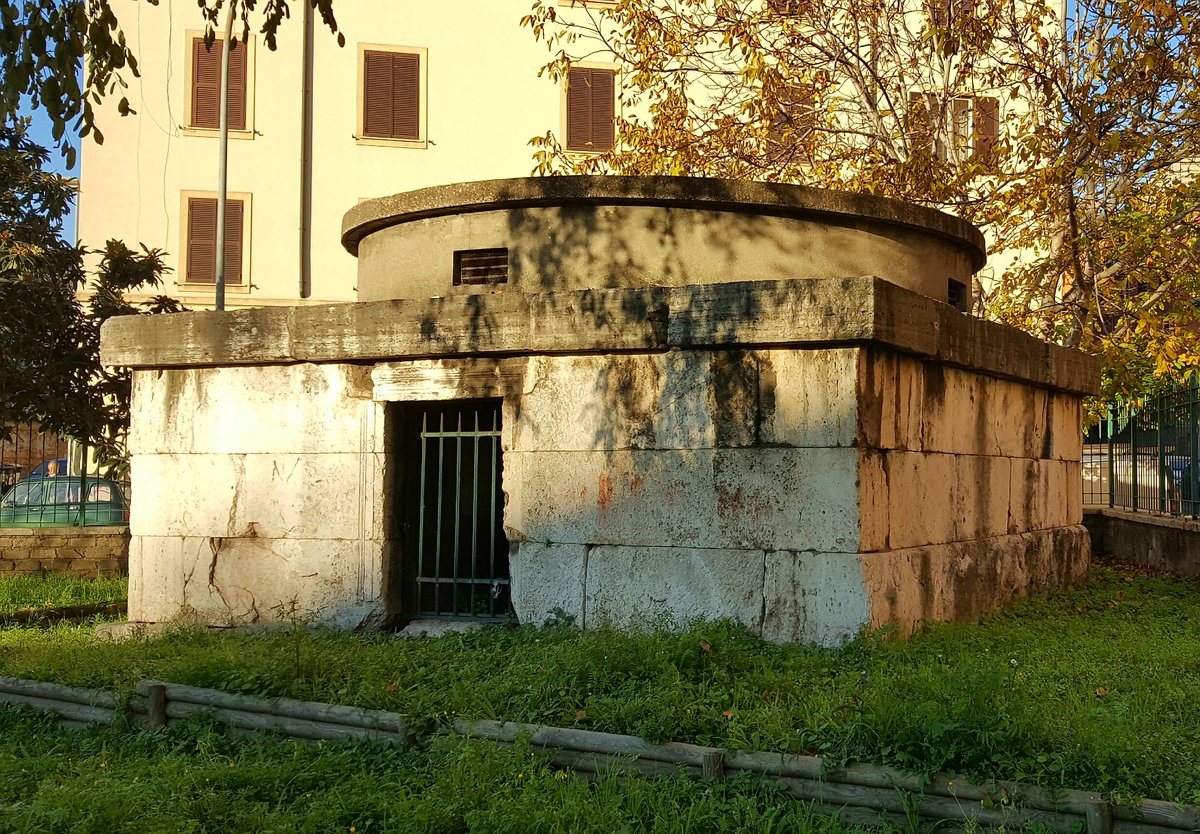

The urban evolution of street levels caused the monument to be buried by the earth. It stayed hidden until excavators accidentally pulled it back into the light in 1935 at the intersection of the ancient via Collatina and via di Malabarba.
The Sepolcro di Largo Talamo is a funerary monument built between the first and third centuries for the Pomponia family. The family had significant status, as evidenced by the monument's scale and its base made of travertine. Three brick stamps were recovered from the lining, dating to the era of Commodus and the period between 198 and 212 AD.
The dimensions of the tomb are inscribed into the monument as thirty-two feet high and twenty feet wide. Archaeologists also found a small altar nearby with a dedication to the Pomponia family. The monument originally consisted of a cylindrical drum placed above a travertine base.
Today, the monument sits reconstructed in a protected area near Largo Eduardo Talamo. It is surrounded by a small area of respect protected by a fence.
Sources: Wikipedia, OpenStreetMap, Wikidata, Wikimedia Commons

Written by Nicolo Ciampini
Discuss this with the author and others
No comments yet. Be the first to start the conversation.