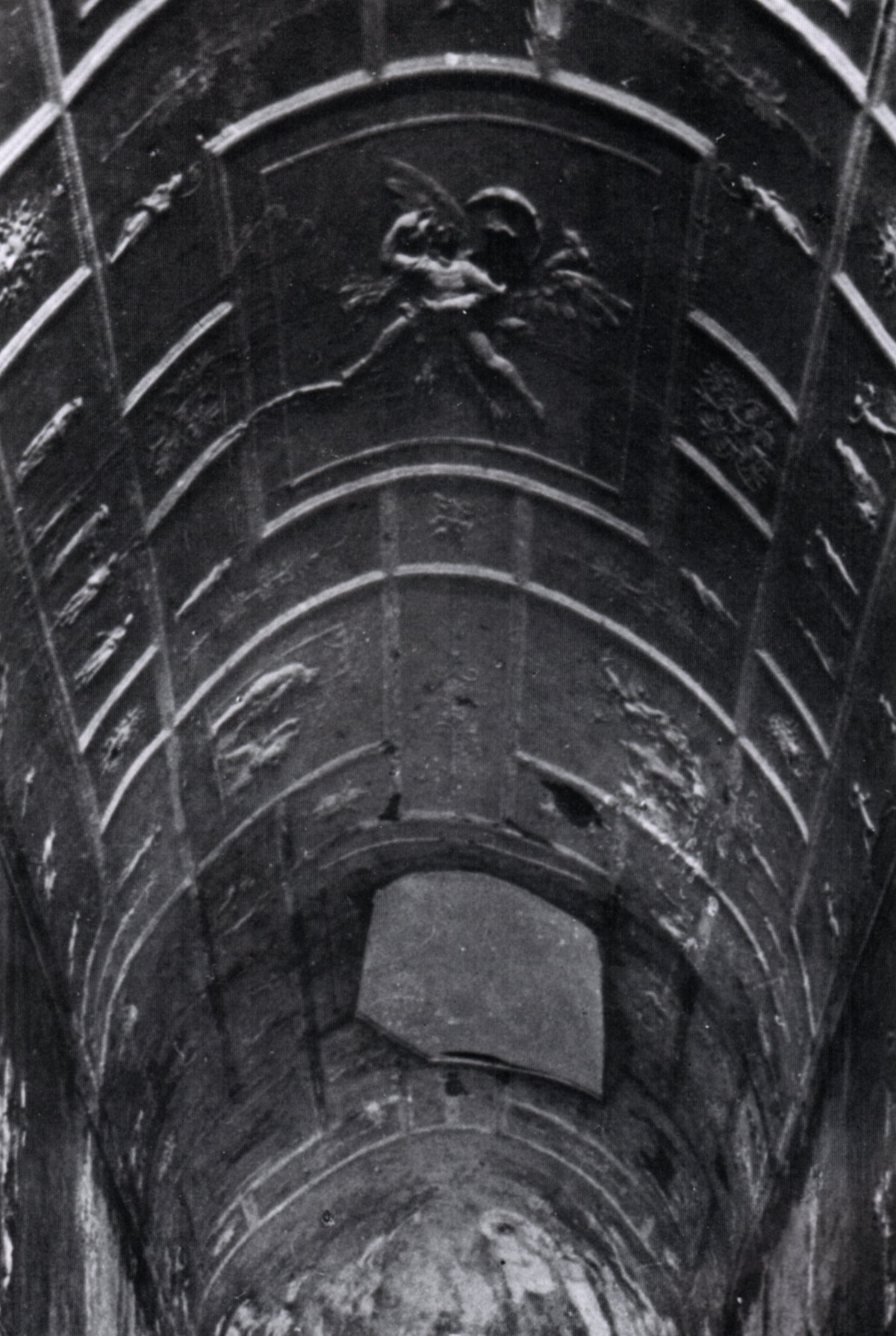

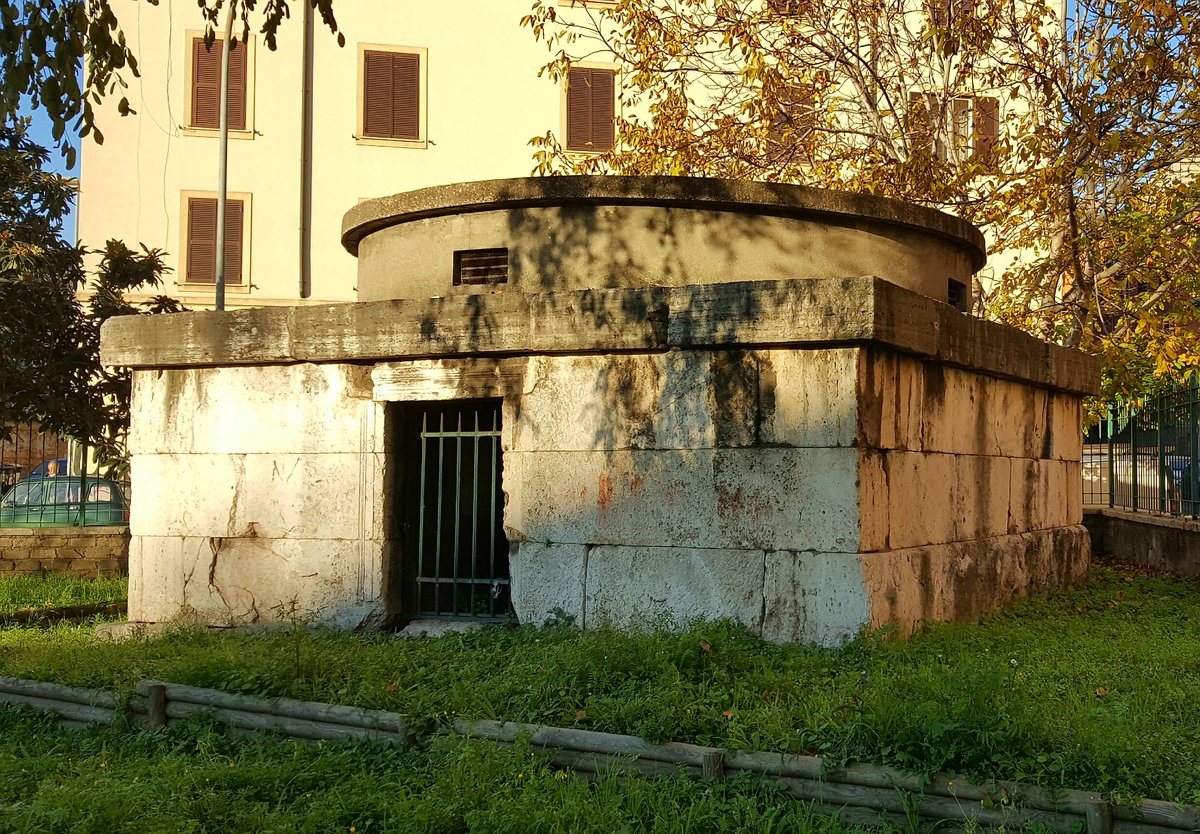
The Basilica Sotterranea di Porta Maggiore is an underground chamber located 12 metres below street level. It was discovered accidentally in 1917 during the construction of a railway line from Rome to Cassino when an underground passage caved in, revealing the hidden structure.
It is believed to have been the meeting place of the neo-Pythagoreans, a group of mystical philosophers who practiced asceticism and based their lives on the works of Pythagoras and Plato. This is the only historical site associated with the neo-Pythagorean movement. The space features three naves and an apse filled with stucco figures of centaurs, griffins, and satyrs, as well as classical heroes such as Achilles, Orpheus, Paris and Hercules.
The structure is thought to have been constructed by the Statilius family. The head of the family, Titus Statilius Taurus, was accused by the Senate of an addiction to magical superstitions. He protested his innocence but eventually committed suicide in 53 CE.
To preserve the fragile monument, a concrete shell was constructed in 1951 to enclose the entire basilica. Air purifiers have been installed to combat radon gas while the temperature and humidity are kept within a narrow range. It is open to small groups of visitors on the 2nd and 4th Sunday of every month with prearranged tours.
Sources: Wikipedia, OpenStreetMap, Wikidata, Wikimedia Commons

Written by Nicolo Ciampini
Discuss this with the author and others
No comments yet. Be the first to start the conversation.