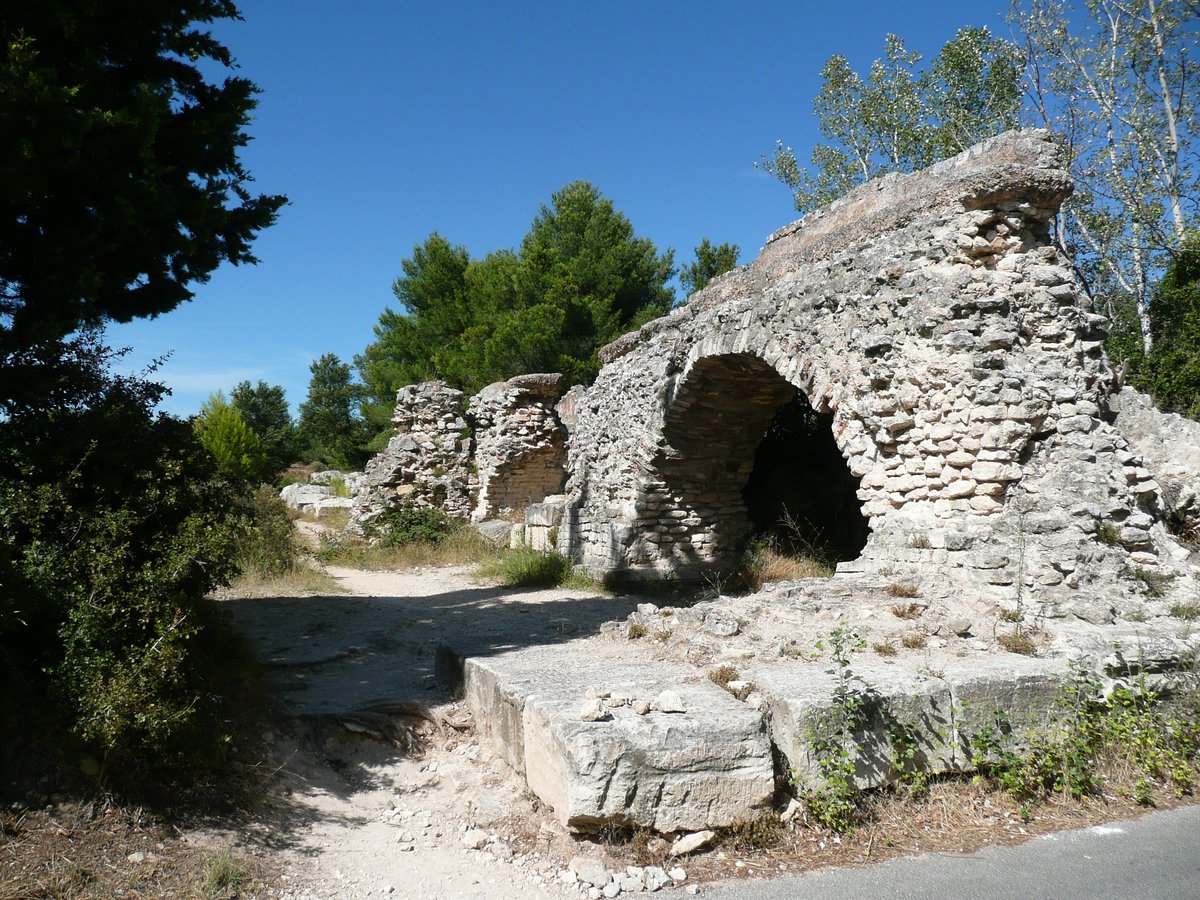

North-east of Arles in southern France lies the Barbegal Roman Mill complex, a marvel of ancient engineering and mechanical power. It was a watermill complex consisting of 16 water wheels arranged in two parallel sets of eight descending a steep hillside. These 16 overshot wheels are considered to be the largest ancient mill complex, designed to harness the power of water to grind flour for as many as 30,000 people.
The mill complex was situated near an aqueduct, which provided the necessary water to operate the mills. Not only did these aqueducts serve the mills, but they also supplied water to the town of Arles, then called Arelate. The two aqueducts joined just north of the mill complex, where a sluice controlled the water supply. The complex operated from the beginning of the 2nd century until about the end of the 3rd century.
Visitors to the site can see the massive remains of the original aqueduct and the substantial masonry remains of the water channels and foundations of the individual mills. The site offers a glimpse into the ingenuity of the ancient Romans and their ability to create monumental feats of engineering. While the site is often signposted as a Roman aqueduct, it remains a significant example of ancient water-powered technology.
Sources: Wikipedia, OpenStreetMap, Wikidata, Wikimedia Commons
Written by Nicolo Ciampini
Discuss this with the author and others
No comments yet. Be the first to start the conversation.