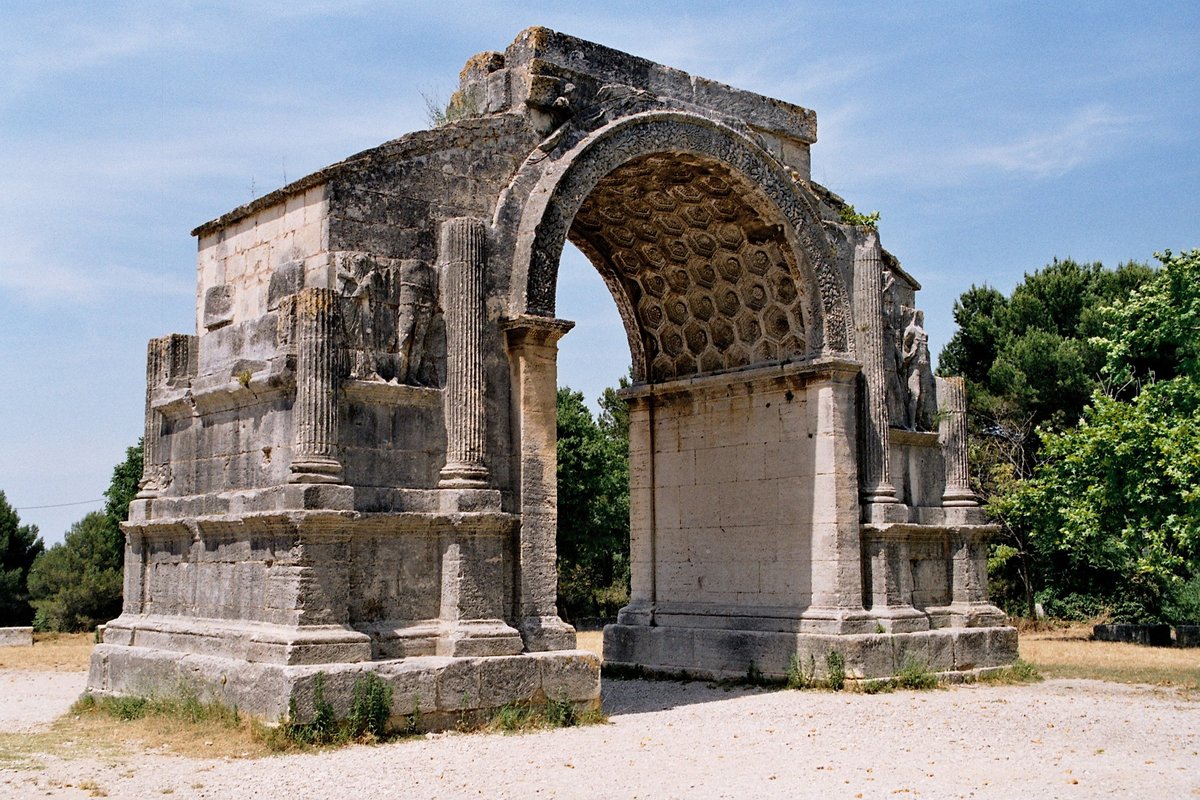

Nestled at the foot of the Alpilles, Glanum, France, is a historical enigma that has remained relatively hidden. This archaeological site boasts the preserved relics of an ancient city, with a rich history spanning various epochs, notably its Roman era. The region was initially inhabited by the Salyens, a Celto-Ligurian tribe, who built an oppidum, a fortified town, around a spring known for its curative properties. In the second century BC, the area flourished under Greek influence, transforming into a Roman city.
Yet, it was never completely obliterated post-Roman Empire, maintaining some of its most spectacular structures for posterity. Among these survivors are Les Antiques – a mausoleum and triumphal arch constructed in the first century BC. The city continued to prosper until it was overrun and destroyed by the Alamanni in 260 AD, leading to its abandonment. Today, these conserved antiquities narrate the city's tale, providing a window into the lives of its residents and the events that occurred here. The site is under the care of the Centre des monuments nationals, safeguarding its preservation and promotion.
Sources: Wikipedia, OpenStreetMap, Wikidata, Wikimedia Commons
Written by Nicolo Ciampini
Discuss this with the author and others
No comments yet. Be the first to start the conversation.