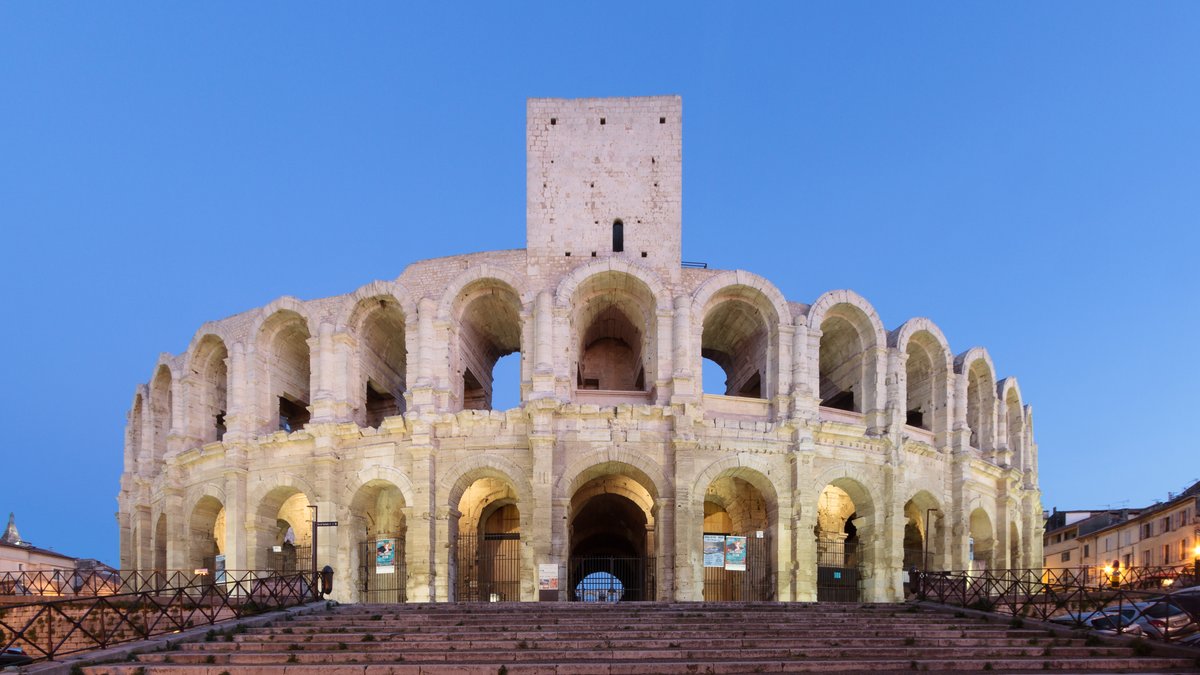

Why is this structure smaller than the famous Colosseum in Rome? The historical records show that the architect was forced to reduce the size and replace the dual system of galleries outside the Colosseum by a single annular gallery because of the conformation of the land. Built in 90 AD, the arena was meant to accommodate over 20,000 people for chariot races and bloody hand-to-hand battles.
The structure measures 136 meters long and boasts 120 arches. It served as a temple for games where gladiators and hunting scenes played out for more than four centuries. The towers jutting out from the top are medieval add-ons to the original Roman building.
After the fall of the Western Empire in the 5th century, the amphitheatre became a shelter for the population and was transformed into a fortress with four towers. The structure encircled more than 200 houses, becoming a real town with its public square built in the centre of the arena and two chapels. This residential role continued until the late 18th century.
In 1826, the expropriation of the houses built within the building began, ending in 1830. Today, the site remains a living venue that draws crowds for bullfighting during the Feria d'Arles, as well as plays and concerts in the summer.
Sources: Wikipedia, OpenStreetMap, Wikidata, Wikimedia Commons
Written by Nicolo Ciampini
Discuss this with the author and others
No comments yet. Be the first to start the conversation.