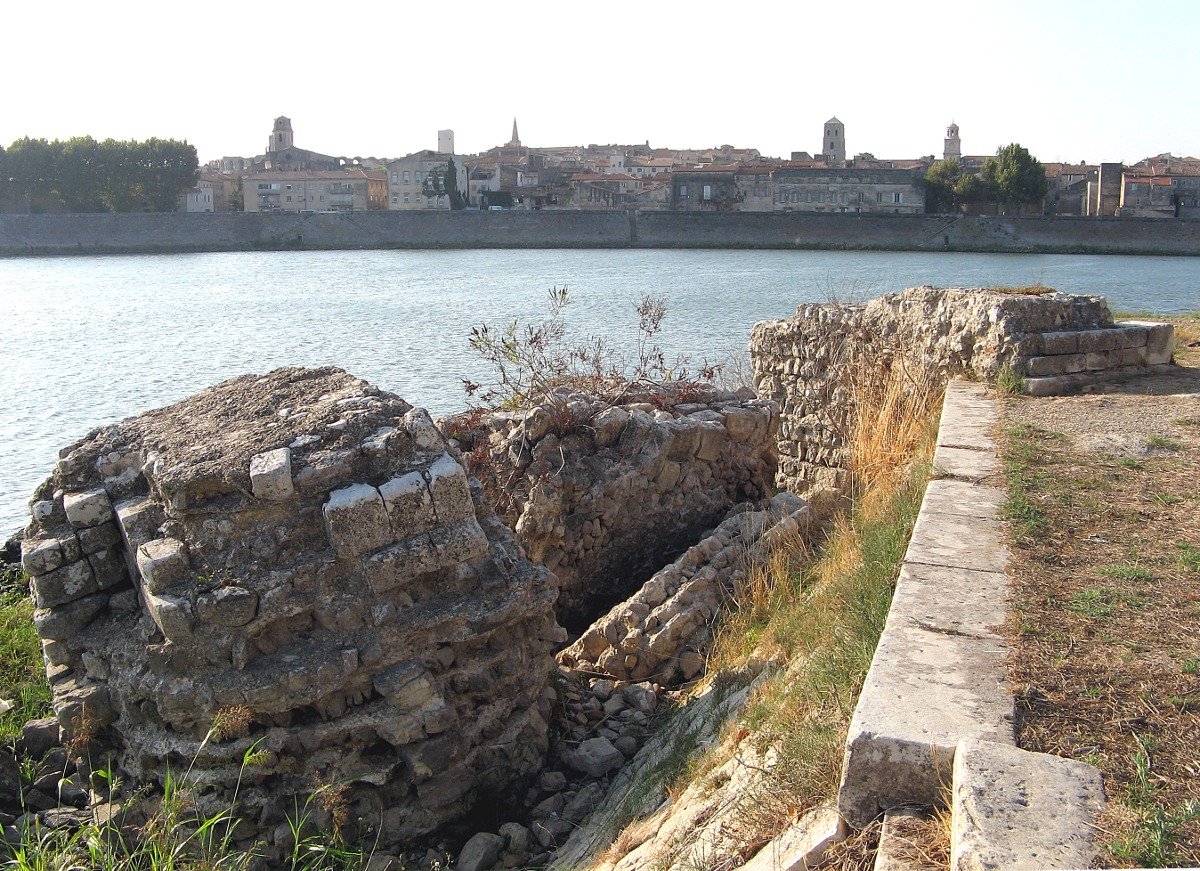

The Pont de Constantin served as a vital link between Arles and the Camargue. While a bridge likely existed since antiquity, the Roman structure seen today dates back to the era of Constantine. It was known as a 'pont de bateaux' - a bridge of boats - characterized by a central square arranged in the middle of the construction where goods from the Roman world were received.
The construction of the bridge remains a subject of historical discussion. For a long time, observers debated whether it was made of stone or wood. Modern theories suggest it combined both: stone at each end with wooden sections forming the bridge of boats in the middle. Its importance is documented in a 1st-century mosaic in Ostia, the port of Rome, which depicted the Rhône delta and the bridge, marking the area reserved for sailors from Arles.
In the 4th century, the poet Ausone described the bridge as a place where goods were received, while the 5th century saw it face significant stress. In 428, the bridge of boats reportedly collapsed under the weight of pilgrims celebrating the martyrdom of Saint Genès, though it is noted that no one died during the event. By the 8th century, historical records still described it as an ancient structure so vast and solid that markets were held upon it.
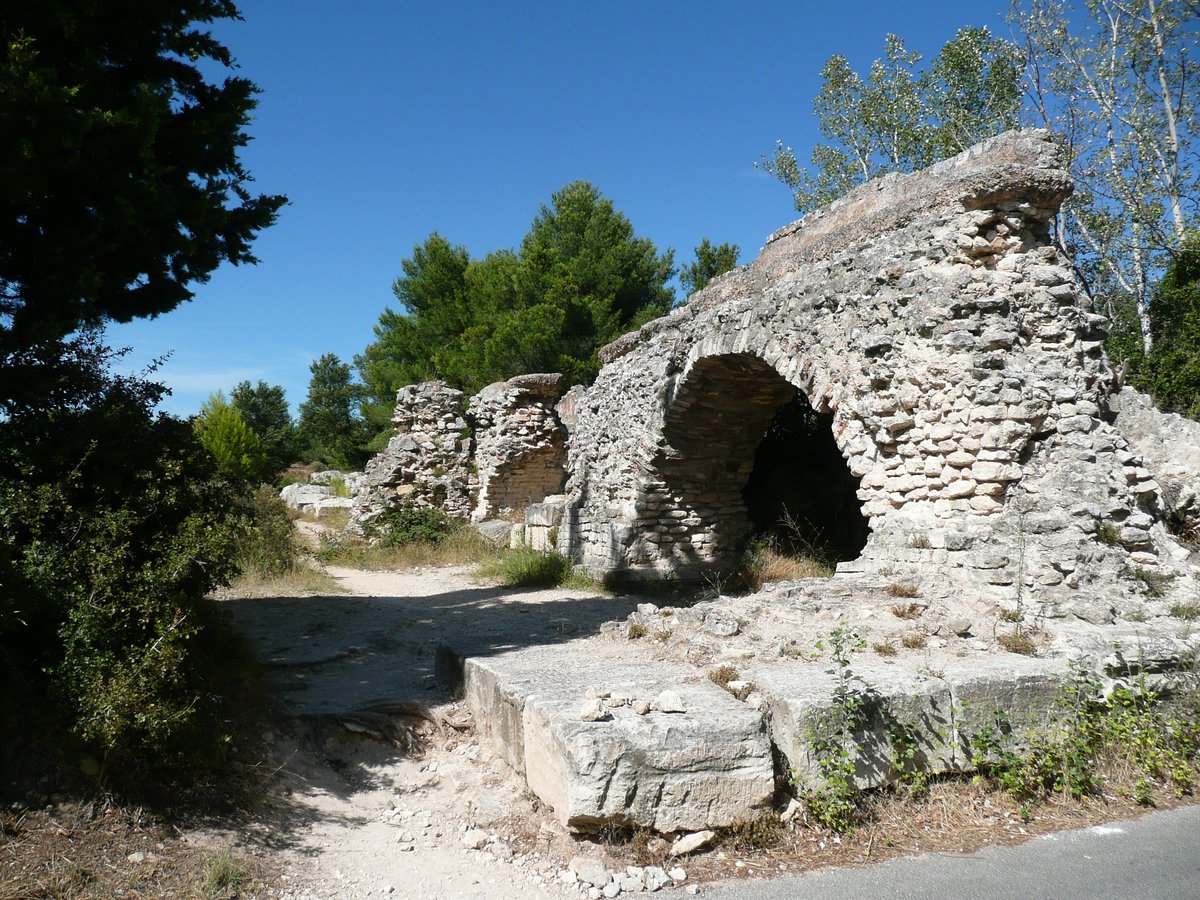
Today, only the ruins at Trinquetaille remain visible, as much of the structure is submerged or lost. The site is currently owned by the State and V.N.F. and is classified as a Monument historique and a UNESCO World Heritage site. Much of our knowledge of this landmark now relies on written sources, poems, and modern underwater archaeological surveys.
Sources: Wikipedia, OpenStreetMap, Wikidata, Wikimedia Commons
Written by Nicolo Ciampini
Discuss this with the author and others
No comments yet. Be the first to start the conversation.