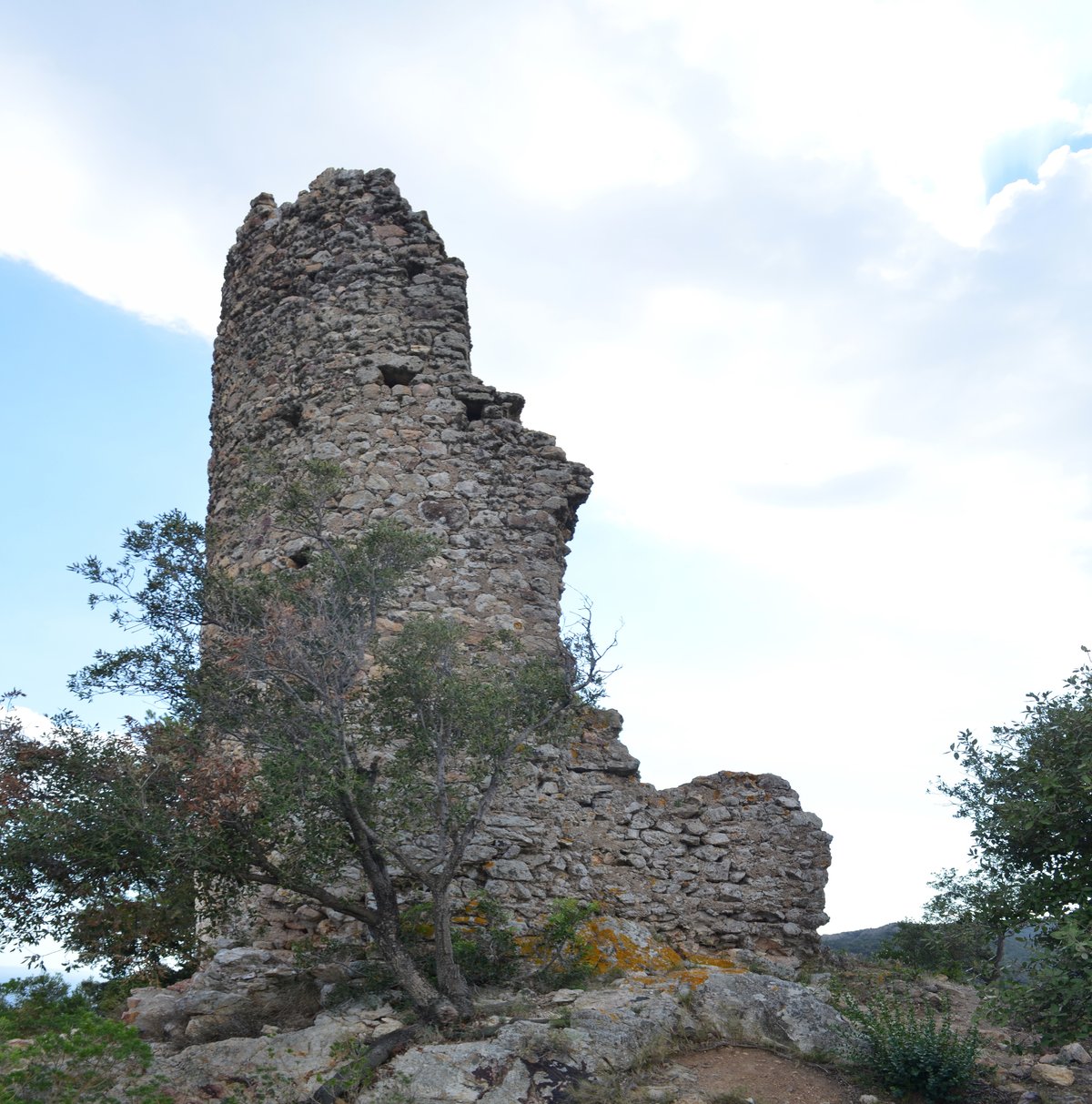

The Pola Tower, standing tall in Tossa de Mar, Catalonia, Spain, is not an ordinary tourist attraction. It is a testament to architectural ingenuity and historical intrigue. Its semi-circular base and prominent front protuberance date back to the 16th century. Now functioning as a geodetic sign for the Institut Cartogràfic de Catalunya, the Pola Tower's captivating past is much more compelling. Before the breathtaking views, this was a place designed for defense and vigilance.
This fortress, however, has been strategically significant since its conception. It served as a natural fortress, easily defensible and well-placed for watching over the coastline. The first constructions on this rock can be traced back to the 10th century, making it one of the oldest structures in the region. The official name of the Pola Tower is Puig de Guàrdia Pola (Tower of Pola's Guard), and it is part of the Catalonian Architectural Heritage Inventory.
Before the Pola Tower, a simpler structure may have stood there to protect the Tossa residents in the northeast of the termina. The towering structure we see today could have functioned as an improved version to serve a double purpose: defense and vigilance. The location of the Pola Tower was premeditated and studied. It was strategically placed to provide a direct visual link to the Castell de Tossa, which is known today as the Faro de Tossa (Tossa Lighthouse). Construction on this quadrangular fortification may be dated to the middle of the 10th century. On this point, we are unsure, but the strategic value of the roca de Pola (Pola Rock) was certainly recognized long before the tower was built.
Sources: Wikipedia, OpenStreetMap, Wikidata, Wikimedia Commons
Written by Nik Frost
Discuss this with the author and others
No comments yet. Be the first to start the conversation.