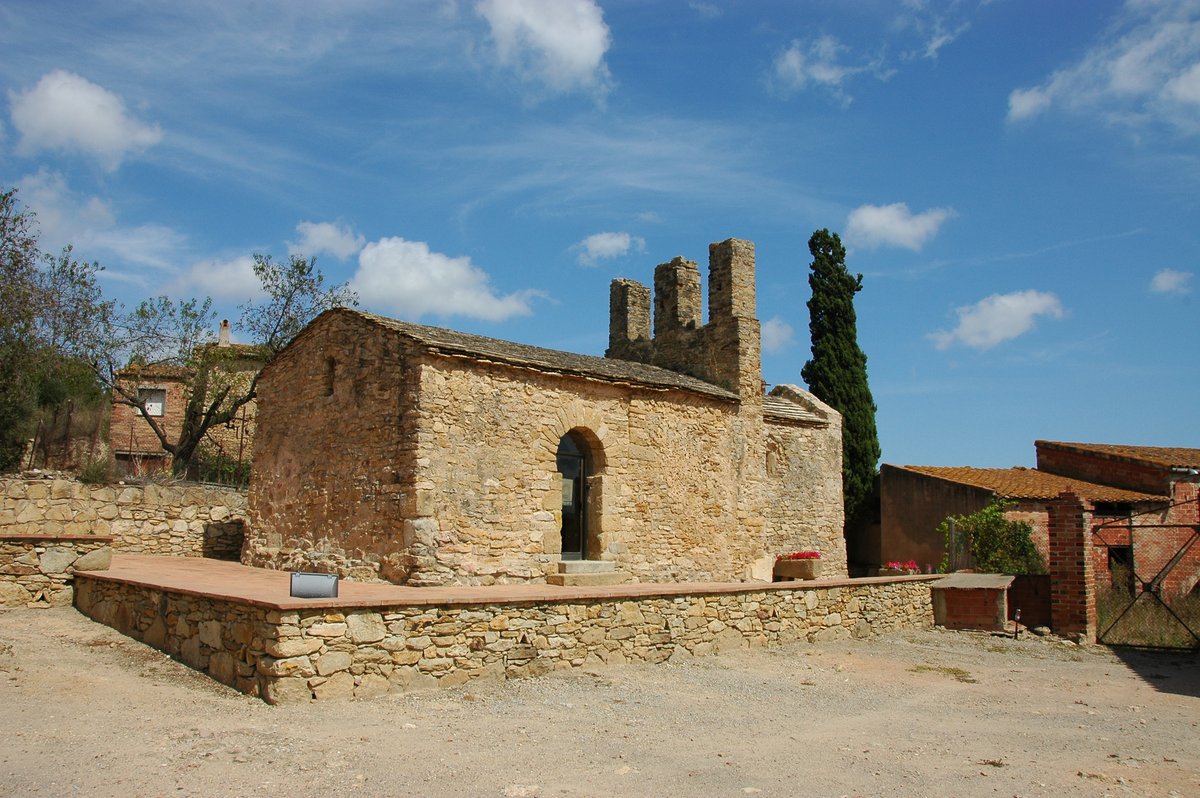

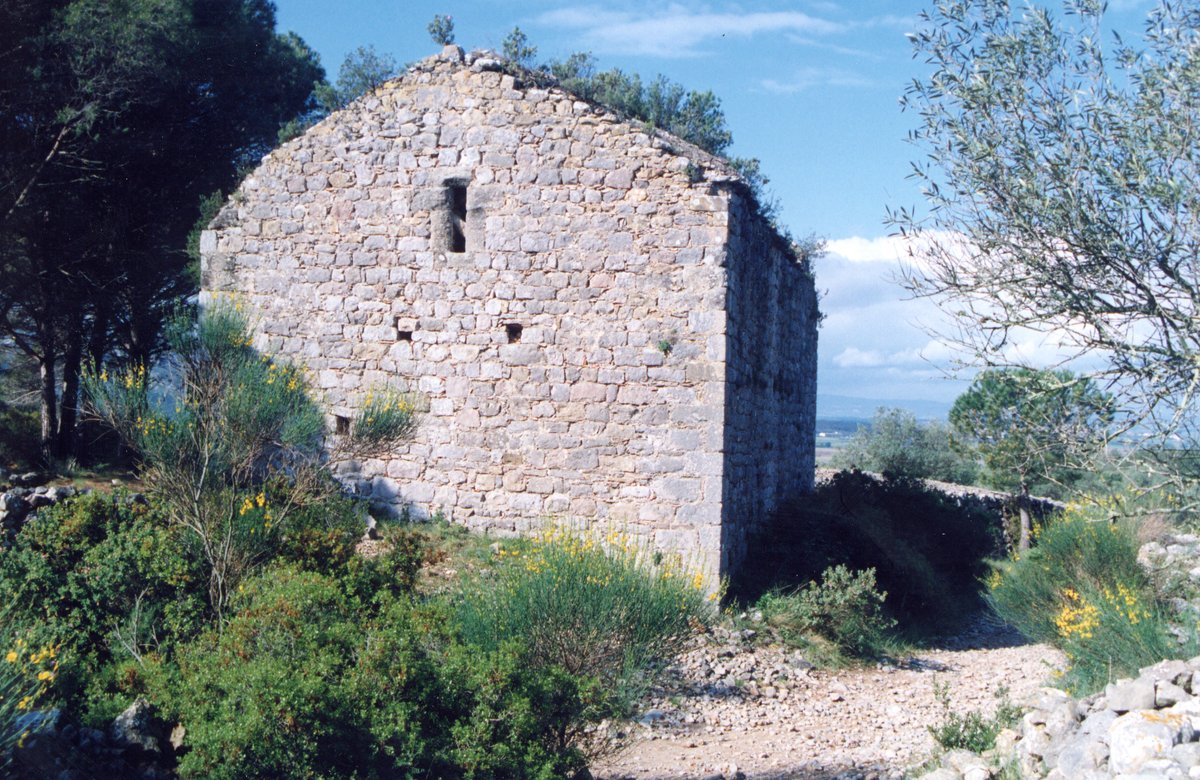
Sant Julià de Buada is a Mossarabic church situated in the village of Sant Julià de Buada, a part of Palau-sator. It is one of the oldest chapels in the area, as testified by a document from 934. While a 1362 document calls it Sant Joan de Buadela, historian Manuel Gómez Moreno refers to it as Sant Julià de Buada. Though not considered a work of art, the building offers a rich historical record of the development of rural architecture.
The building's origins are possibly Visigothic, featuring a single nave separated from the apse by an arch of 36 stone voussoirs. A second reconstruction in the 10th century added a second nave separated by a Mossarabic arch and reinforced the walls and pillars. This later work shows the hand of a master trained in the Islamic taste of the time. The church is constructed from poor materials, with an irregular plan and walls of varying thickness.
The oldest arch is the triumph of the apse, which could be Visigothic, and its curvature harmonizes with the vault. The chapel and its arch also show traces of fresco paintings of saints where red and yellow colors predominate. Gómez Moreno believes these could date from the Romanesque period. In the apse, an axial window in the shape of a keyhole resembles those found in Mossarabic churches in Galicia.
Sources: Wikipedia, OpenStreetMap, Wikidata, Wikimedia Commons
Written by Nik Frost
Discuss this with the author and others
No comments yet. Be the first to start the conversation.