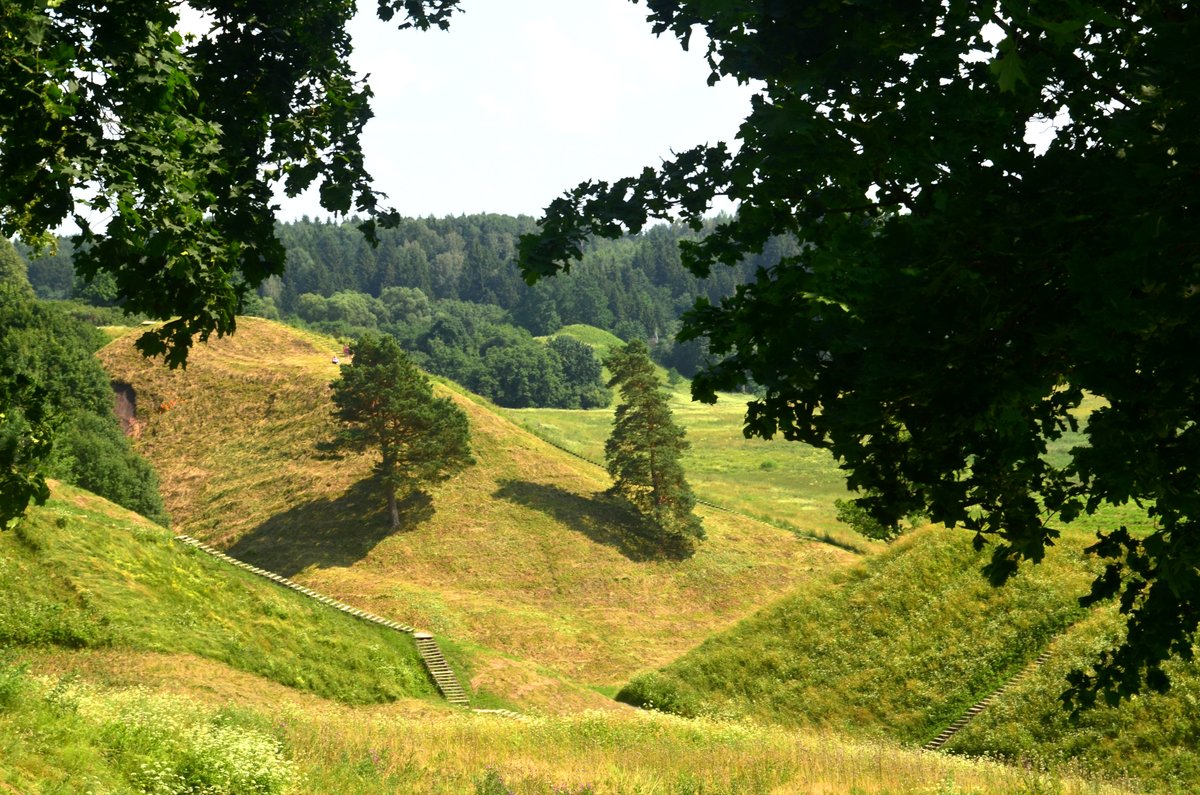

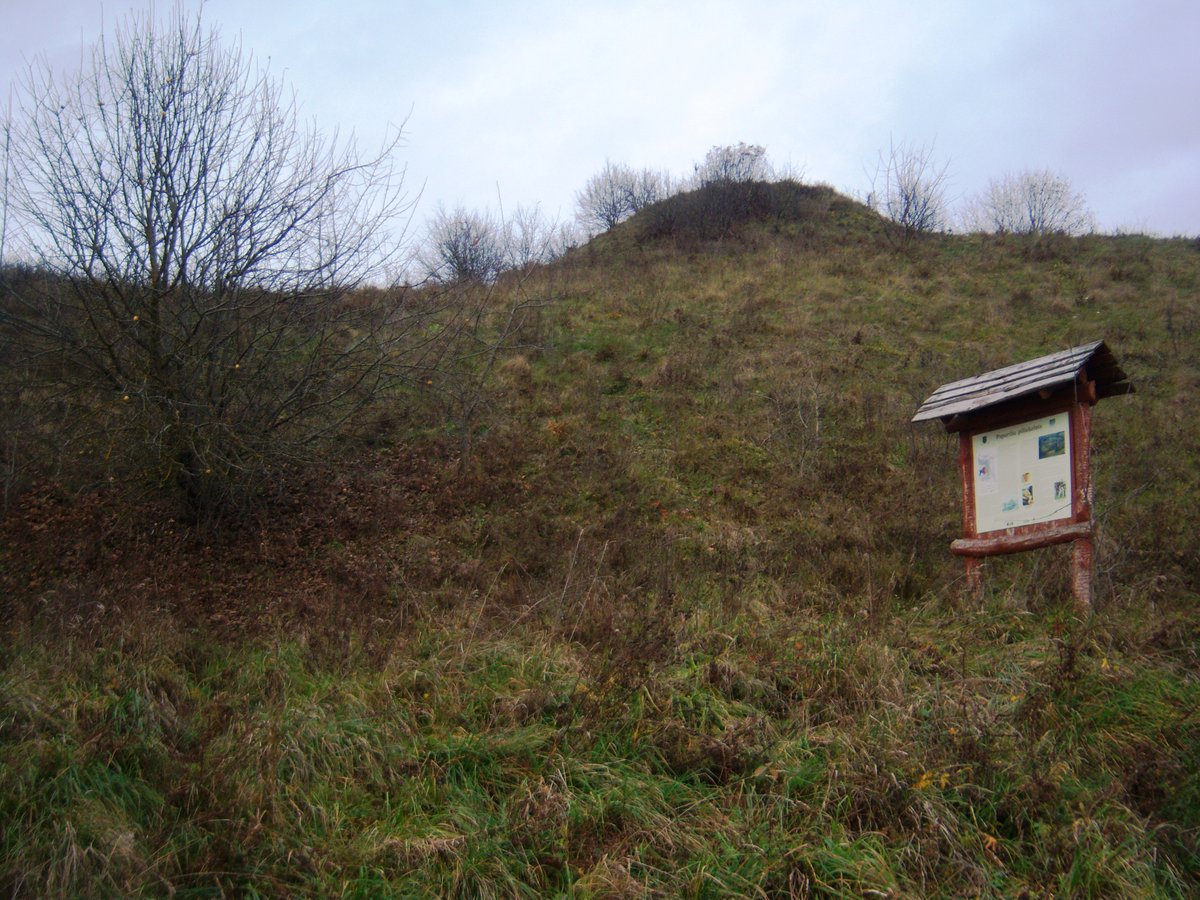
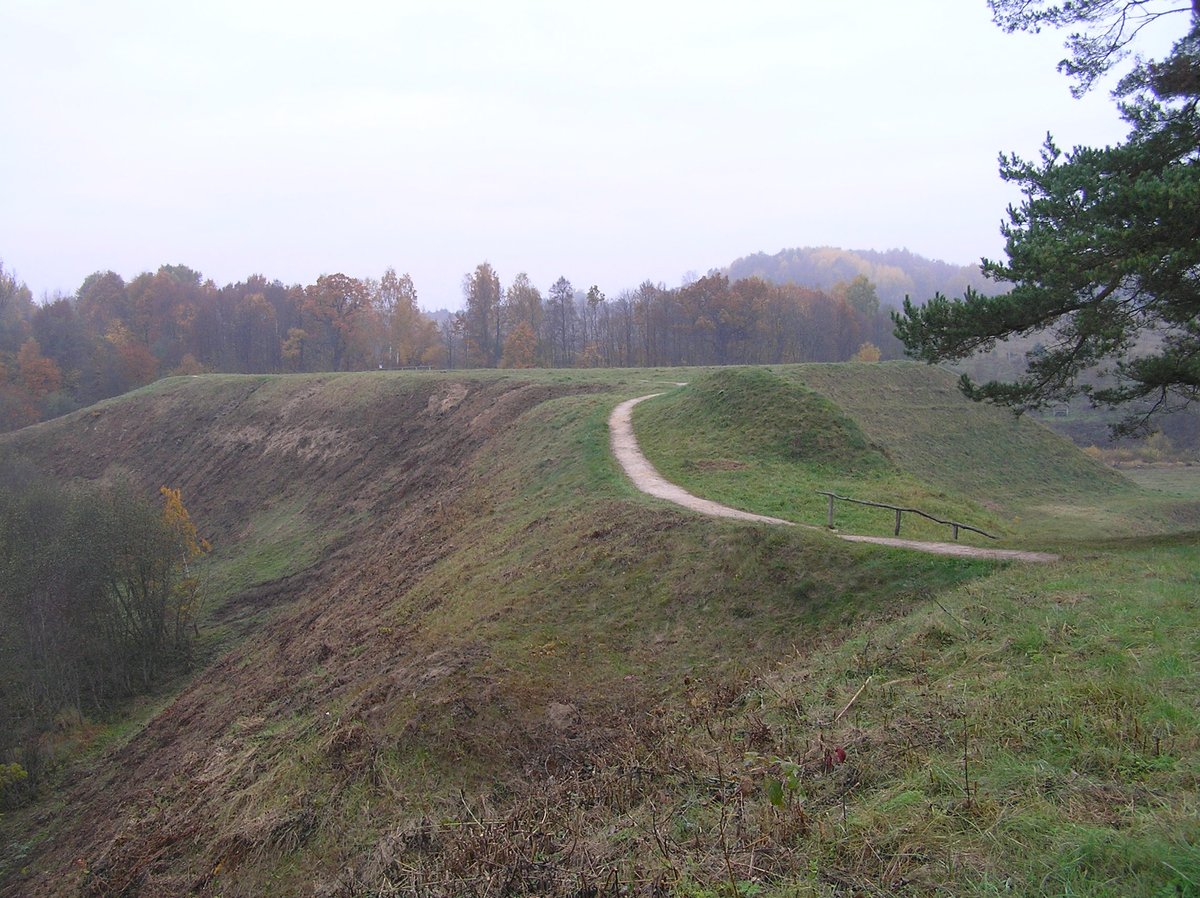
In 1390, the defenders of the Kernavė castle took a drastic measure to prevent the approaching Livonian forces from capturing their seat. Rather than waiting for the enemy to arrive, they burned the castle themselves. After this event, the castle was never rebuilt on the hillfort. While Vytautas's manor was established nearby in Pilies Kalnas, the hillfort remains a centerpiece of the Kernavė archaeological site.
Archaeology has unearthed the remains of various historical layers at the site. A cultural layer from the 13th-14th century contains a wooden castle, where objects such as iron spearheads, silver Lithuanian jewelry, glass bracelets, and imported glazed pottery from the Far East were found. These items, along with glass beads, beads, and ceramic shards, indicate the site served as a ducal castle. The area was also subject to an siege where about 30 arrowheads were recovered from the walls.
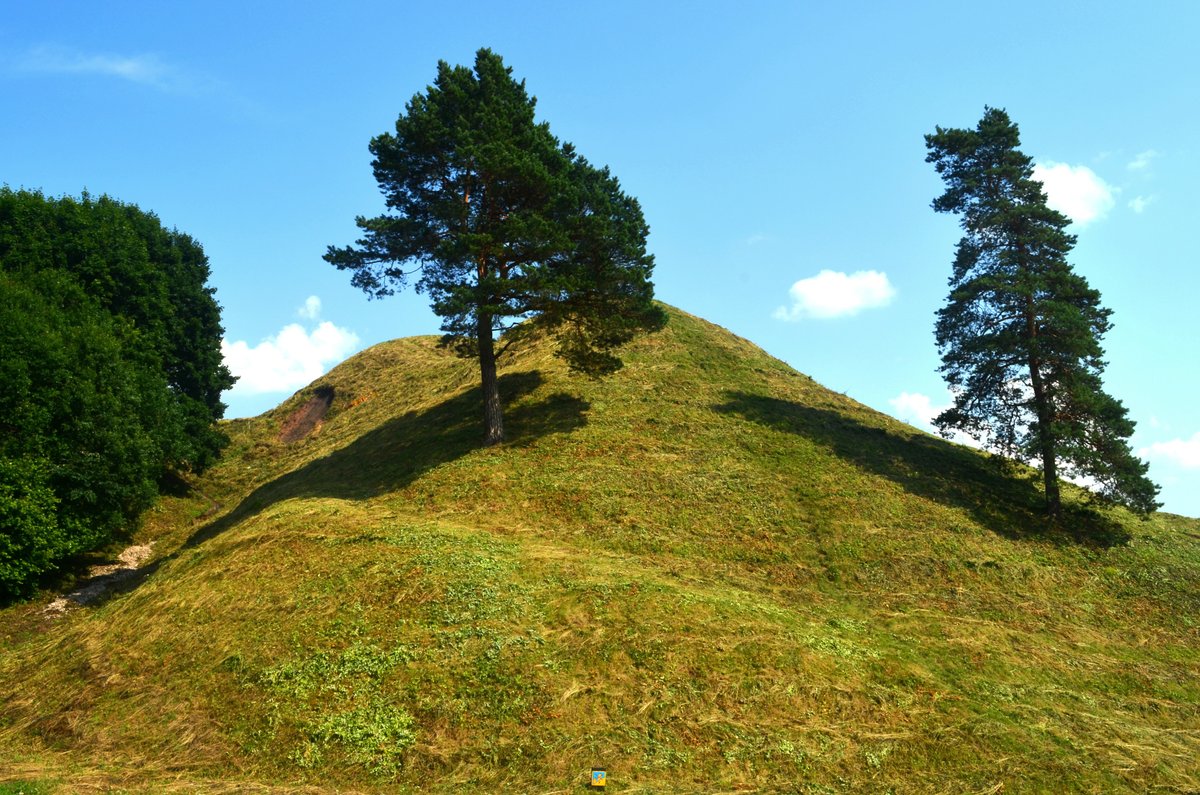
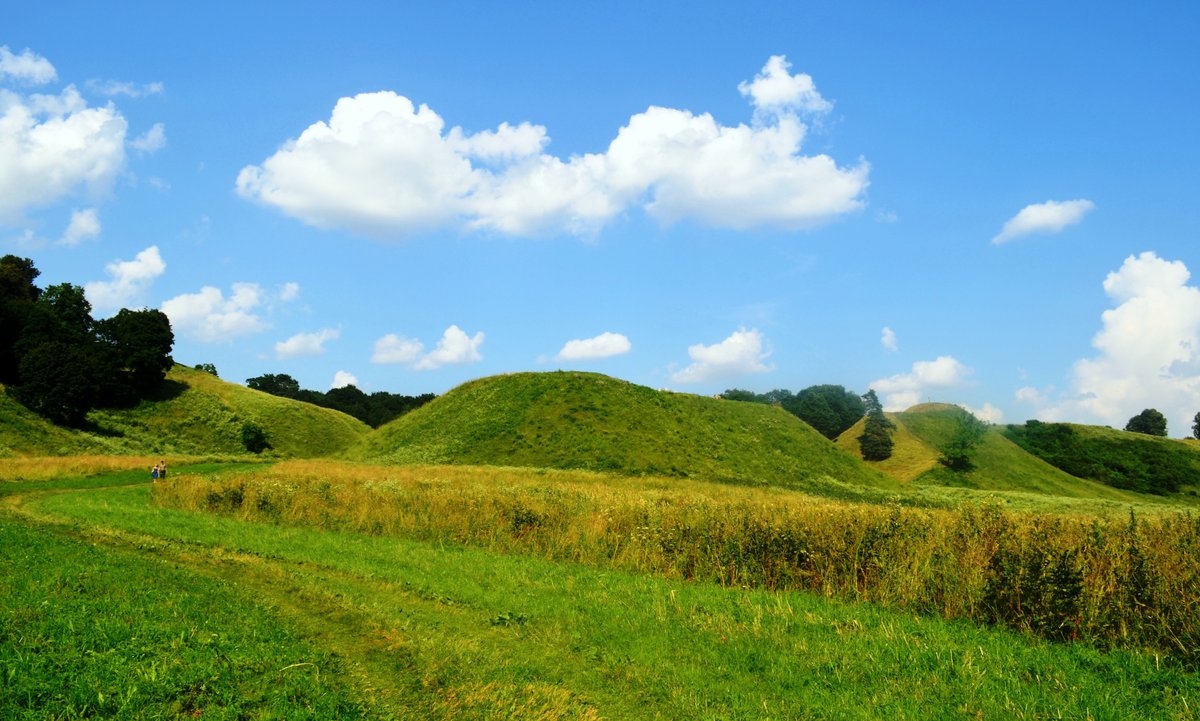
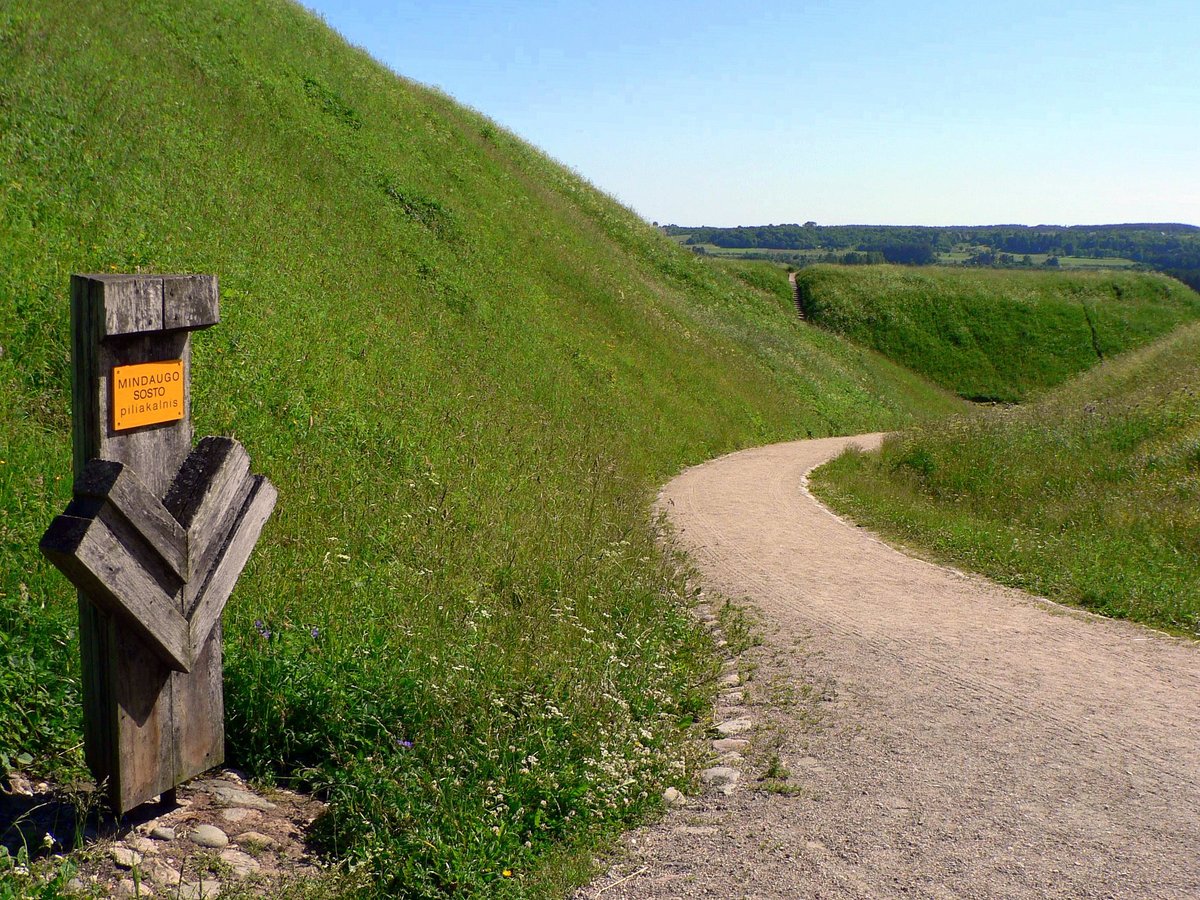
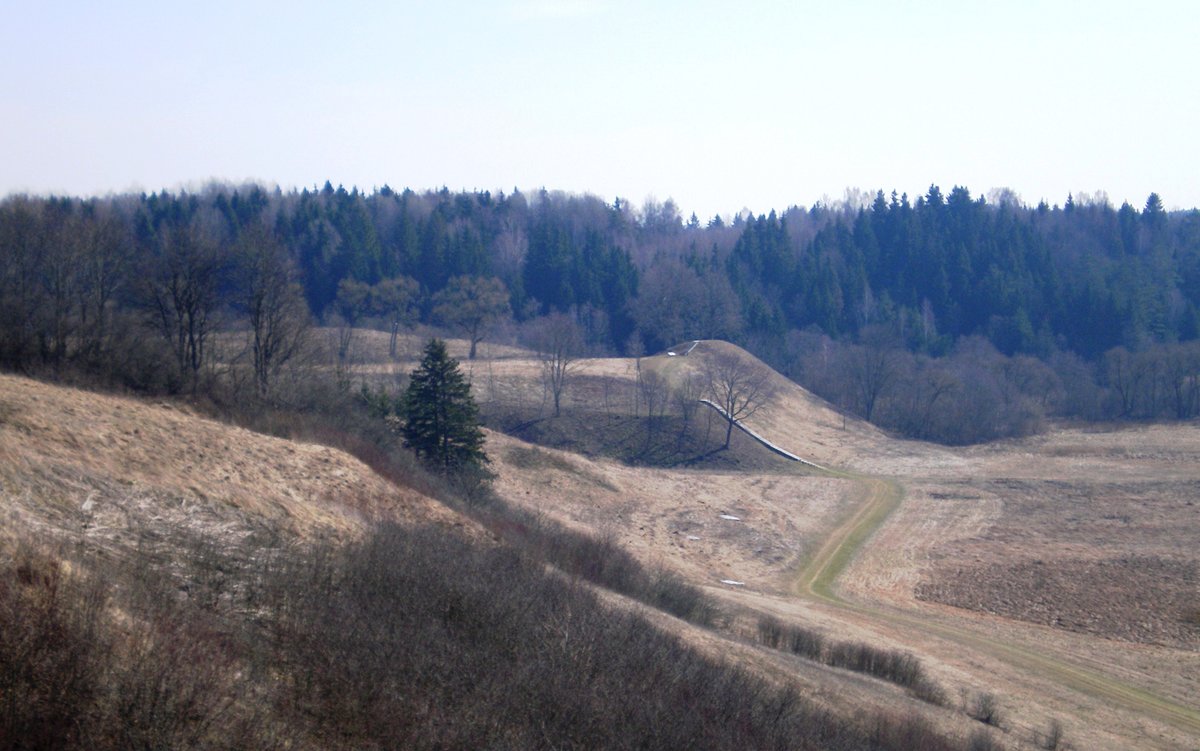
Today, the site remains a significant archaeological complex. You can visit the Aukuro hillfort, which sits on the right bank of the Neris River valley. The area includes more than 50 archaeological, historical, and cultural monuments, including the nearby Mindaugo Sosto and Lizdeikos hillforts, as well as the Įgulos hillfort and the Kernavė cemetery.
Sources: Wikipedia, OpenStreetMap, Wikidata, Wikimedia Commons
Written by Nicolo Ciampini
Discuss this with the author and others
No comments yet. Be the first to start the conversation.