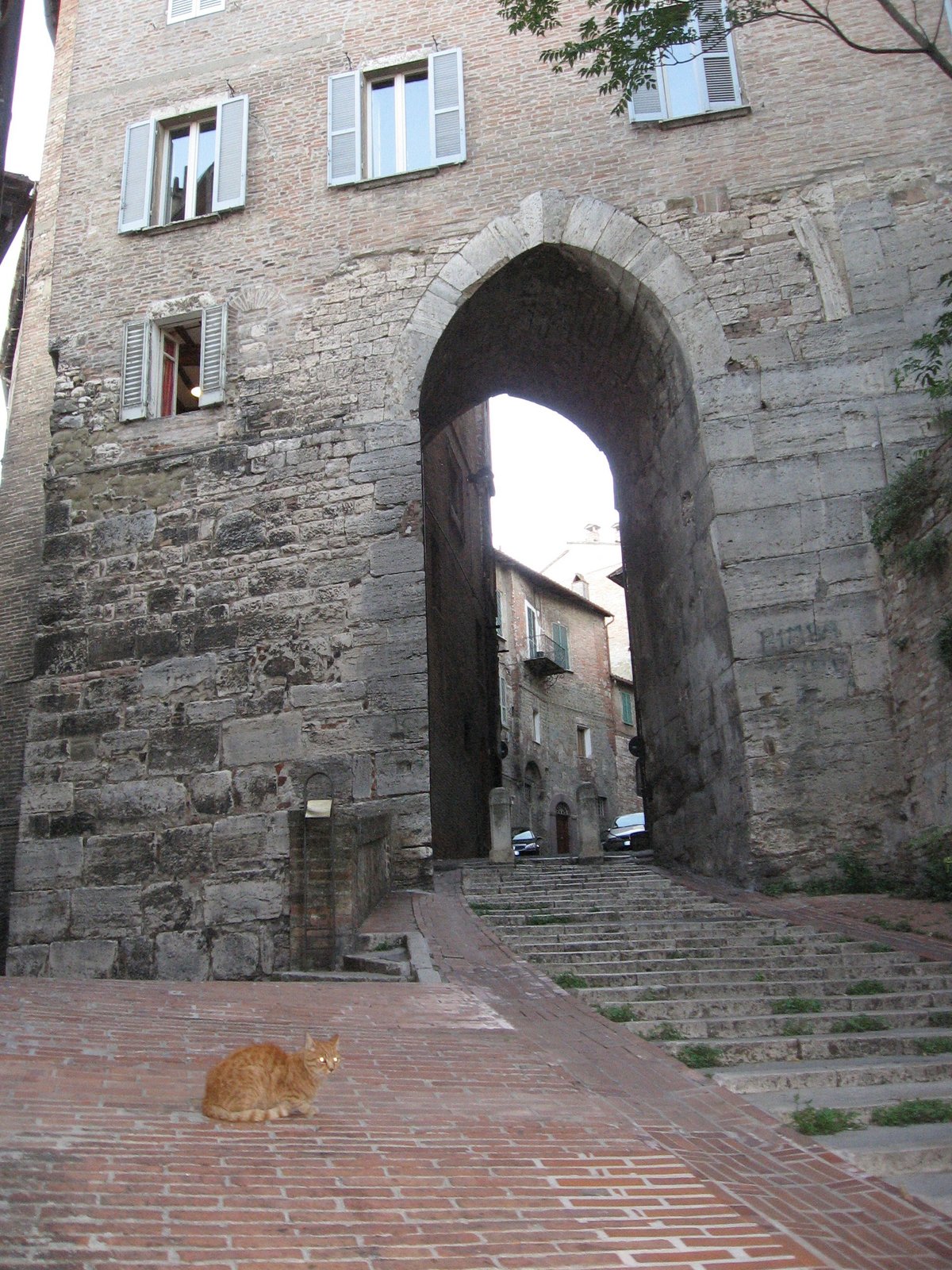

The Arco dei Gigli is a remnant of Perugia's Etruscan city wall, originally a round arch that was transformed into a round one during the 13th century. The area around the Arco was fortified in the 13th century, but the fortress of Porta Sole, located higher in the city and mentioned by Dante Alighieri, was dismantled after a popular rebellion in 1376. The nickname Porta del Giglio (or dei Gigli) was given to the Arco in 1535, when Pope Paul III Farnese inscribed the symbol of his family, the Lily, on the arch. The travertine blocks of the Etruscan wall can still be seen on the Arco. The original round arch, still visible on the exterior side, is a testament to the Arco’s long and storied past. The Arco is also known as Arco dei Montesperelli, named after the noble family who lived near it.
Sources: Wikipedia, OpenStreetMap, Wikidata, Wikimedia Commons
Written by Nicolo Ciampini
Discuss this with the author and others
No comments yet. Be the first to start the conversation.