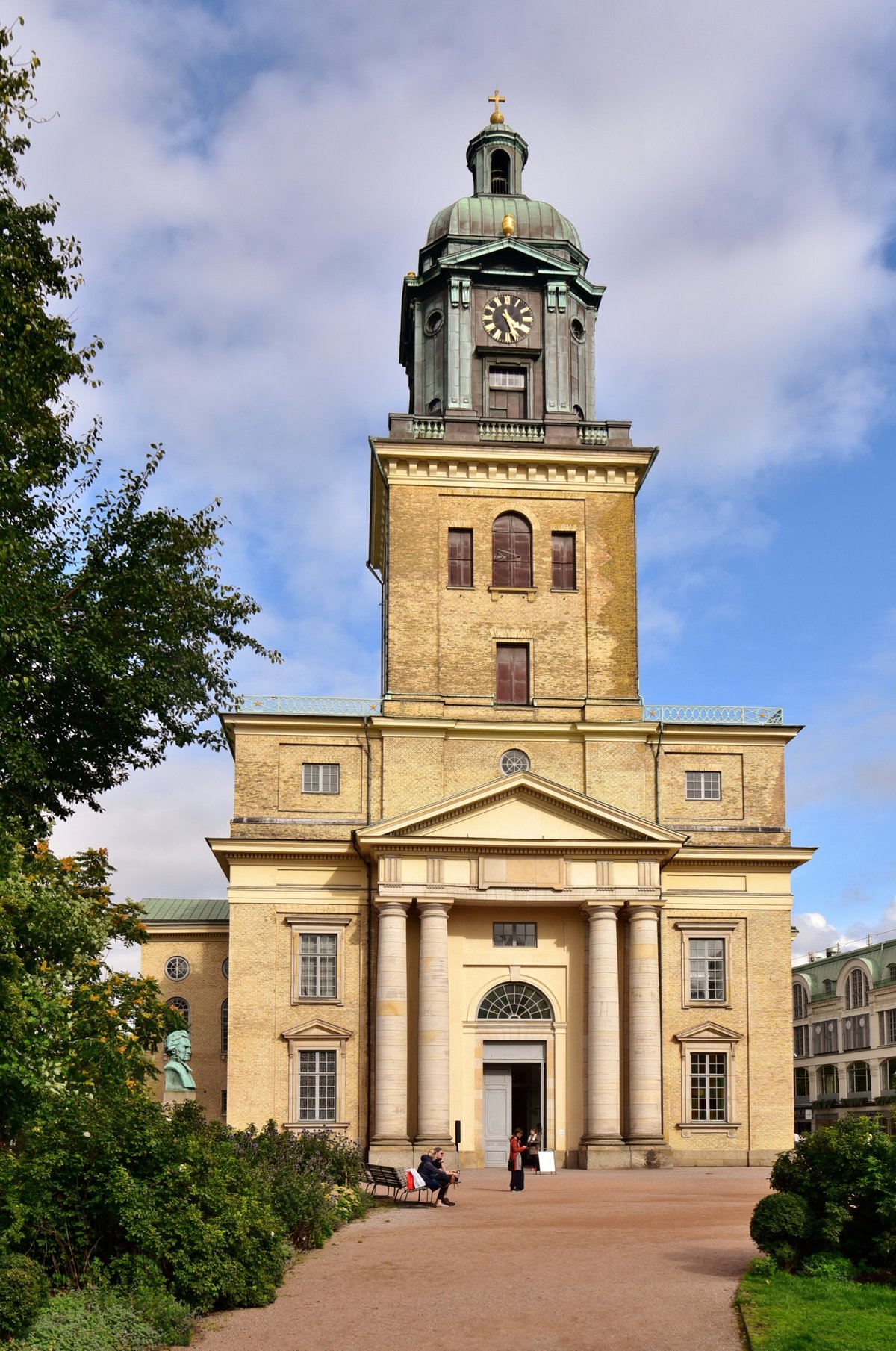

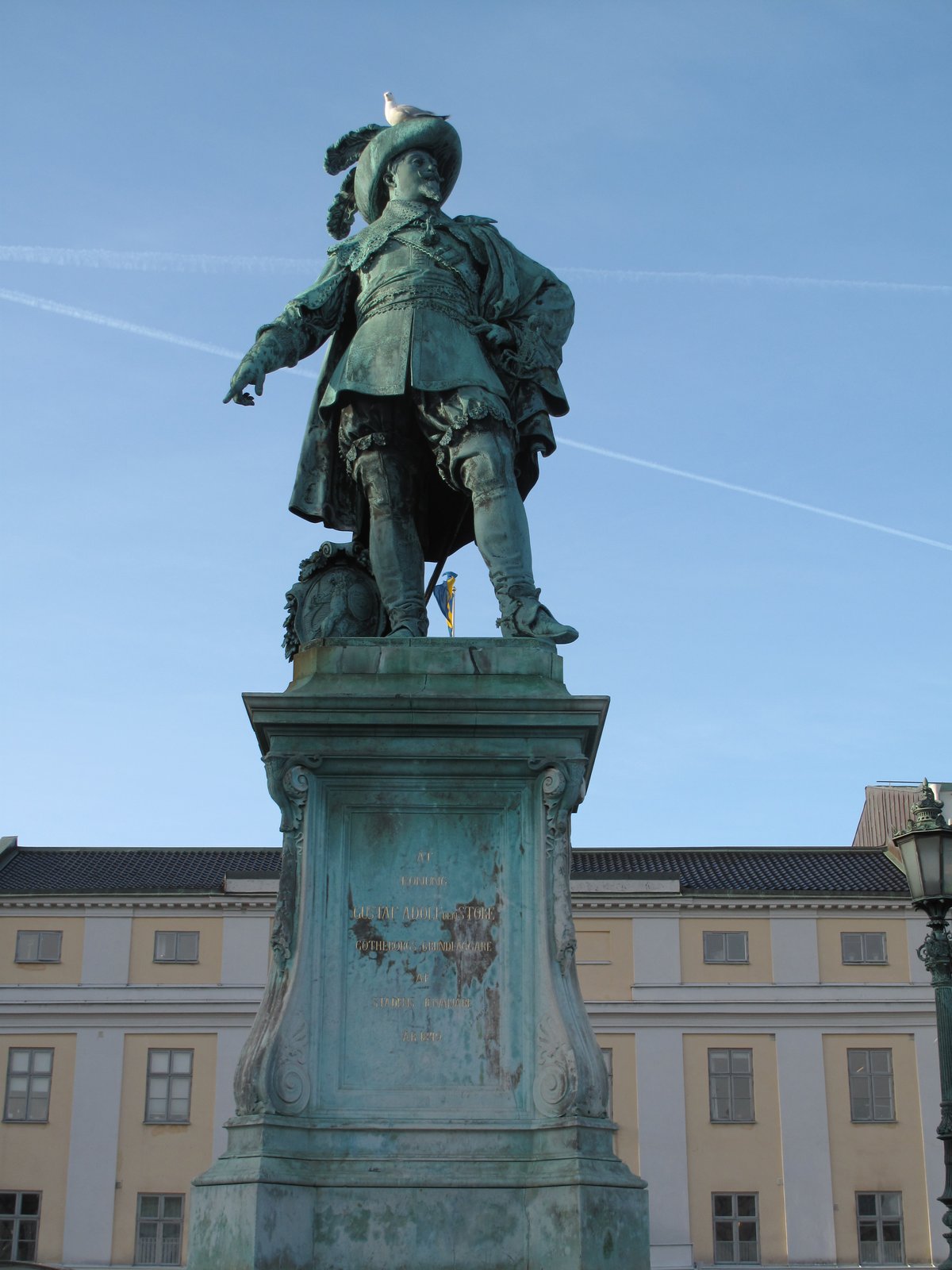
To build a church in the 1620s, King Gustavus Adolphus established a peculiar tax. Every church-owned property in the Västergötland province was required to provide a barrel of grain - wheat, oats, barley, or rye - to fund the construction. This collective effort produced a new church, a structure of granite faced with Dutch bricks and adorned with Palladian windows.
While the building was initially known in accounting records as the great church, it was elevated to cathedral status in 1665 as the administration shifted to a bishopric. It was named Gustavi church to honor the king who initiated the project. The interior reflects a blend of influences, featuring a pulpit carved in 1674 by Marcus Jaeger the Elder and a royal throne upholstered in red velvet to honor King Charles XI.
Today, the cathedral remains the seat of the bishop of the diocese of Gothenburg in the Church of Sweden. Visitors can still see the seventeen octagonal weight-bearing columns that have supported the nave since the 17th century.
Sources: Wikipedia, OpenStreetMap, Wikidata, Wikimedia Commons
Written by Nik Frost
Discuss this with the author and others
No comments yet. Be the first to start the conversation.