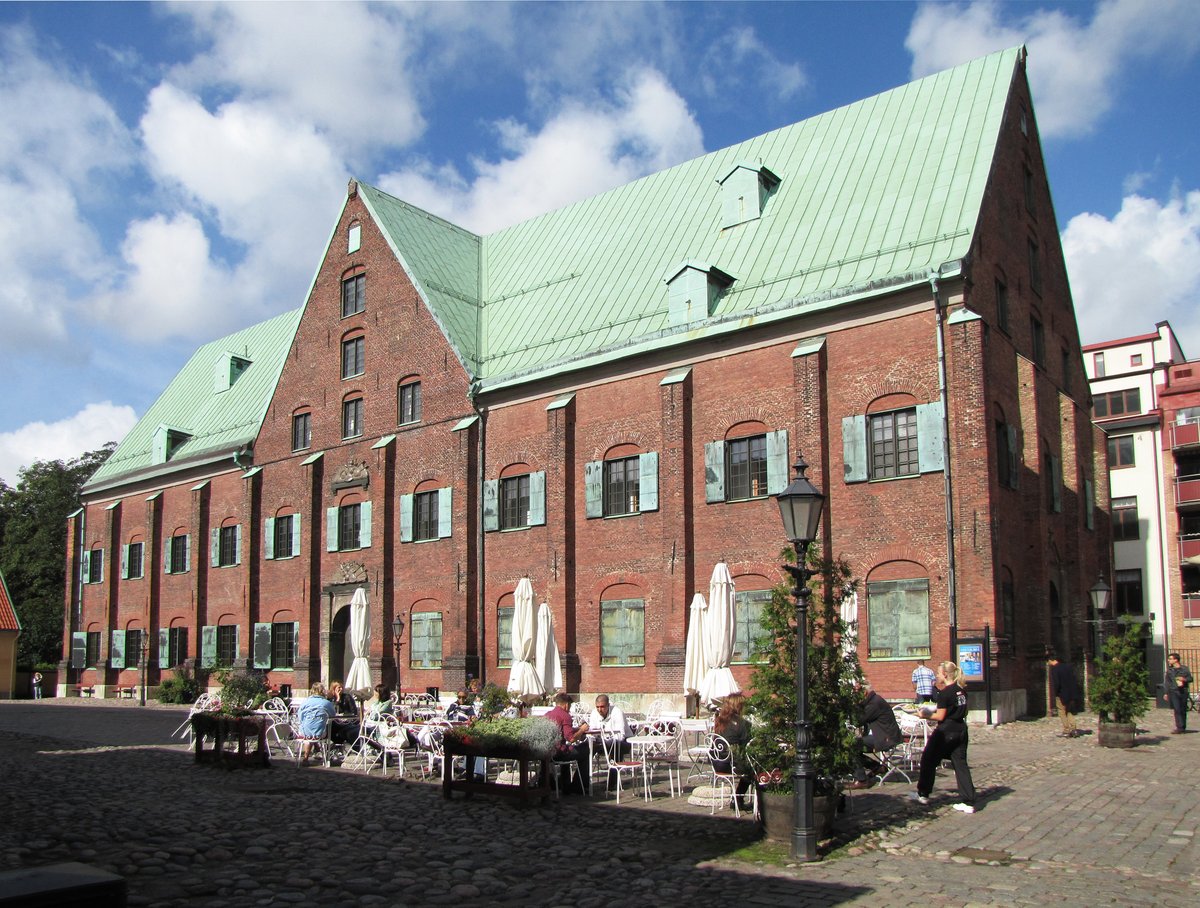

Constructed between 1643 and 1654 in a Dutch style, Kronhuset, originally known as Giötheborgz Tyghuhs ('Gothenburg's Arsenal'), stands in Västra Nordstaden, Gothenburg. It is one of the city's oldest secular buildings, alongside the Torstenson Palace (constructed 1648–1650). The royal architect Simon de la Vallée is believed to have designed the building. Initially, Kronhuset served as an arsenal for the city garrison and a granary to store food reserves.
On December 9, 1927, the Swedish state transferred the ownership of Kronhuset to Gothenburg Municipality. It has been a byggnadsminne, a listed building, since 24 October 1968. In 1660, Kronhuset was used as a venue for the Riksdag of the Estates, the Swedish Parliament, by King Karl X Gustav. The building thus acquired the distinction of serving as the kingdom's parliament house.
The large room on the ground floor has been known as the Rikssal, or the National Hall, ever since. While Karl Gustav died suddenly in the Torstensson Palace on 13 February, the Riksdag met at the Kronhus to proclaim his four-year-old son as King on 1 March. Later, the building served as a chapel for the garrison Parish from 1680 until 1898, and it was restored to serve as a museum starting in 1957.
Sources: Wikipedia, OpenStreetMap, Wikidata, Wikimedia Commons




Written by Nik Frost
Discuss this with the author and others
No comments yet. Be the first to start the conversation.