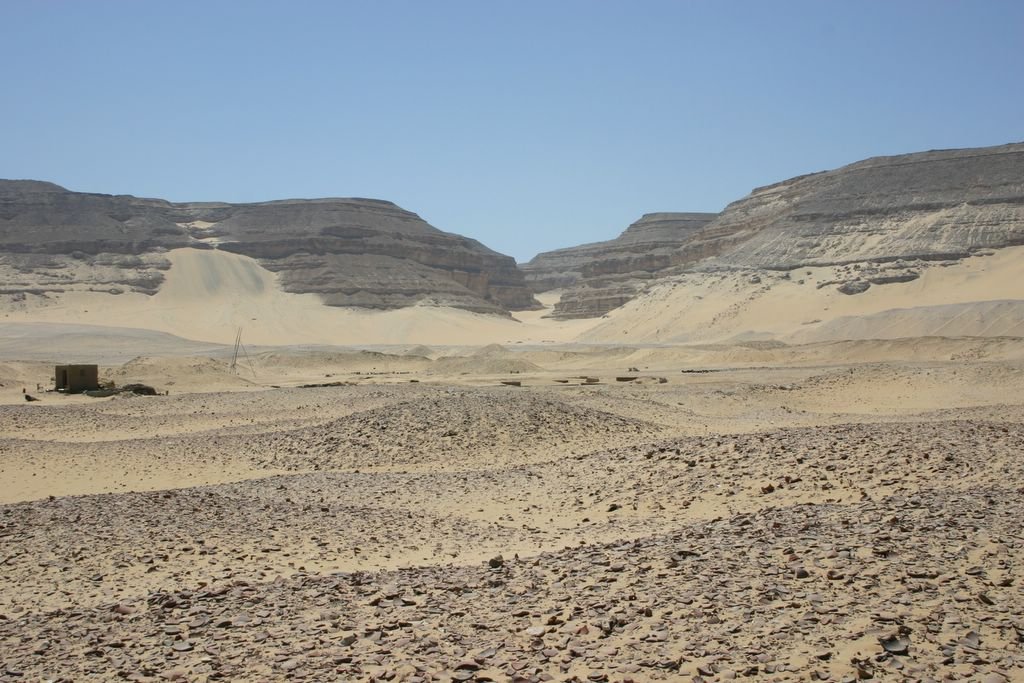

Umm el-Qa'ab is an archaeological site located at Abydos, Egypt. Its modern name, meaning 'Mother of Pots', refers to the mound made of millions of broken pieces of pots which defines the landscape. The site contains evidence that it is the cemetery for Egypt's predynastic proto-kings along with rulers of the 1st and 2nd dynasties. Evidence suggests the cemetery was likely founded during the Naqada I period, around 4,000 BCE.
The location continued as a royal cemetery through the First Dynasty and ended with the burial of the last two kings of the Second Dynasty, Peribsen and Khasekhemy, in 2,650 BCE. The development of the necropolis occurred in three stages, moving from north to south: Cemetery U held Predynastic burials; Cemetery B contained royal tombs of Dynasty 0 and early Dynasty I; and the final tomb complexes held six kings and one queen of Dynasty I and two kings of Dynasty II.
Cemetery U, located at the northern edge, holds roughly 700 graves from the Naqada I-III periods. Among them, tomb U-j stands out for its size and the evidence of its royal nature. While partially excavated by Émile Amélineau between 1895-1898, the tomb was 'discovered' by G. Dreyer in 1978. Dated to Naqada IIIA2, it contains 12 separate chambers built in two stages. Remnants of a wooden shrine were found in Chamber 1, along with 'Wavy-Handled vessels' thought to have held oil.
Although the tomb had been plundered, about 2,000 ceramic vessels were recovered, with nearly one-third imported from Palestine. These vessels contained traces of tree-resin-infused wine, providing the first evidence of wine in Ancient Egypt. In addition to ceramic vessels, tomb U-j contained bowls carved out of obsidian and chests made from imported cedar, suggesting the existence of an extensive trade network during the time the tombs were being constructed.
Sources: Wikipedia, OpenStreetMap, Wikidata, Wikimedia Commons
Written by Mutabor
Discuss this with the author and others
No comments yet. Be the first to start the conversation.