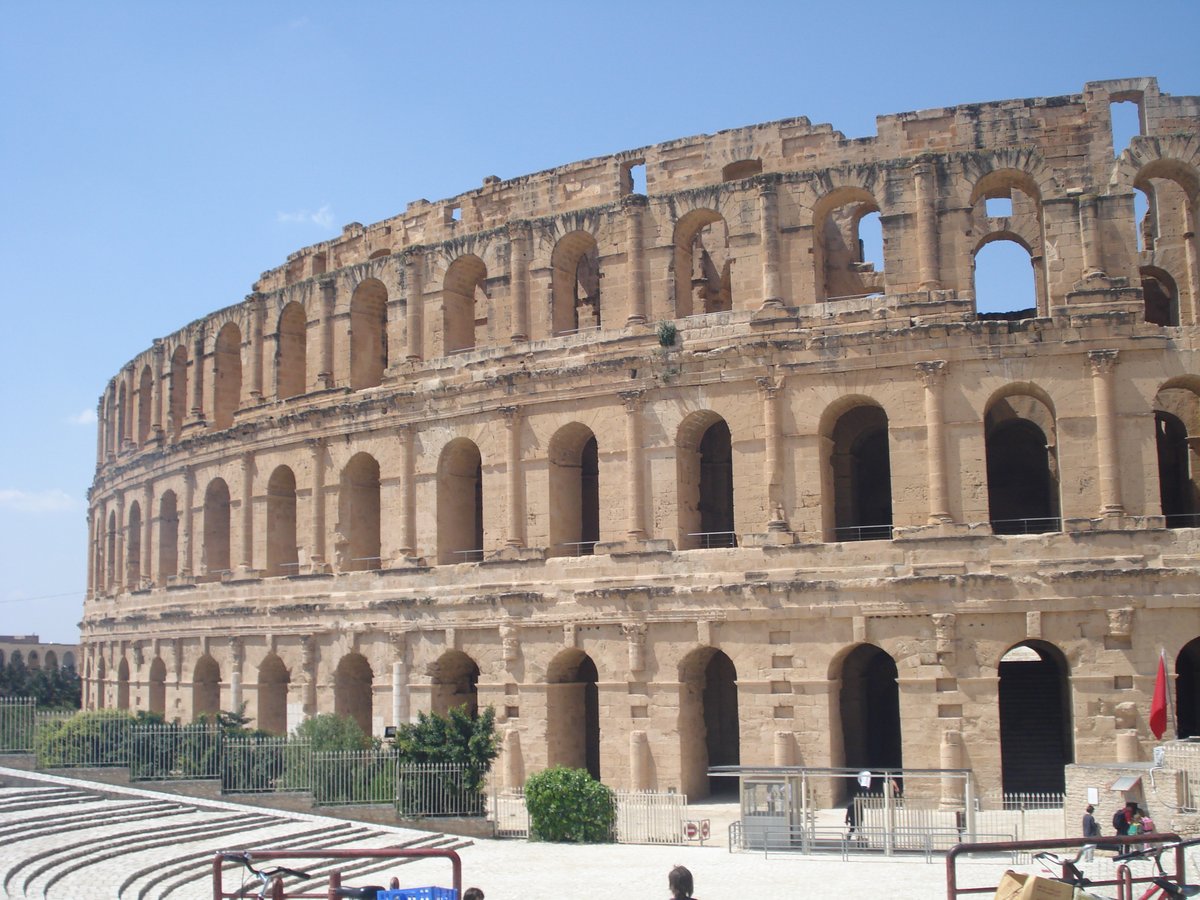

The Amphitheatre of El Jem is located in the modern-day city of El Djem, Tunisia, in the area formerly known as Thysdrus. Built around 238 AD, it is one of the best-preserved Roman stone ruins in the world and is unique in Africa. This oval amphitheatre served as a venue for spectator events and is among the largest of its kind globally. It has an estimated capacity of 35,000 people and measures 148 metres along its major axis and 122 metres along its minor axis.
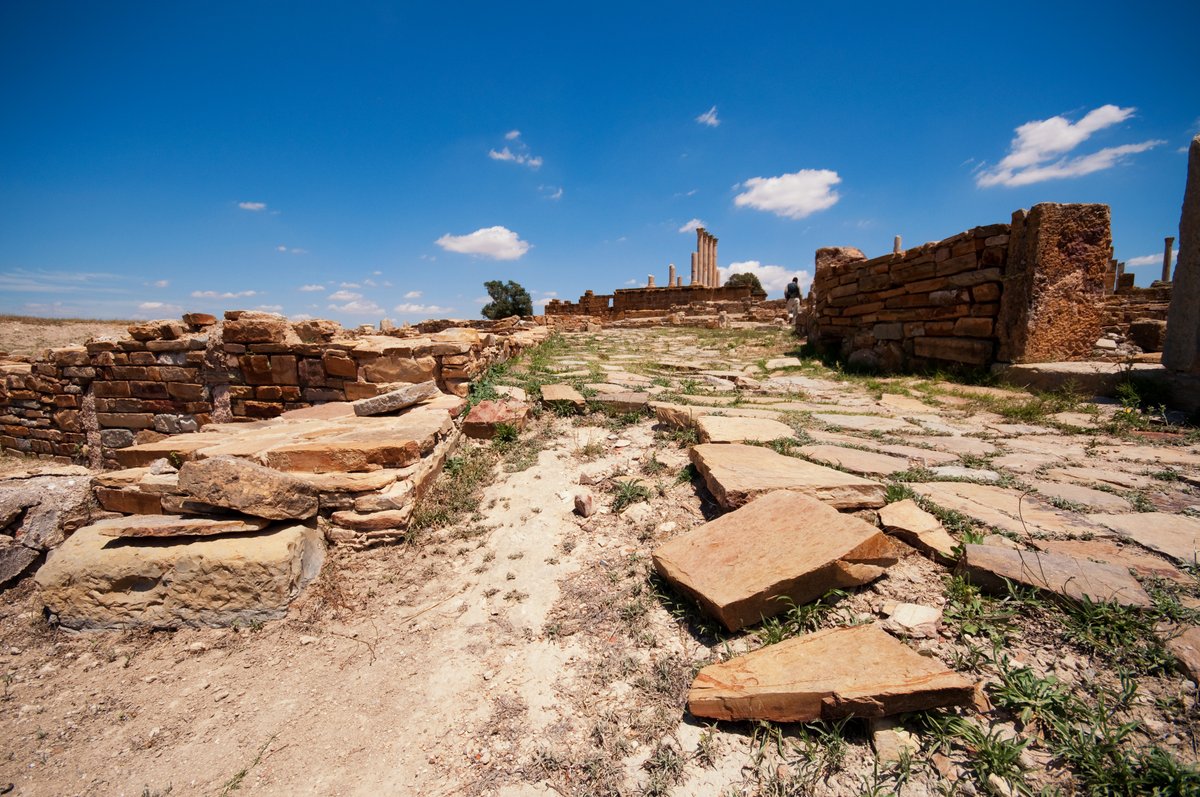
The ruins stand on flat ground and are constructed of stone blocks. While some believe it was commissioned by the local proconsul Gordian, who became Emperor Gordian II, it is more likely that the young Gordian III intended the amphitheatre to be an embellishment of his hometown. The project remained unfinished following his death.
During the Middle Ages, the amphitheatre served as a fortress, providing shelter during the attacks of the Vandals in 430 and the Arabs in 647. By the end of the 18th and throughout the 19th century, it was used as a saltpetre factory. In the second half of the 19th century, the structure was repurposed for shops, dwellings, and grain storage.
The site has been featured in various media, including the film Monty Python's Life of Brian, the television travel series Long Way Down, and a 1996 Nike commercial titled 'Good vs Evil'. Today, it remains a significant archaeological site and a UNESCO World Heritage Site.
Sources: Wikipedia, OpenStreetMap, Wikidata, Wikimedia Commons
Written by Mutabor
Discuss this with the author and others
No comments yet. Be the first to start the conversation.