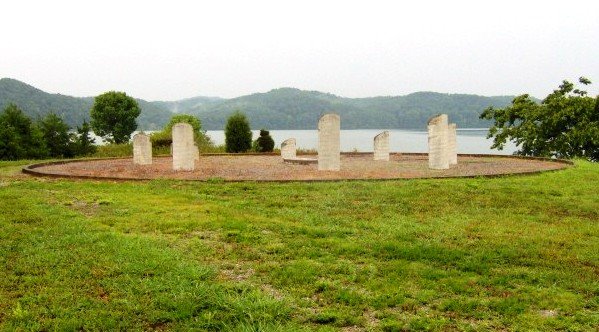
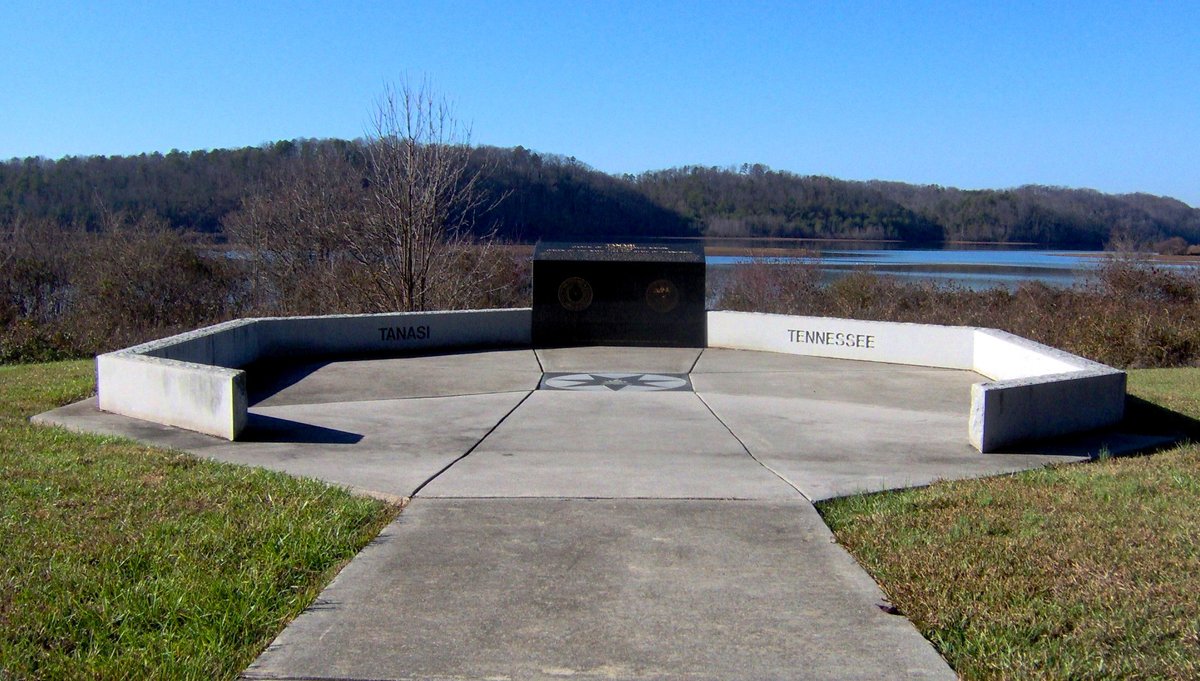
Developing after nearby Tanasi, Chota was the most important of the Overhill towns from the late 1740s until 1788. It replaced Tanasi as the de facto capital, or 'mother town' of the Cherokee people. A number of prominent Cherokee leaders were born or resided at Chota, among them Attakullakulla, Oconostota, Old Hop, Old Tassel, Hanging Maw, and Nancy Ward.
In 1730, Moytoy of Tellico was crowned 'Emperor of the Cherokee,' shifting the capital to Great Tellico. However, after Moytoy died in 1741, Conocotocko, called Old Hop by the English, was the head man at Chota and began to consolidate power. By 1753, Chota had usurped Great Tellico as the 'mother town' of the Overhill Cherokee.
Relations between the British and Cherokee soured by 1760, erupting into open conflict. After Cherokee warriors laid siege to Fort Loudoun, the garrison surrendered, and the Cherokee took plunder to Chota. In late December 1761, military officer Henry Timberlake reached Chota as part of a friendship delegation. In a ceremony inside the Chota townhouse, Ostenaco ceremoniously buried a hatchet to symbolize peace. Timberlake later recorded 52 dwellings and a townhouse in his map of the Cherokee country.
Sources: Wikipedia, OpenStreetMap, Wikidata, Wikimedia Commons
Written by Leroy
Discuss this with the author and others
No comments yet. Be the first to start the conversation.