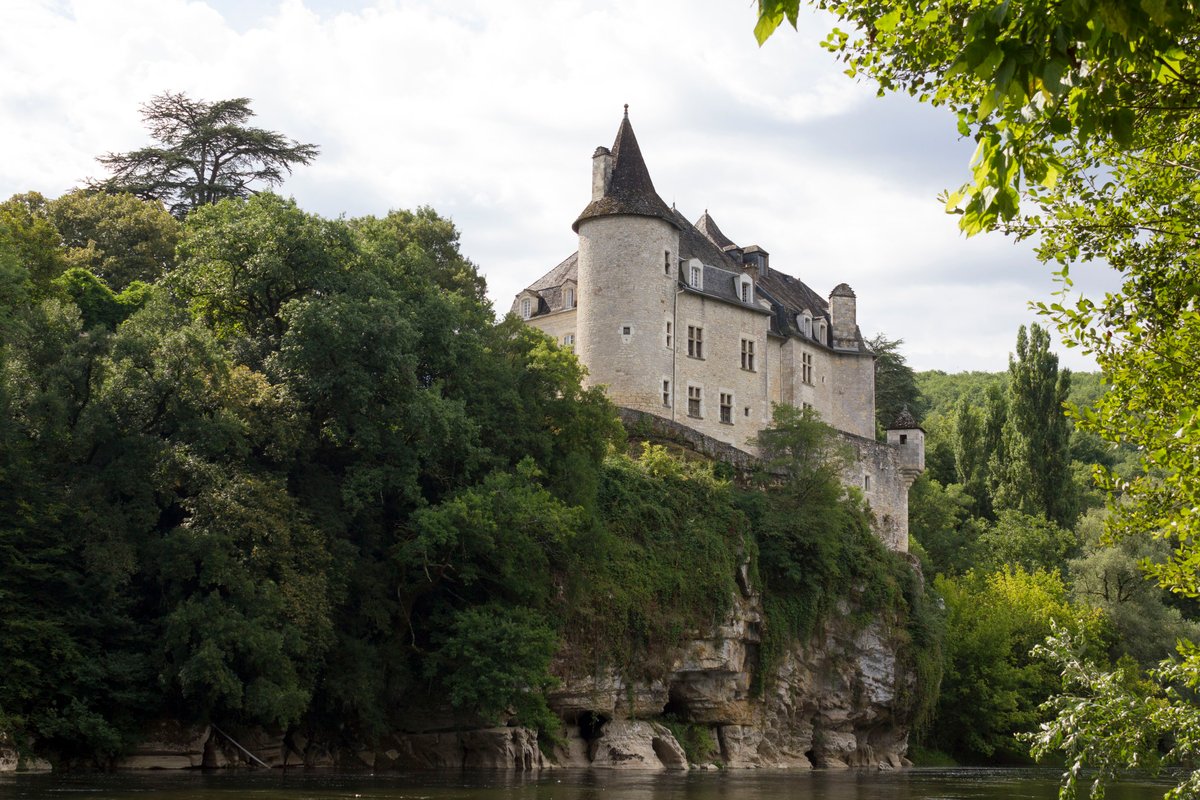

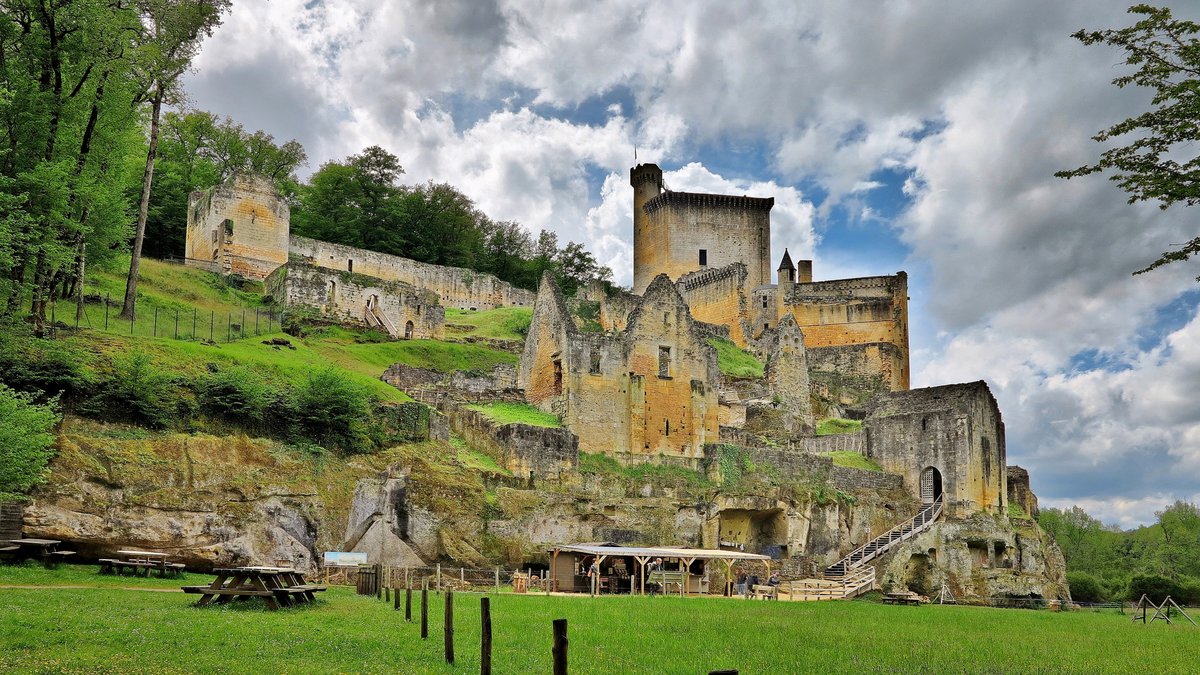
In 1622, an order from the Parlement of Toulouse commanded the destruction of the château de la Treyne. The decree was issued because of the rebellion and excesses of the son of Jean de La Ramière, who was found guilty of lèse-majesté. However, this order of destruction was never executed. The estate remains a significant historical site, characterized by a 14th-century square keep joined to the north by a large round tower, completed as part of a restoration before 1643.
The castle has a long history of religious and political shifts. In the 1500s, it was considered a stronghold for the Huguenots. In 1586, the building was set on fire by order of the lieutenant of Henri III. It was later rebuilt and expanded by various owners, including the Cardaillac family, who enlarged the structure around 1760.
The property underwent further significant changes in the 20th century. In 1910, the castle and its domain were sold to Auguste-Gabriel Savard, a Parisian industrialist. He oversaw the restoration and arrangement of the interiors and commissioned the creation of a garden in the French style by the botanist Édouard André.
Sources: Wikipedia, OpenStreetMap, Wikidata, Wikimedia Commons

Written by Nicolo Ciampini
Discuss this with the author and others
No comments yet. Be the first to start the conversation.