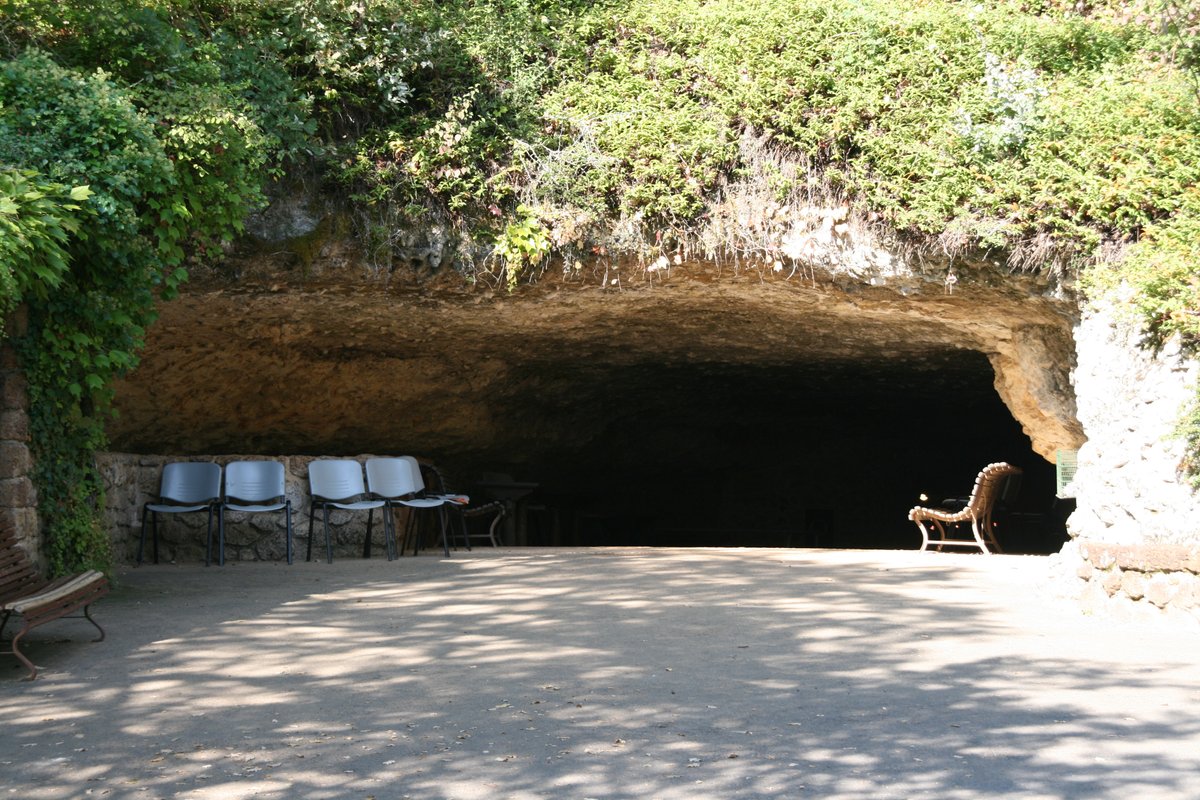

Tucked away in the verdant hills of the Dordogne département in southwestern France, the Rouffignac Cave presents a captivating blend of nature and history. This remarkable cave system, also known as the Cave of the Hundred Mammoths, contains over 250 engravings and cave paintings dating back to the Upper Paleolithic. Despite being first mentioned in the 16th century, this cave was only rediscovered and confirmed by archaeologists in the early 20th century.
The Cave of the Hundred Mammoths, so named for the numerous engravings of mammoths that adorn its walls, is located approximately 5 kilometers (3.1 miles) south of Rouffignac on a hillside near the La Binche river. The rocks of the cave consist primarily of flat-lying limestones, rich in flint nodules, though over time, the cave system has expanded to encompass more than 8 kilometers (5 miles) of underground passageways. The cave is organized around a fractal-like dendritic pattern, indicating that it was not formed at random, but rather through specific infiltration of water into the bedrock.
The Rouffignac Cave was first mentioned in 1575 by François de Belleforest, who noted its extensive paintings and animal traces. Visitors of the cave in the 19th century included renowned archaeologists such as Henri Breuil, André Glory, and Édouard-Alfred Martel. In the early 20th century, the cave was rediscovered and confirmed by Louis-René Nougier and Romain Robert, two prehistorians from the Pyrenees. During the Second World War, the Rouffignac Cave served as a hiding place for the French Resistance.
Sources: Wikipedia, OpenStreetMap, Wikidata, Wikimedia Commons
Written by Nicolo Ciampini
Discuss this with the author and others
No comments yet. Be the first to start the conversation.