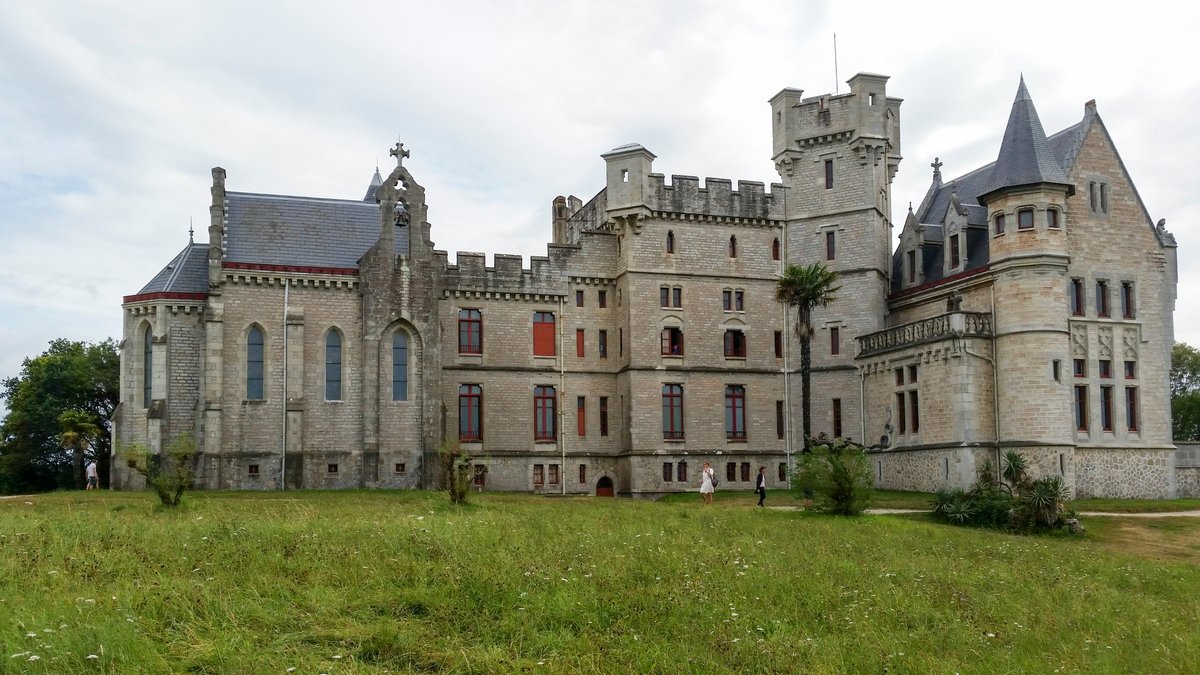

Nestled in the heart of Hendaye, Pyrénées-Atlantiques, France, the Château d’Abbadia – a historical monument and ‘Maison des Illustres’ – is an architectural marvel packed with historical artifacts. Constructed between 1864 and 1879 by architects Eugène Viollet-le-Duc and Edmond Duthoit, under the commission of the daring explorer Antoine, this Neogothic fortress boasts authentic scientific collections, archives, and 19th-century furniture. These elements form the backbone of the castle's cultural legacy.
But what, pray tell, does the exterior and interior of the castle reveal? The facade exudes an Irish Gothic Revival flair, while the interior offers a captivating fusion of Radiant Gothic and Orientalism, with hints of the Abbadian brothers' Ethiopia explorations hidden in every carved detail. Intricate designs and decorative elements abound, emblazoned with enigmatic symbols such as elephants, snakes, and crocodiles – wonder what tales they tell?
As you enter, be prepared for a spellbinding vista – grand details, intricate designs, and secret whispers that will leave you spellbound. Inscriptions in various languages (Basque, Irish, Guèze, Arabic, Latin, English, and German) adorn the walls, with exquisite textiles, paintings on plaster, and Earthenware decor befitting a fairy tale. Four main halls – the room of honor, the Persian boudoir, the Moorish smoking room, and the Arabic living room, each filled with captivating paintings, stained glass windows, and Oriental-inspired furniture – invite you to unravel their secrets.
Yet, what lies beneath these opulent layers remains a riddle unsolved, perhaps revealing a whole new chapter of Château d’Abbadia's history.
Sources: Wikipedia, OpenStreetMap, Wikidata, Wikimedia Commons
Written by Nicolo Ciampini
Discuss this with the author and others
No comments yet. Be the first to start the conversation.