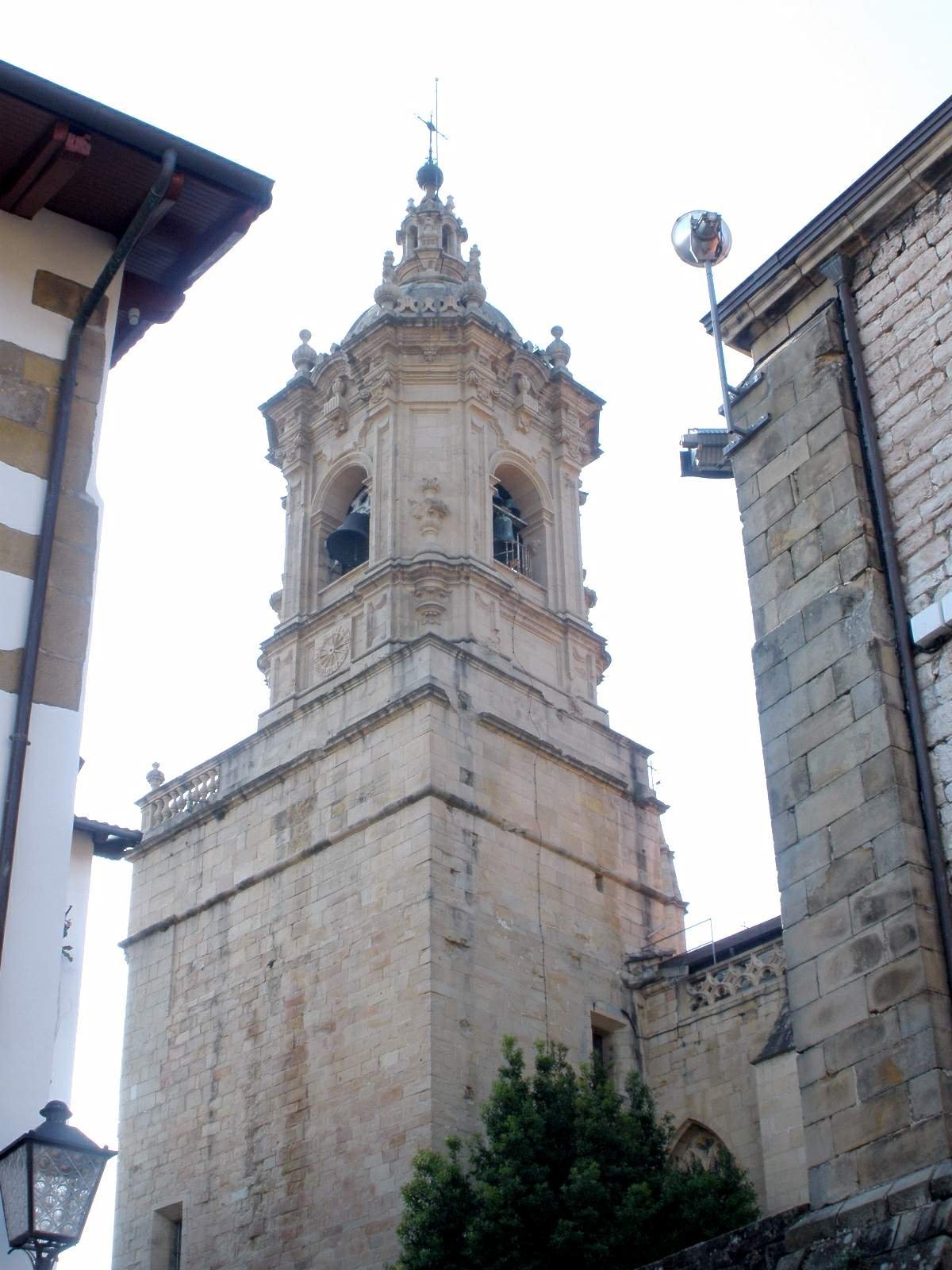

The Church of Nuestra Señora de la Asunción y del Manzano in Hondarribia was built on the site of a Romanesque temple, its foundations laid in 1471 by the Count of Armagnac. This is not a footnote in the history of the building - it is the building itself. The Romanesque stones repurposed in the 15th century still echo in the church’s thick walls and polygonal apses. Construction began in the second half of the 15th century, during a period of political and military upheaval.
The town of Hondarribia was caught between the ambitions of Castile and Navarre, and the church’s construction was repeatedly interrupted. In 1474, work started with the apse, which became the church’s easternmost feature. The nave was built later, its cylindrical piers dividing the space into three naves of equal width. The Latin cross plan was shaped by the need to accommodate both religious and defensive functions, its walls thick enough to serve as part of the medieval city’s fortifications.
The church’s architecture is a palimpsest of styles. Its early Gothic elements - the pointed arches and ribbed vaults - were gradually overlaid with Renaissance influences, particularly in the 16th century when the north entrance was rebuilt. The 1566 renovation introduced a Renaissance-style façade, though the original Gothic entrance remains visible in the church’s north wall. By the 17th century, the Baroque tower, designed by Francisco de Ibero, was added on the site of a former tower house that had once stood on the southern side of the church. This tower, built on the remnants of the Romanesque structure, became a defining feature of the church’s silhouette.
The church’s interior reflects this layered history. The 1910 restoration by architect Fernández de Casadevante removed later Baroque additions, restoring the original Gothic and Renaissance elements. The Neo-Gothic altarpiece, inaugurated in 1914, stands apart from the wall to highlight the eastern apse, its intricate carvings echoing the ancient Romanesque craftsmanship. Earlier altarpieces had been destroyed by fire, though some carved details survived, their weathered surfaces still visible in the church’s shadowed corners.
Today, the church is a parish church with a richly layered history. Its walls still echo with the voices of centuries - the Roman builders, the medieval masons, the Renaissance artisans, and the Baroque architects who shaped its form. The church’s architecture is not just a relic of the past, but a living archive of the region’s turbulent history, its foundations built on a Roman temple that predates the city itself.
Sources: Wikipedia, Wikimedia Commons, The church of Santa María de la Asunción y del Manzano, Art and faith | Nuestra Señora de la Asunción y del Manzano
Written by Nik Frost
Discuss this with the author and others
No comments yet. Be the first to start the conversation.