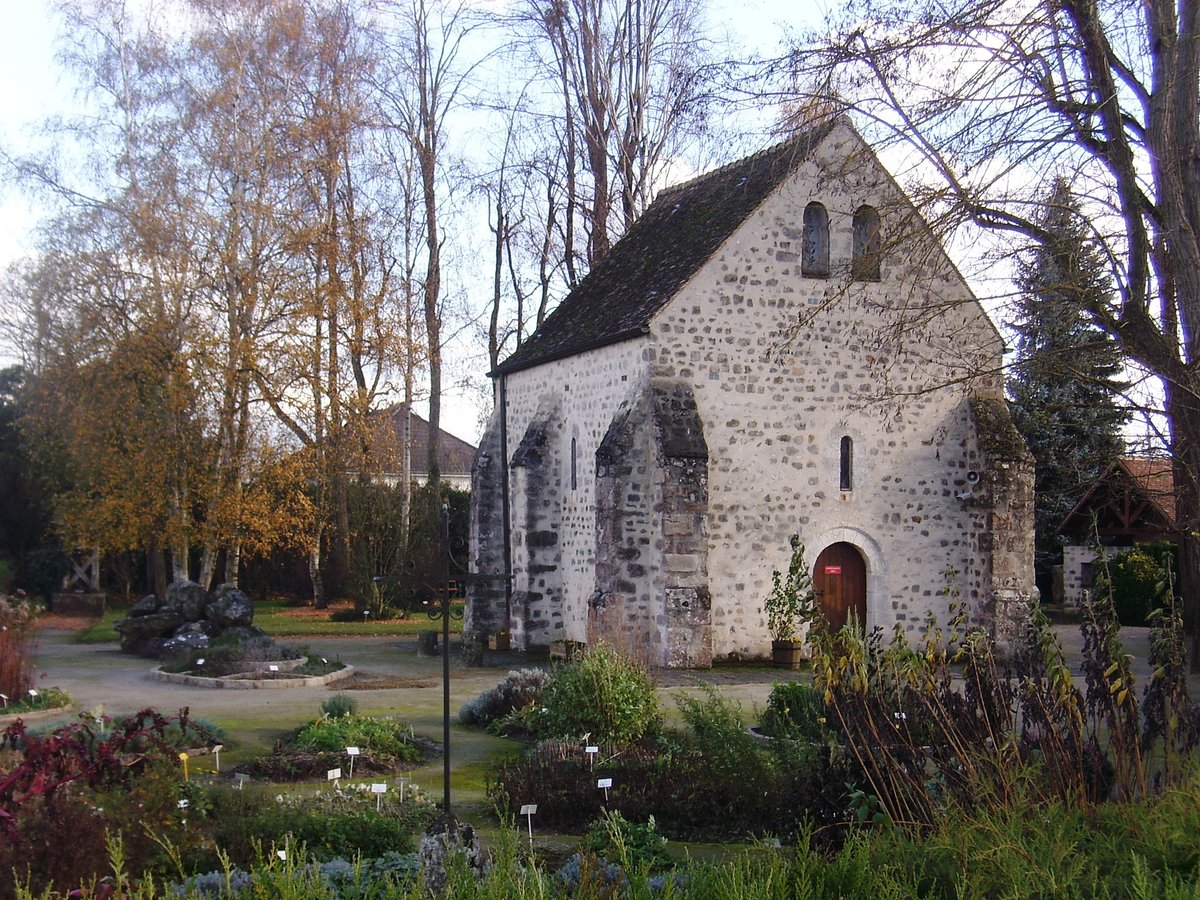

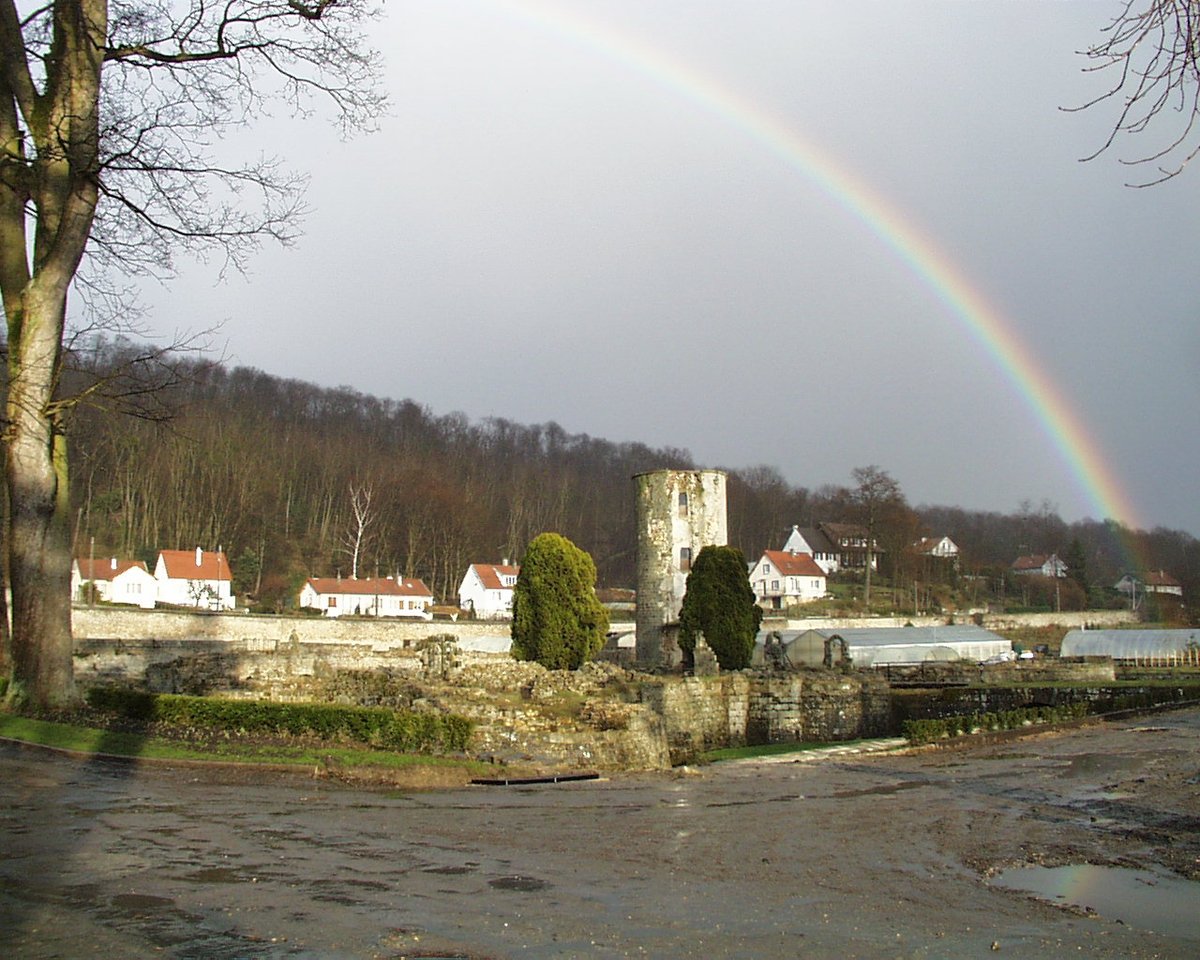
The chapel of Saint-Blaise-des-Simples in Milly-la-Forêt is the sole remaining vestige of a 12th-century maladrerie. Saint Blaise was known as a healer of medicinal herbs, called "simples," which gave the chapel its name. By the 18th century, the rest of the leper colony had fallen into ruin, leaving only the chapel standing.
In 1959, at the request of local officials, Jean Cocteau was invited to decorate the interior of the chapel. He painted the walls using lime-wash to create images of the "simples" - such as belladonna and valerian - and scenes representing the Resurrection, which is symbolized by a cat. He also designed the chapel's stained glass windows.
Cocteau was so attached to the site that he wished to be buried there upon his death in 1963. In 1964, his remains were transferred to a vault in the chapel he had decorated. His grave is covered by a stone slab featuring an epitaph in his own handwriting: "Je reste avec vous."
Today, the chapel is a listed historic monument. It is surrounded by a garden where the medicinal herbs are still grown. In this garden, a market bell from the past is also on display, marking the site's long history as a place of worship and healing.
Sources: Wikipedia, OpenStreetMap, Wikidata, Wikimedia Commons
Written by Nicolo Ciampini
Discuss this with the author and others
No comments yet. Be the first to start the conversation.