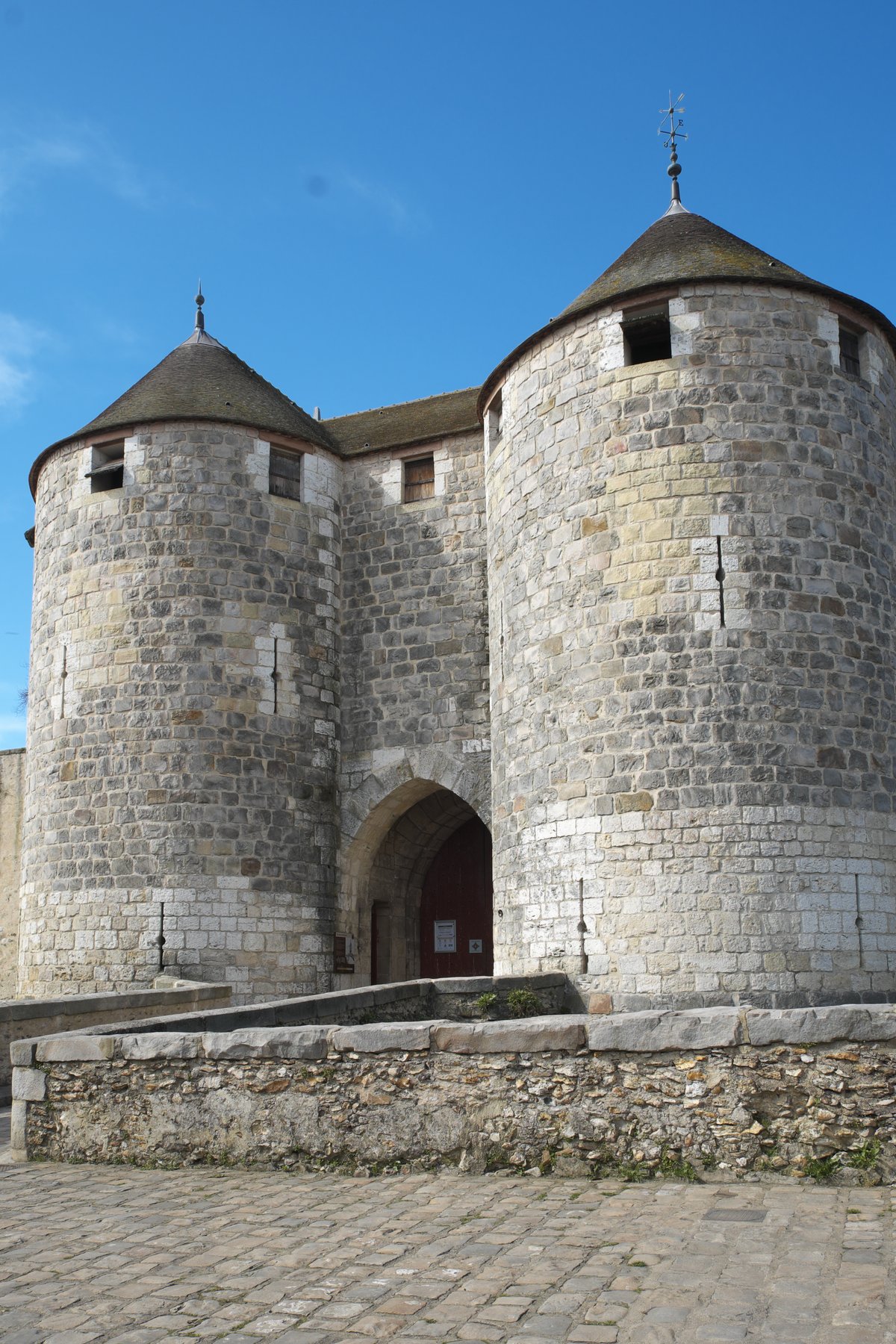

The Château de Dourdan rises above the town of Dourdan in the Essonne region of France like a sentinel of the past. Commissioned by King Philip Augustus in the 1220s, this castle was anything but ordinary. Its unique geometric pattern and isolated donjon, reminiscent of the castle of the Louvre, were typical of the military architecture of the 13th century, with similar structures found at Flint Castle in Wales and Yverdon Castle in Switzerland. The donjon itself measures approximately 30 meters in height and 13.6 meters in diameter, serving as the castle’s primary defensive component.
The châtellenie of Dourdan was part of the Crown lands of France (Domaine royal) from the 10th century. In its early days, the château was a royal residence, housing figures such as Jean de Berry in the 14th century. It was also besieged during the French Wars of Religion. Among some notable personages who resided in the castle were Philip IV of France's daughter-in-law, Joan II, Countess of Burgundy, detained there from 1314 to 1315 in relation to the Tour de Nesle affair, and La Hire, one of Joan of Arc's comrades-in-arms.
By the end of the 17th century, the Château de Dourdan was given to the Duke of Orléans who turned it into a prison. Today, the castle houses a museum of local history.
Sources: Wikipedia, OpenStreetMap, Wikidata, Wikimedia Commons
Written by Nicolo Ciampini
Discuss this with the author and others
No comments yet. Be the first to start the conversation.