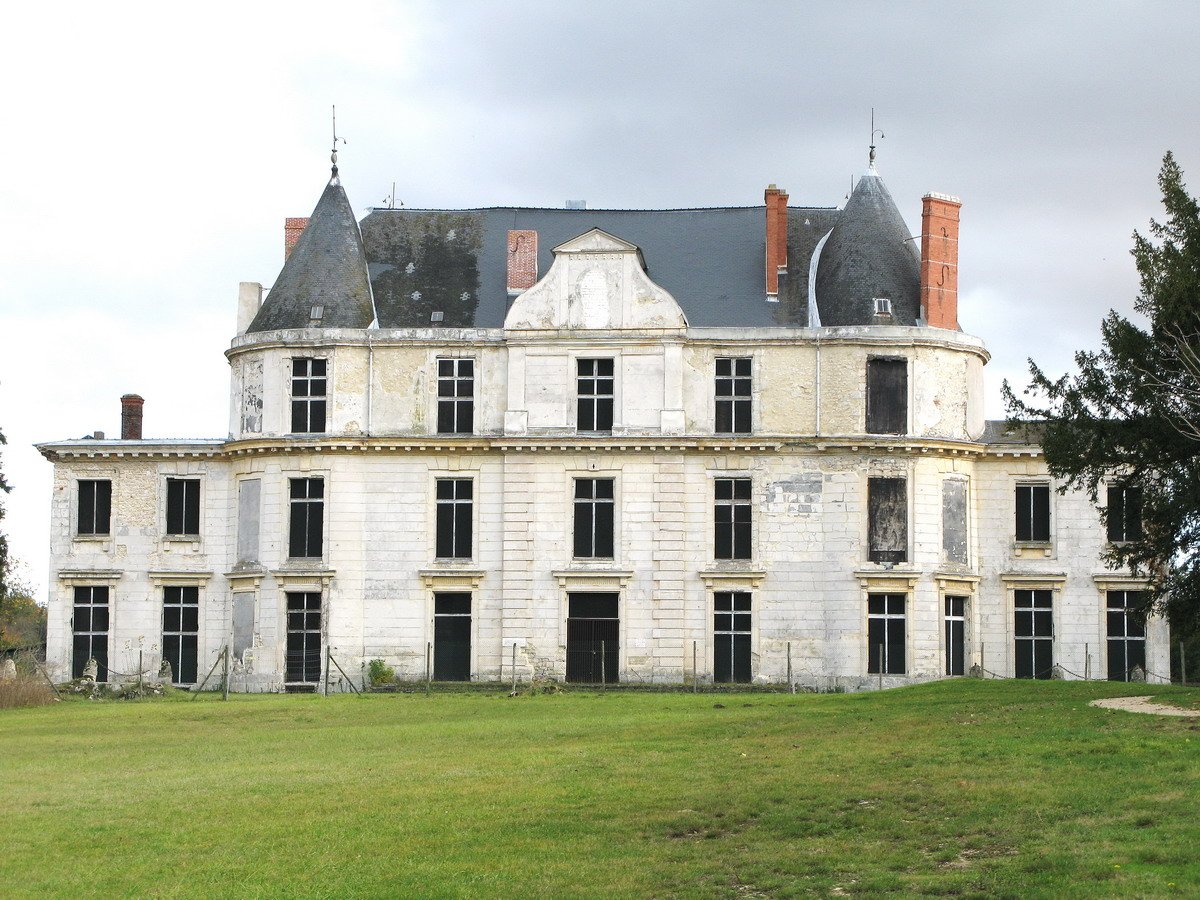

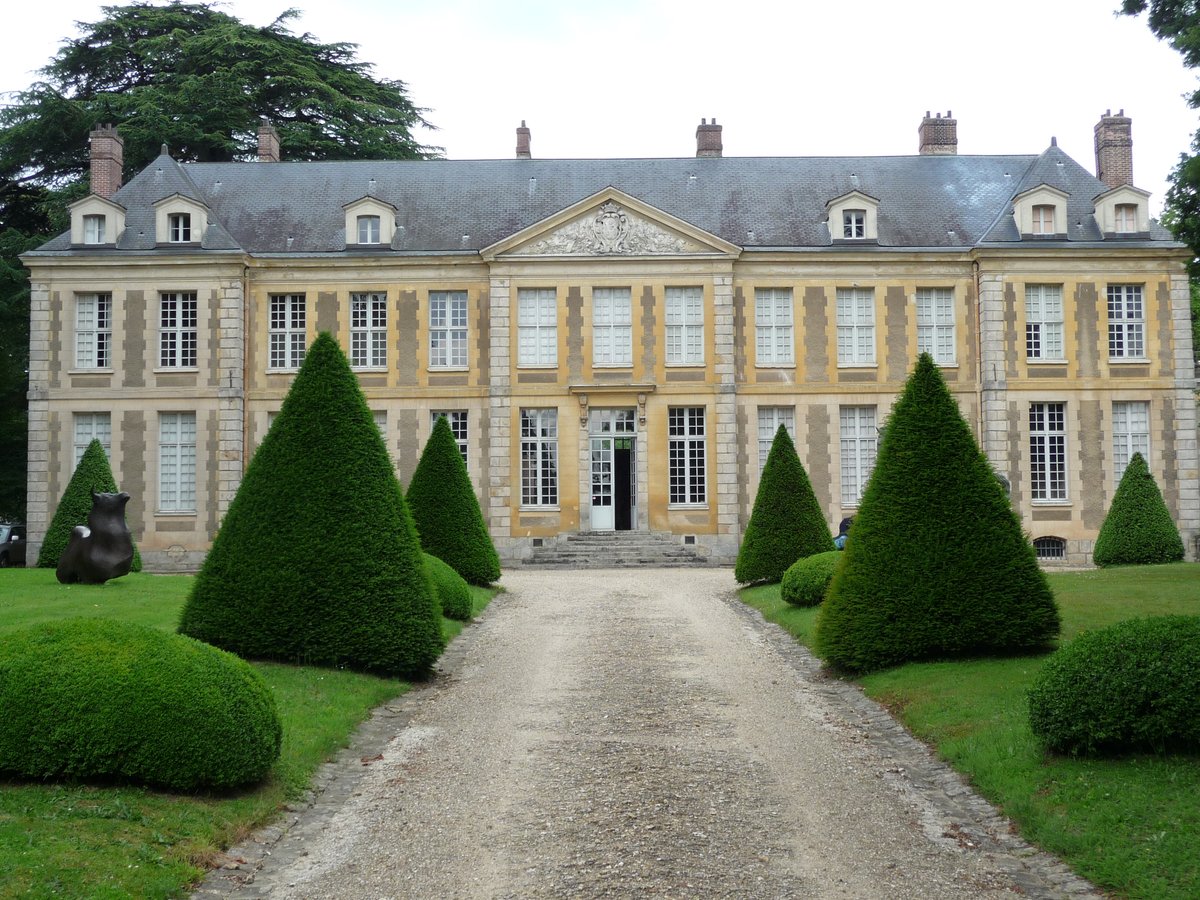
The Château de Méréville is a chateau in Méréville in the valley of the Juine, France. The financier Jean-Joseph de Laborde began to rebuild the château and create a large landscape park in 1786 after purchasing the property. He commissioned major artists such as Bélanger, the famous cabinetmaker Leleu, the sculptor Augustin Pajou and the painter Claude Joseph Vernet. However, Bélanger's plans were threatening to prove too expensive even for the marquis, and in May 1786, Bélanger was sacked as chief architect and replaced by Hubert Robert.
The park was constructed on marshy land that required exceptional hydrographic work, with the rerouting of the Juine taking a long time to achieve. A highlight of the park was the rostral column built on a small island in the centre of the main lake in 1787 to commemorate the marquis' two young sons, who died at sea in Lituya Bay during the La Pérouse expedition. The château itself was first built as a medieval fortress, then rebuilt on the medieval buildings' remains in 1768 for the conseiller du roi Jean Delpech.
After being owned by a Japanese pension fund who planned to turn it into a golf resort, the chateau was bought by the regional government in 2000. Having reopened to the public in 2018, the restored garden was recognized as a remarkable garden in 2019. As of May 2026, the restoration of the chateau's framework and the complete renovation of the roof were reported to be nearing completion.
Sources: Wikipedia, OpenStreetMap, Wikidata, Wikimedia Commons
Written by Nicolo Ciampini
Discuss this with the author and others
No comments yet. Be the first to start the conversation.