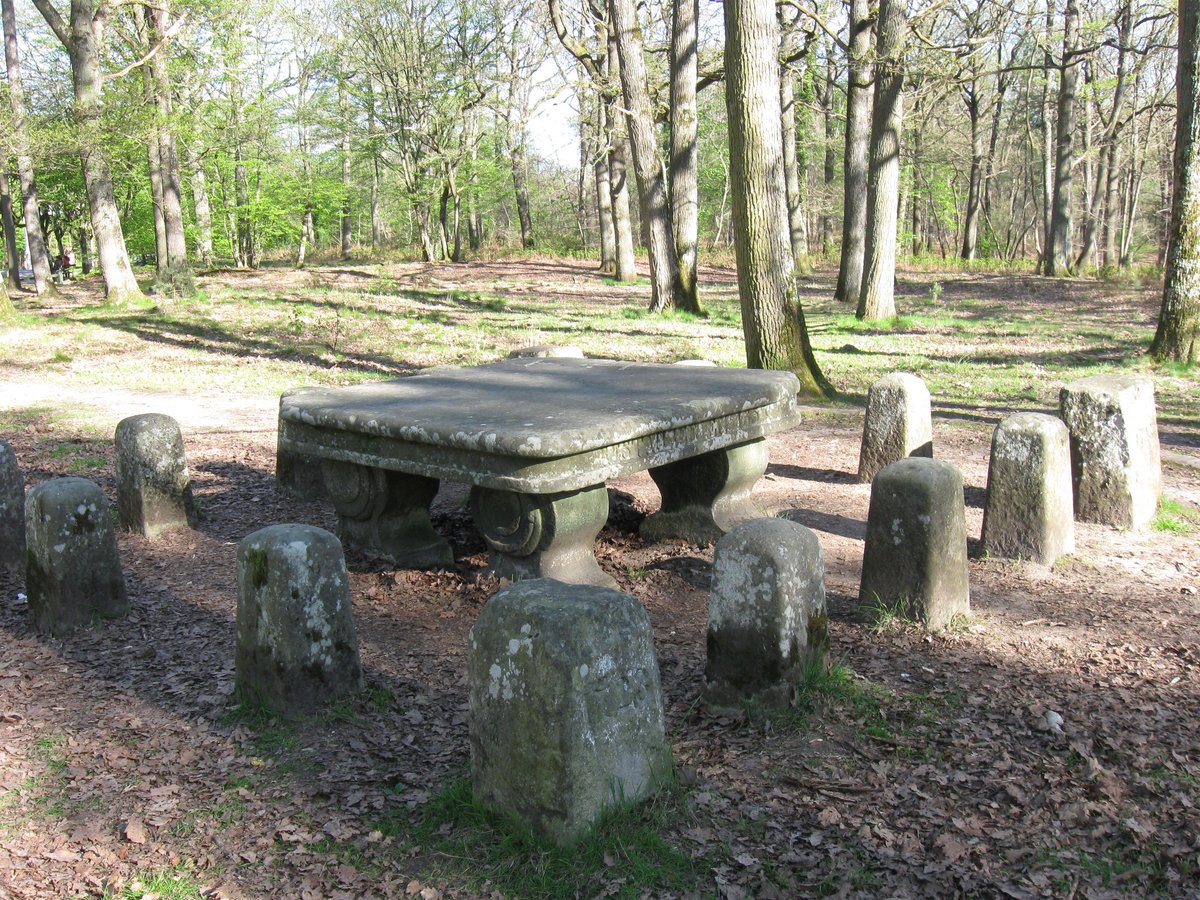

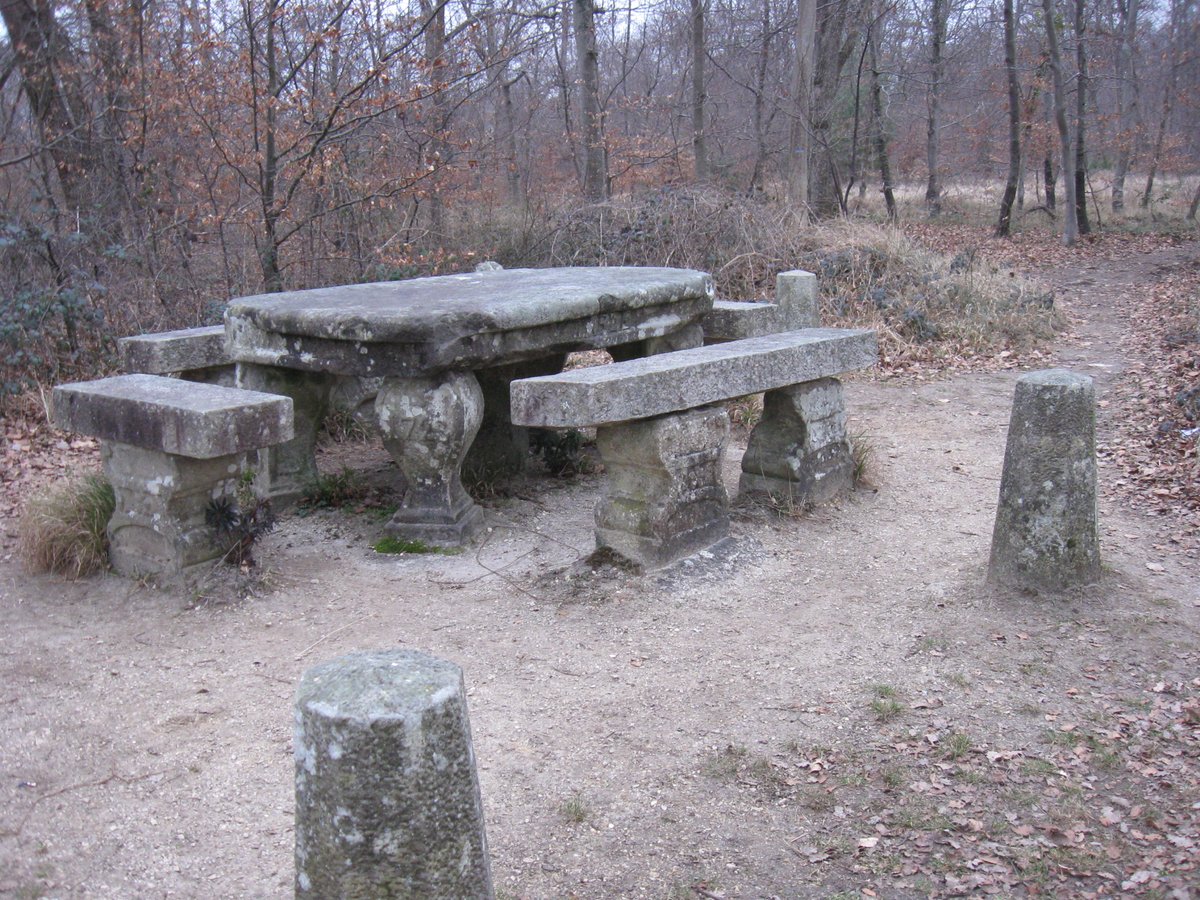
The Table du Roi is a monument located in the forest of Fontainebleau, in the commune of Fontainebleau. While the forest of Bière was incorporated into the royal domain in 1068, the current stone table was established in 1723. For a long time, users of the forest were required to gather at this site to pay their royalties to the master of waters and forests, rendering homage to the king. This procedure eventually came to an end during the Revolution.
Historical records describe the nature of these levies, including contributions of meat, cakes, and small sums of money. Following the collection of these rights, a banquet was held around the table, where the food was consumed by the officers of the waters and forests while the money fed the treasury of the king's domain. Although the table was damaged during the Revolution, it was restored in 1854.
In the first half of the 20th century, the table served as a starting point for many cyclo-cross championships, with the finish at the table of the Grand Maître. On October 13, 1870, a company of the 2nd legion of volunteers of the Nièvre engaged a column of dragons forced to flee towards Melun. The table and its surrounding markers were listed as historical monuments in 1926. Charles Colinet, in his 1893 narrative, detailed the various crosses, tables, and pyramids existing within the forest.
Sources: Wikipedia, OpenStreetMap, Wikidata, Wikimedia Commons



Written by Nicolo Ciampini
Discuss this with the author and others
No comments yet. Be the first to start the conversation.