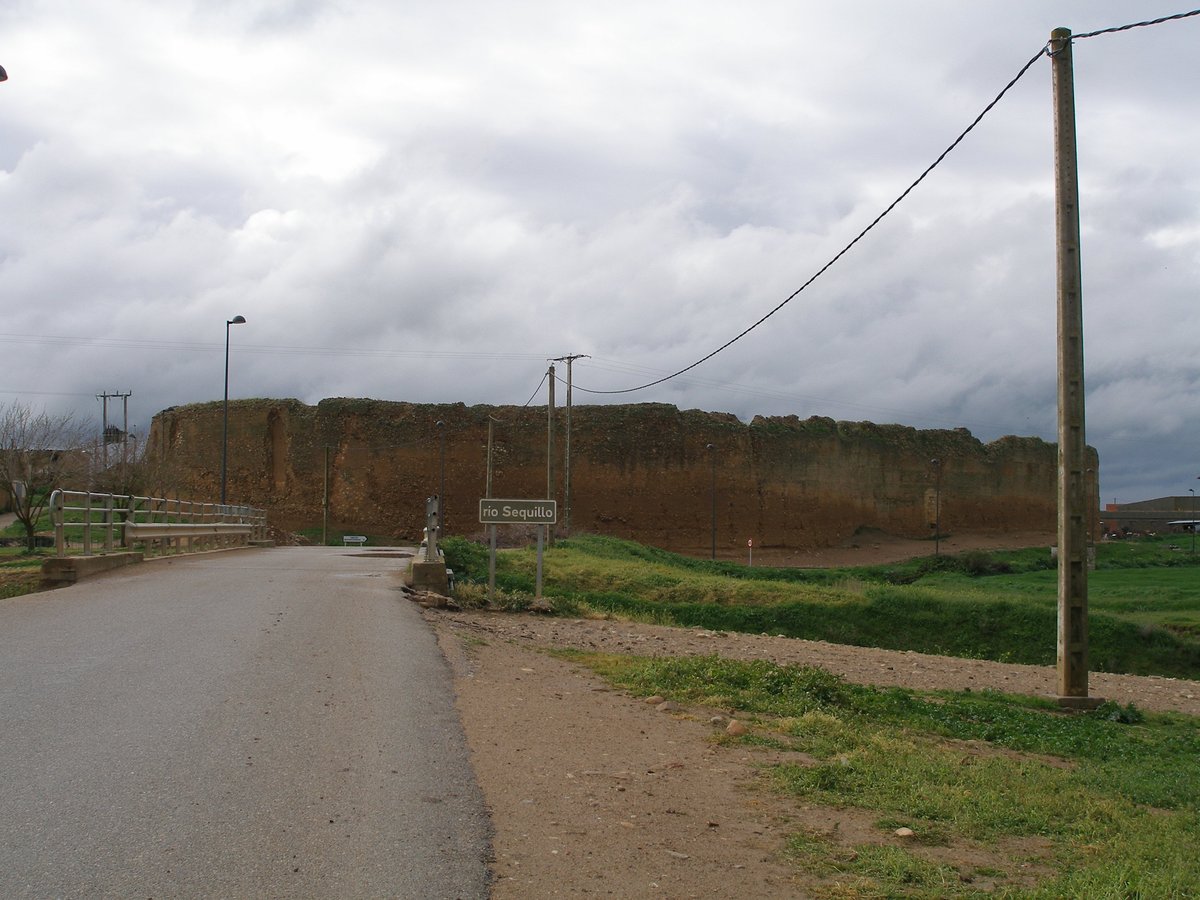

The Castillo de San Pedro de Latarce sits by the río Sequillo on a small rise that dominates the village pass from the bridge. Built as a defensive construction by Alfonso IX of León in the late 12th century to reinforce the border against the Kingdom of Castile, it features an oval plan. It was once constructed with large dimensions of lime and stone rammed earth, using a perfected technique involving paired rods and needles. This specific construction system allows it to be associated with distant structures like those in Granadilla and Rueda.
The castle is recognized for its architectural exceptionality and is the best-preserved and least transformed within its group of enclosures. It was later updated with a masonry castle and a large gate tower during the time of María de Molina. It eventually became the property of the Caballeros Templarios, who maintained a bailía there. Later, the Bazán family built a palace inside it with large windows facing the vanished medieval bridge. After being abandoned, interior noble buildings were dismantled to build a house outside, leading to a legal dispute in the late 18th century. Finally, a granary was built inside, which later became a residence and agricultural buildings, now out of use.
Archaeological potential is significant, as a 2011 campaign exceeded expectations. Excavations revealed the original gate of the enclosure and its tower, identifying at least three levels of occupation. Because there are fills of more than five meters inside the enclosure and traces of old constructions visible on the surface, there is much left to discover. The castle is currently in a state of progressive ruin, with some areas at risk of collapse, though the original gate was consolidated during the 2011-2012 intervention.
Public access to the exterior is free, but viewing the interior requires visiting the ayuntamiento during office hours. The castle is municipal property, having been purchased by the town council between 1999 and 2013. While it has no specific daily use, the municipality occasionally organizes events such as concerts and medieval markets inside the walls.
Sources: Wikipedia, OpenStreetMap, Wikidata, Wikimedia Commons
Written by Nicolo Ciampini
Discuss this with the author and others
No comments yet. Be the first to start the conversation.