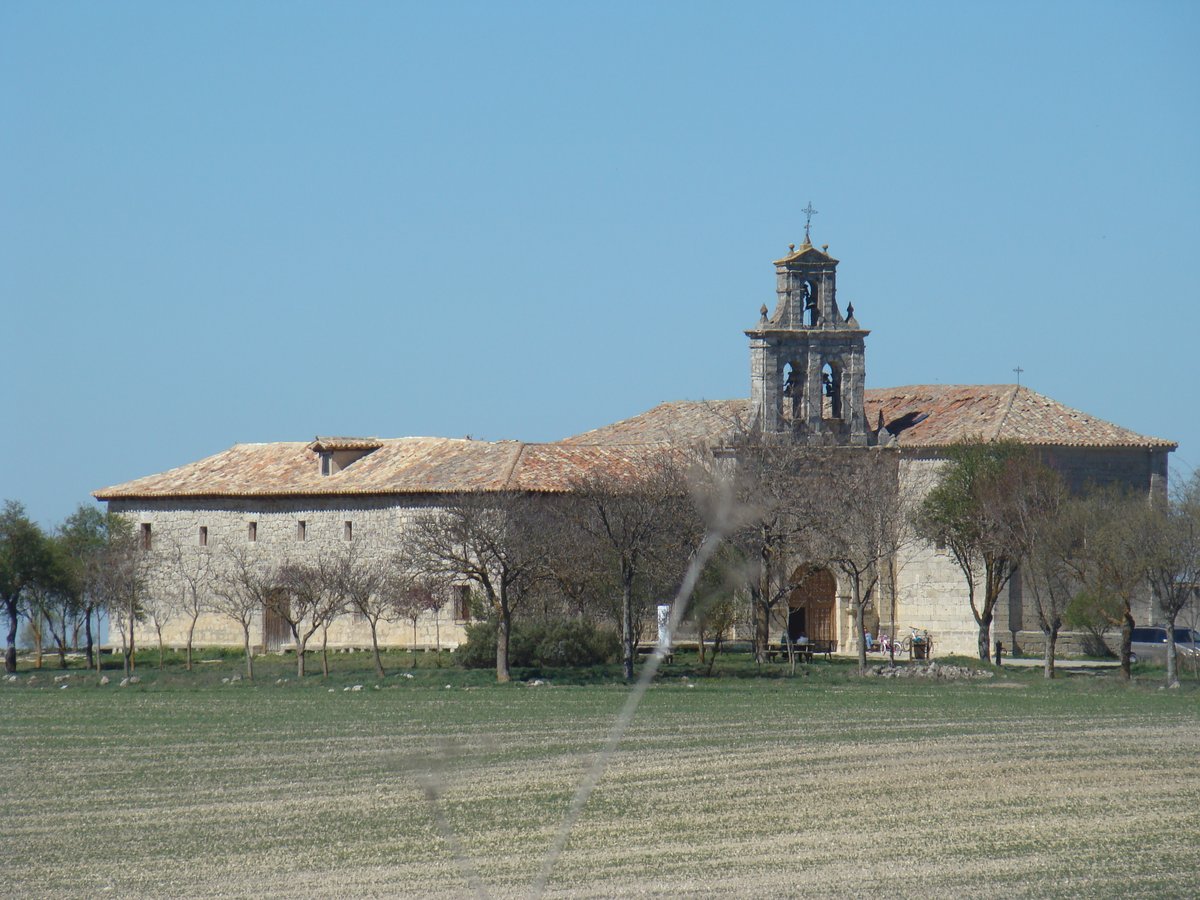

The archaeological site of La Ermita, located in Tiedra, Valladolid, Castilla y León, Spain, is set on a spur that overlooks the Duero River. Once a bustling Roman city, Amallóbriga, as it was known, has been covered by centuries of history. The current village of Tiedra sits about 500 meters from the archaeological site.
Tiedra has its origins in a city called Vaccean, which was later Romanized and identified as Amallóbriga or Abulobriga. The archaeological site of La Ermita shows the superposition of material from the Second Iron Age (Vacceo era) and the Roman era.
One fragment of terra sigillata from the Roman era, found in the excavation, has circles decoration and others have figurative decoration. The archaeological study of Amallóbriga began in 1991 and was expanded in 2001.
Remains of Vaccean and Roman ceramics were found in the cemetery.
In 17-02-1994, the site was granted the distinction of Bien de Interés Cultural with number RI-55-0000384.
Sources: Wikipedia, OpenStreetMap, Wikidata, Wikimedia Commons
Written by Nicolo Ciampini
Discuss this with the author and others
No comments yet. Be the first to start the conversation.