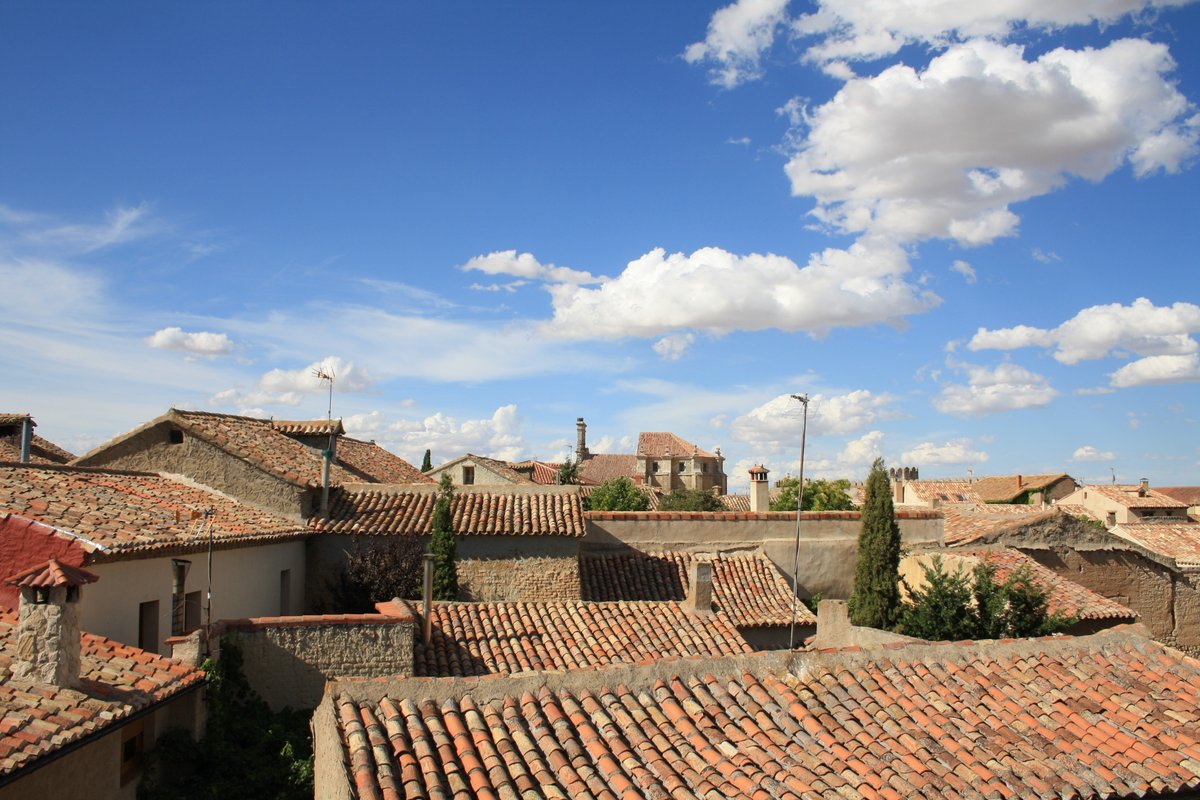

Urueña, a municipio in the province of Valladolid, Castile and León, Spain, is a charming medieval town that has been beautifully restored to reflect its rich past. The well of clean water that has existed at the foot of the hill where the town stands since antiquity is the heart of Urueña. The town retains much of its walls, including two gates and the castle. The church, Santa María del Azogue, built in gothic-renaissance styles, is still in use today.
Four museums, an old monastery ruin, and the Romanesque-style Ermita de Nuestra Señora de la Anunciada are also found within walking distance of the town. Urueña's history dates back to the earliest Vaccean settlements. It was Romanized at the beginning of the Common Era and Christianized around the 10th century. From the 12th to the 14th centuries, it served as the head of the Infantado of Valladolid. The town’s location, strategically dominating the valley, made it highly attractive to early settlers.
Its name is believed to derive from the Vaccean language: Ur-Uru (water area) and Anna-Eneas (sister). Urueña sits atop a hill, within the foothills of the Torozos Mountains. Urueña is a member of the I.O.B.-International Organisation of Book Towns, a network of villages where second-hand and antiquarian bookshops are concentrated.
Sources: Wikipedia, OpenStreetMap, Wikidata, Wikimedia Commons
Written by Nicolo Ciampini
Discuss this with the author and others
No comments yet. Be the first to start the conversation.