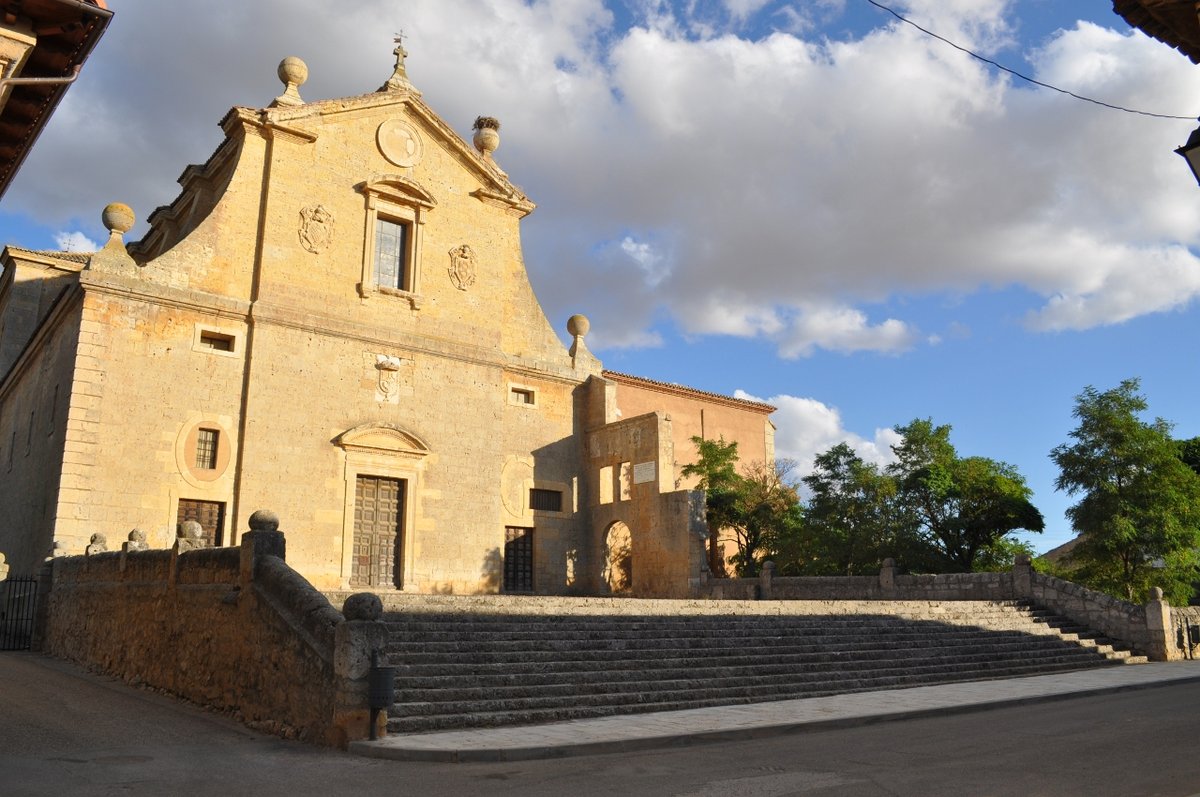

The Collegiate Church of San Luis in Villagarcía de Campos, Spain, was initially commissioned by D.ª Magdalena de Ulloa and her husband D. Luis Méndez de Quijada in the 16th century as their pantheon. Notable architects such as Rodrigo Gil de Hontañón and Pedro de Tolosa were involved in the design and construction. The building is a significant example of contrareformist architecture in Castilla and served as a model for many Jesuit temples until the 17th century. However, its history goes beyond impressive architecture. Over the centuries, it has served as a school, a hospital, and a monastery for children, even being used as a playground by a royal family. Today, it stands as a unique chapter in Spanish history, blending the religious, the royal, and the educational.
Sources: Wikipedia, OpenStreetMap, Wikidata, Wikimedia Commons
Written by Nicolo Ciampini
Discuss this with the author and others
No comments yet. Be the first to start the conversation.