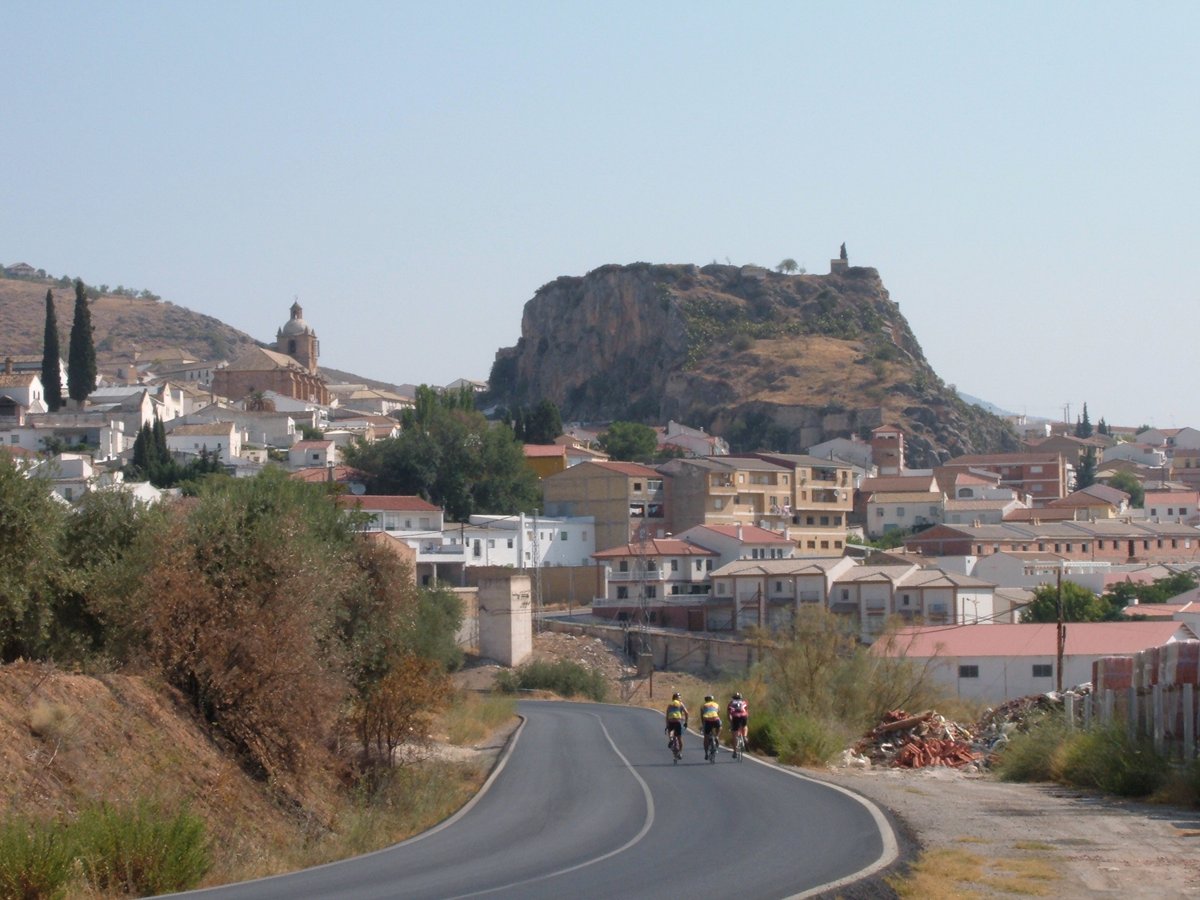

Íllora Castle, prominently situated on a rocky hilltop in the village of Íllora, Spain, is a remarkable example of early medieval military architecture in Andalusia. Dating back to the 9th century during the Caliphate period, the castle offers valuable archaeological and architectural insights into the social organization of fortified settlements and medieval fortification techniques. In the 14th century, the castle underwent significant additions during the Nasrid period, making it an essential part of the defense of the Nasrid Kingdom of Granada.
The castle's complex structure and strategic location reveal its significant role in the region's turbulent history and border defenses. Íllora Castle was part of a strategic network of fortifications along the frontier between the Nasrid Kingdom and Christian territories. It maintained visual contact with nearby castles such as Castillo de Montefrío and Castillo de Moclín, as well as watchtowers like the Torre de Brácana and the atalayas (watchtowers) of La Mesa and La Gallina.
These installations enabled rapid communication and coordinated defense. Today, Íllora Castle stands as a testament to the layered history of Andalusia, reflecting the Caliphate, Taifa, Nasrid, and Christian Reconquista periods. Its ruins offer valuable archaeological and architectural insights into medieval fortification techniques and the social organization of fortified settlements, but the specific ownership of the castle during the Caliphate period remains uncertain, as it may have been owned by Arab rulers, but evidence is limited.
Sources: Wikipedia, OpenStreetMap, Wikidata, Wikimedia Commons
Written by Nik Frost
Discuss this with the author and others
No comments yet. Be the first to start the conversation.