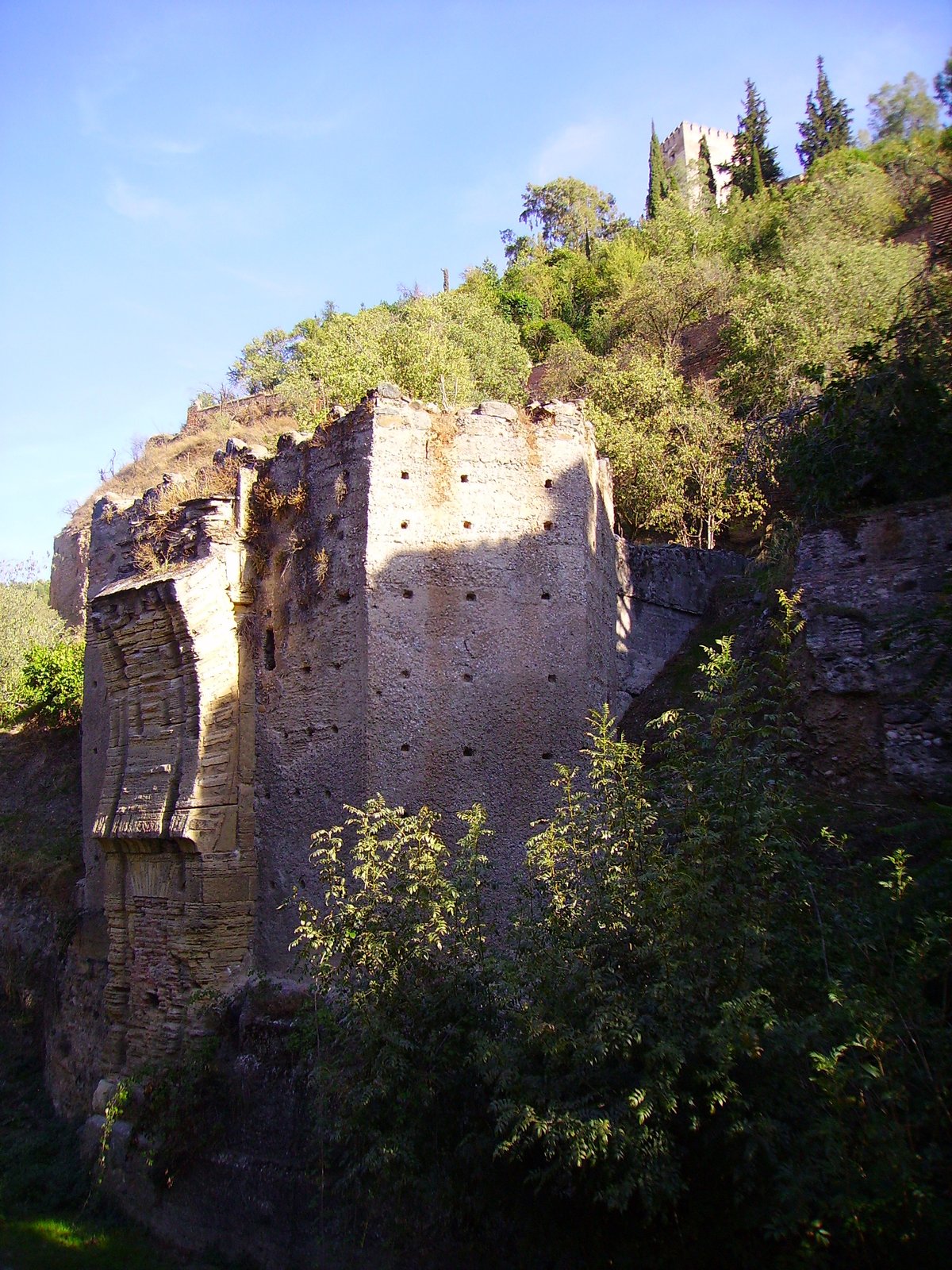

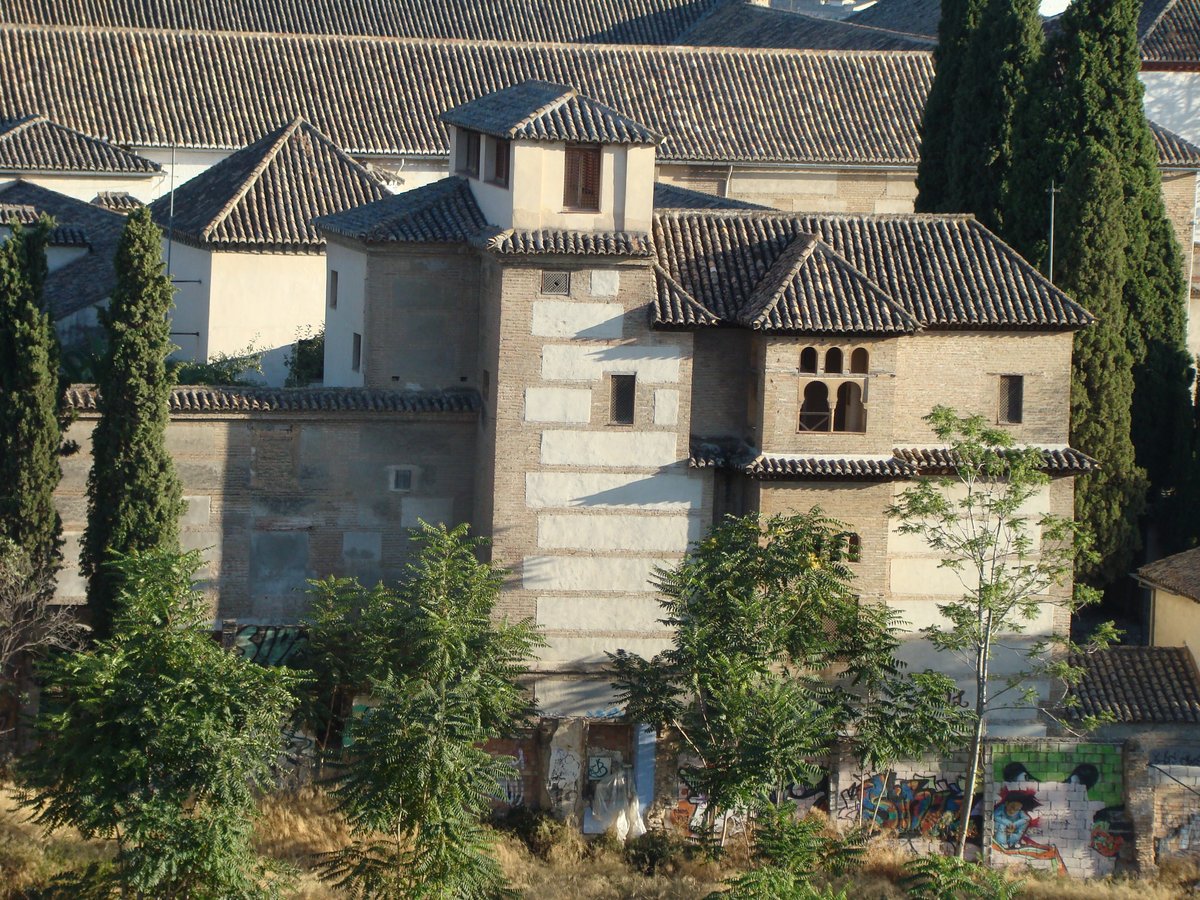
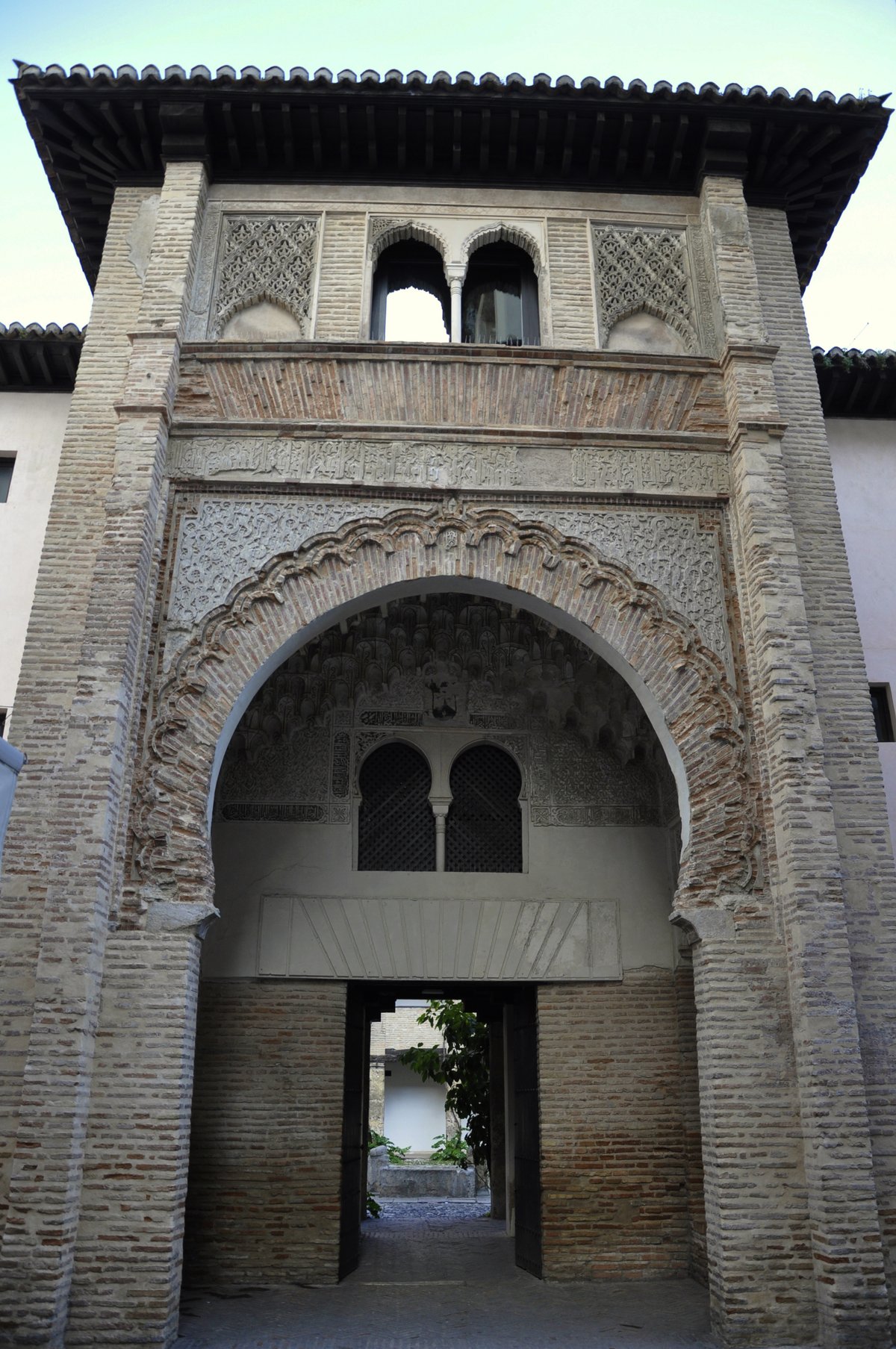
Puente del Cadí is situated in the urban center of Granada, spanning the river Darro. Currently, only one of its two abutments remains standing on the bank of the Alhambra, with a hexagonal tower-like shape and the start of a large horseshoe vault. The structure is built from sandstone masonry. The vault displays alternating recessed and protruding voussoirs that are polychromed, completed by imposts and an alfiz.
Inside the tower, there are two spiral staircases. The masonry shows evidence of housing for scaffolding and a grate that once closed the passage over the river below. A small lintel doorway can be seen in the abutment, which may have belonged to an earlier construction. In 1931, it was declared a Monumento histórico-artístico, making it a monument of cultural interest.
The bridge was one of the main elements of the relationship between Muslim Granada and the river Darro and is mentioned in numerous ancient writings. In 1501, the Catholic Monarchs issued a decree to pave the bridge while it was still standing. However, the architect Torres Balbás, who was the conservator of the Alhambra in the mid-20th century, argued that the current remains do not correspond to the bridge cited by ancient sources.
According to Balbás, the remains cited in historical texts likely correspond to a wall passage over the river. This theory is consistent with the bridge's functional aspects, such as its excessively high elevation relative to its surroundings and its narrow width, which would be of little use for traffic, even for pedestrians. Today, Puente del Cadí is included within the management perimeter of the Alhambra.
Sources: Wikipedia, OpenStreetMap, Wikidata, Wikimedia Commons
Written by Nik Frost
Discuss this with the author and others
No comments yet. Be the first to start the conversation.