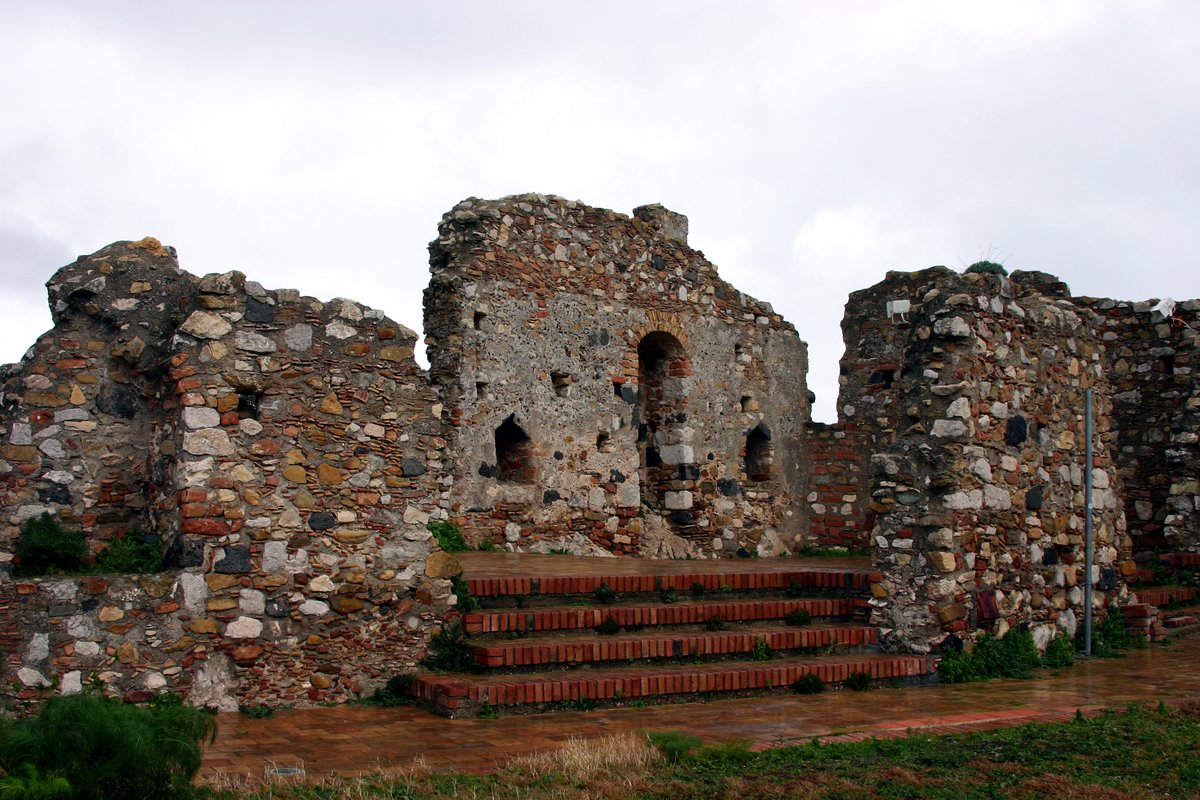

The fortification, with its irregular layout, dominated the castrum Molae during the Roman period. The current Castello di Castelmola was built during the rule of King Philip II of Spain. Ruggero I of Sicily built a new castello (called Mola) as a thank-offering to the Madonna. Affiliated with the nobles faithful to the Kings of Sicily, Castello di Castelmola supported the Hohenstaufen against the Angioini until 1282. In 1282, during the Vespral Sicilian War, Castello di Castelmola rebelled against the Angioini, supporting the Aragonese.
Under King Frederick III and his son, King Peter II of Sicily, the castle was fortified and made impregnable. In 1353, Michele da Piazza described the castello di Mola as of ancient foundation. In 1419, Pietro Forni was the castellano of the Mola. Part of the current castle was constructed during the Byzantine era. Today, Castello di Castelmola is a historical archaeological site. It houses the Museum of Medieval Sicilian Arts and offers medieval falconry displays.
Sources: Wikipedia, OpenStreetMap, Wikidata, Wikimedia Commons
Written by Nicolo Ciampini
Discuss this with the author and others
No comments yet. Be the first to start the conversation.