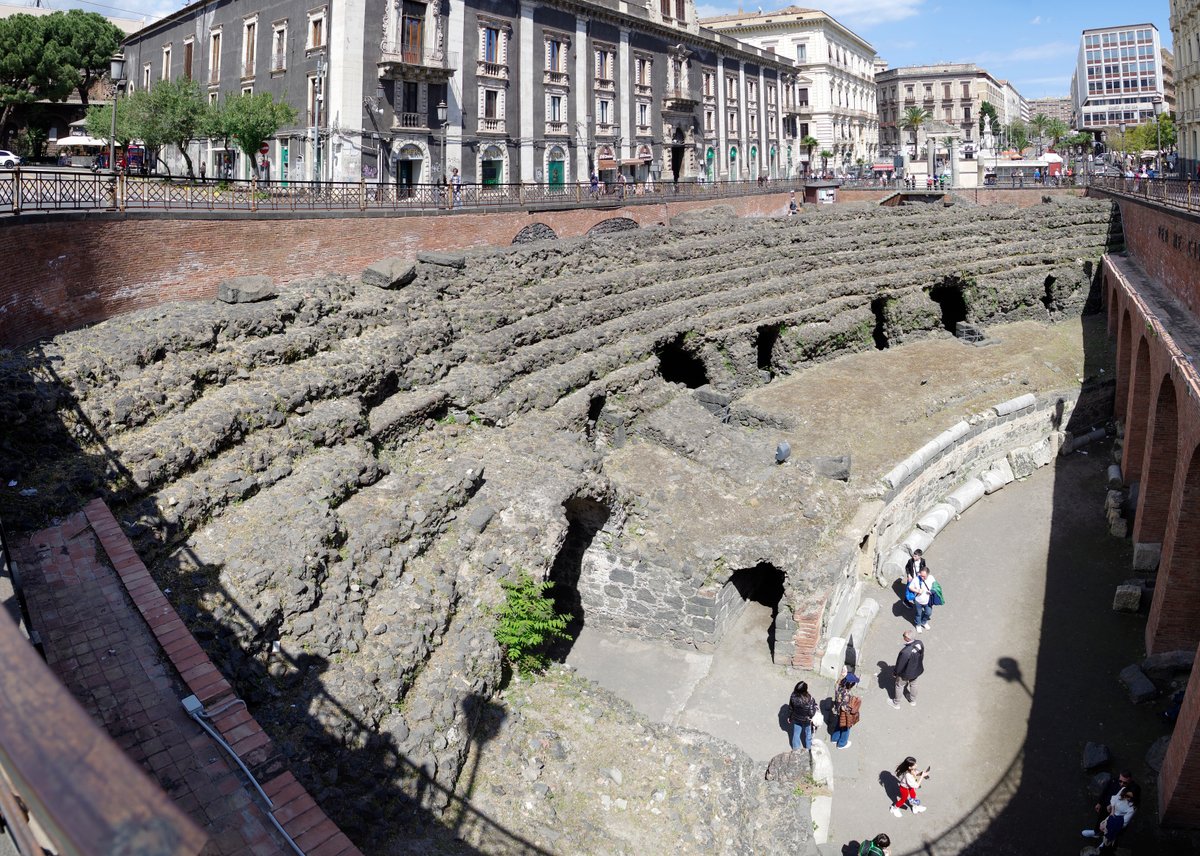

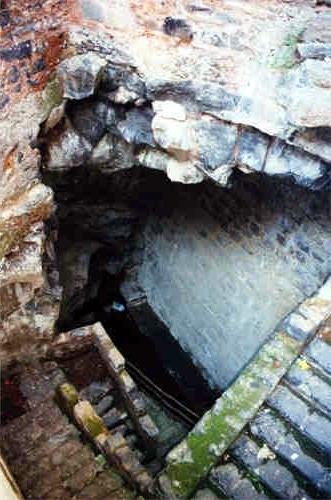
The Amphitheatre of Catania is the most complicated and largest of all the amphitheatres in Sicily. Built in the Roman Imperial period, probably in the 2nd century AD, it was located on the northern edge of the ancient city. Today, only a small section of the structure remains visible below ground level to the north of Piazza Stesicoro. The structure was part of the Parco archeologico greco-romano di Catania.
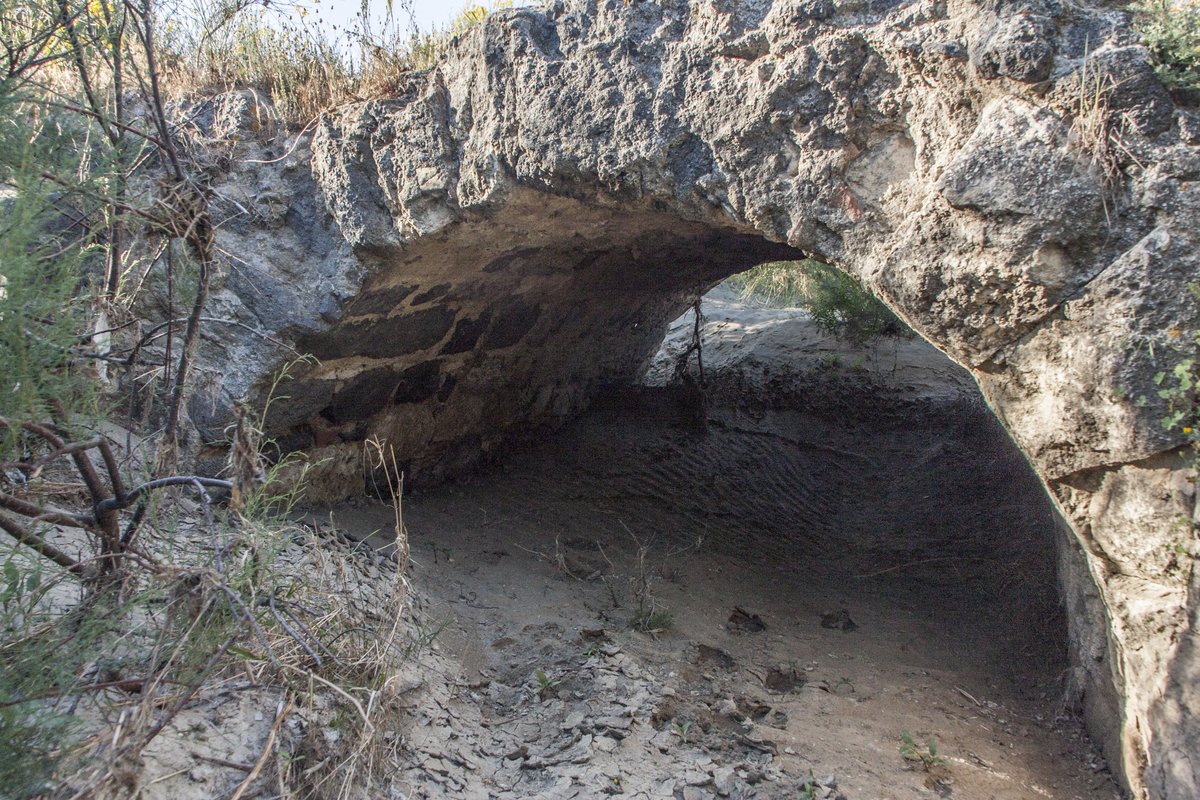
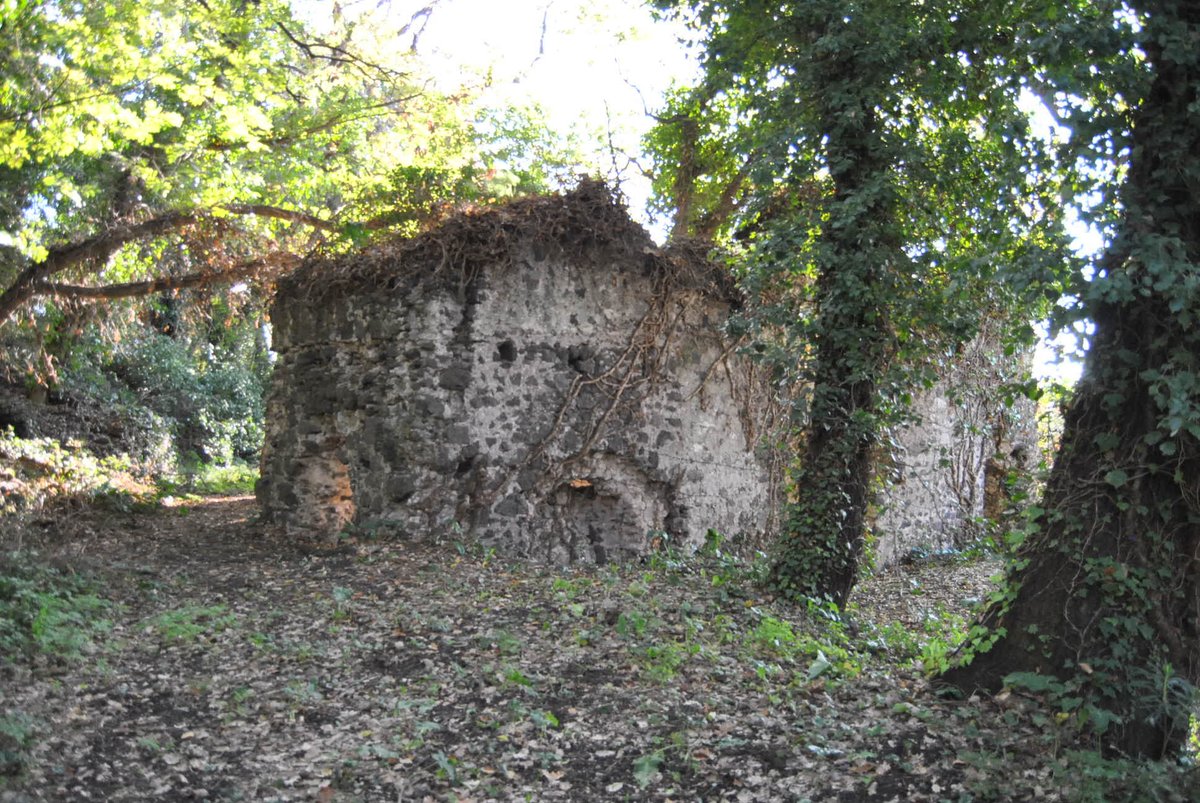
The amphitheatre featured an elliptical arena surrounded by radial walls and vaults supporting seating with 14 steps and 32 aisles. The arena had a maximum diameter of 70 metres and a circumference of 192 metres. Opus vittatum was used for the construction of the interior, while opus quadratum was used for the exterior. The external walls indicate a degree of carelessness in construction, as the blocks are cut irregularly and seem to have been recycled. In contrast, the external arches were made with large rectangular bricks of regular shape and good quality mortar, while the internal ones were made of concrete with large radial plates.
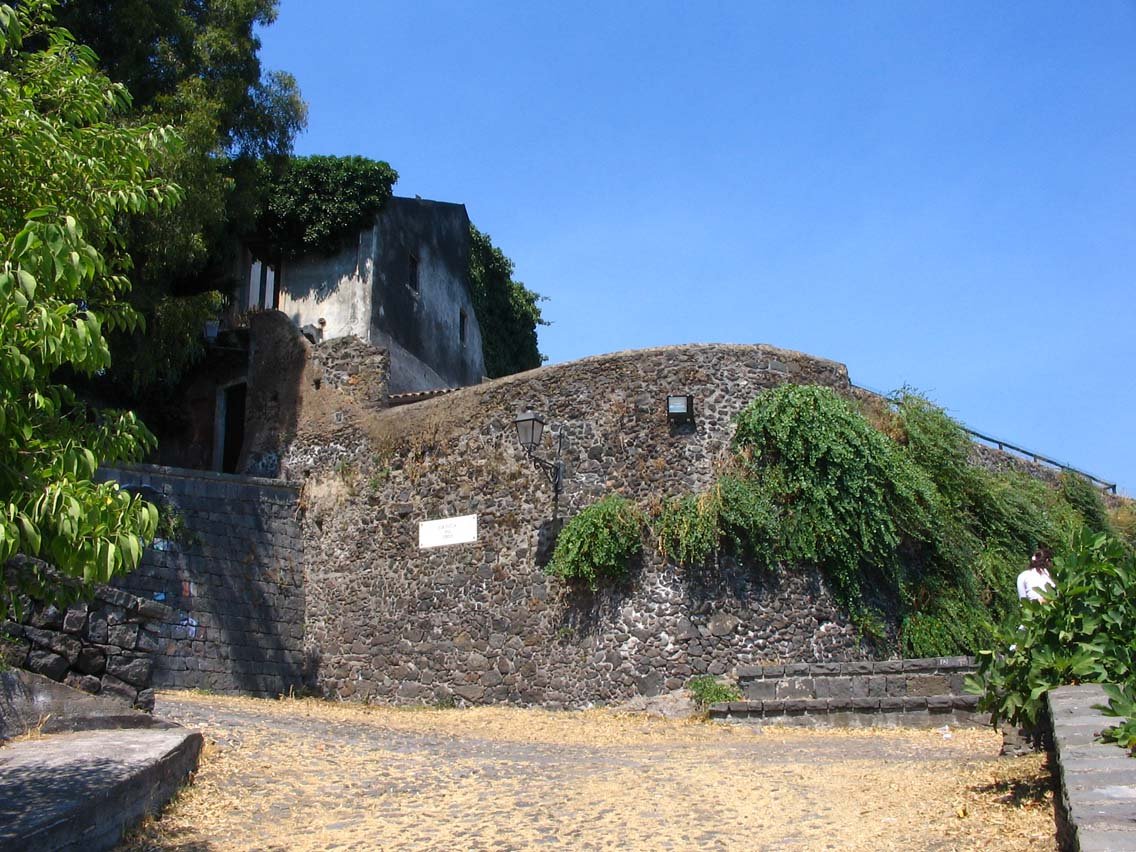
From its dimensions, it can be calculated that the arena held 15,000 spectators, with almost double that number possible using wooden bleachers for standing spectators. A tradition, though unconfirmed, suggests that naumachiae (staged sea battles) were intended to take place here using the ancient Roman aqueduct of Catania to fill the arena with water. The structure also featured a striking contrast between the very dark igneous rock of the walls and the red bricks of the arches, with marble used for cladding the podium and for decorations like the herms on the main entrance.
Sources: Wikipedia, OpenStreetMap, Wikidata, Wikimedia Commons
Written by Nicolo Ciampini
Discuss this with the author and others
No comments yet. Be the first to start the conversation.