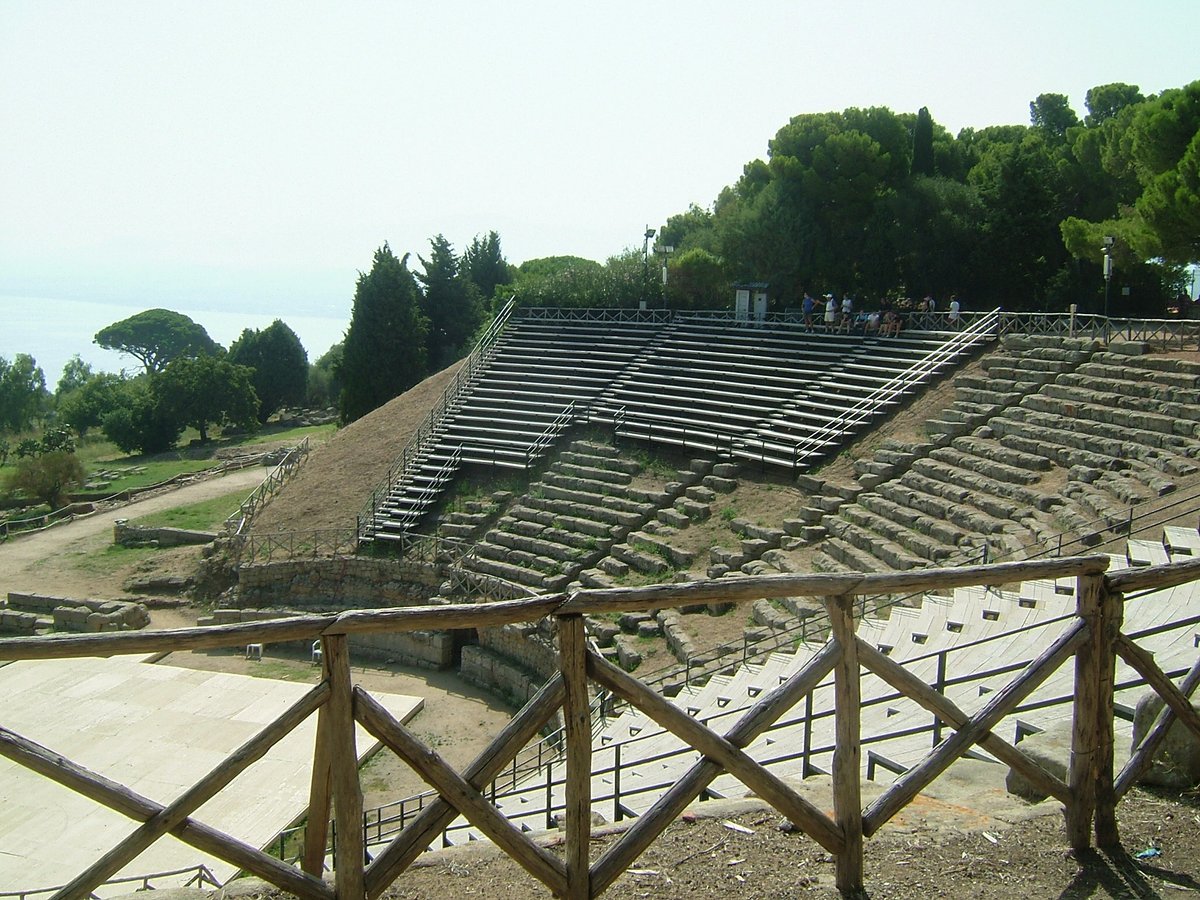

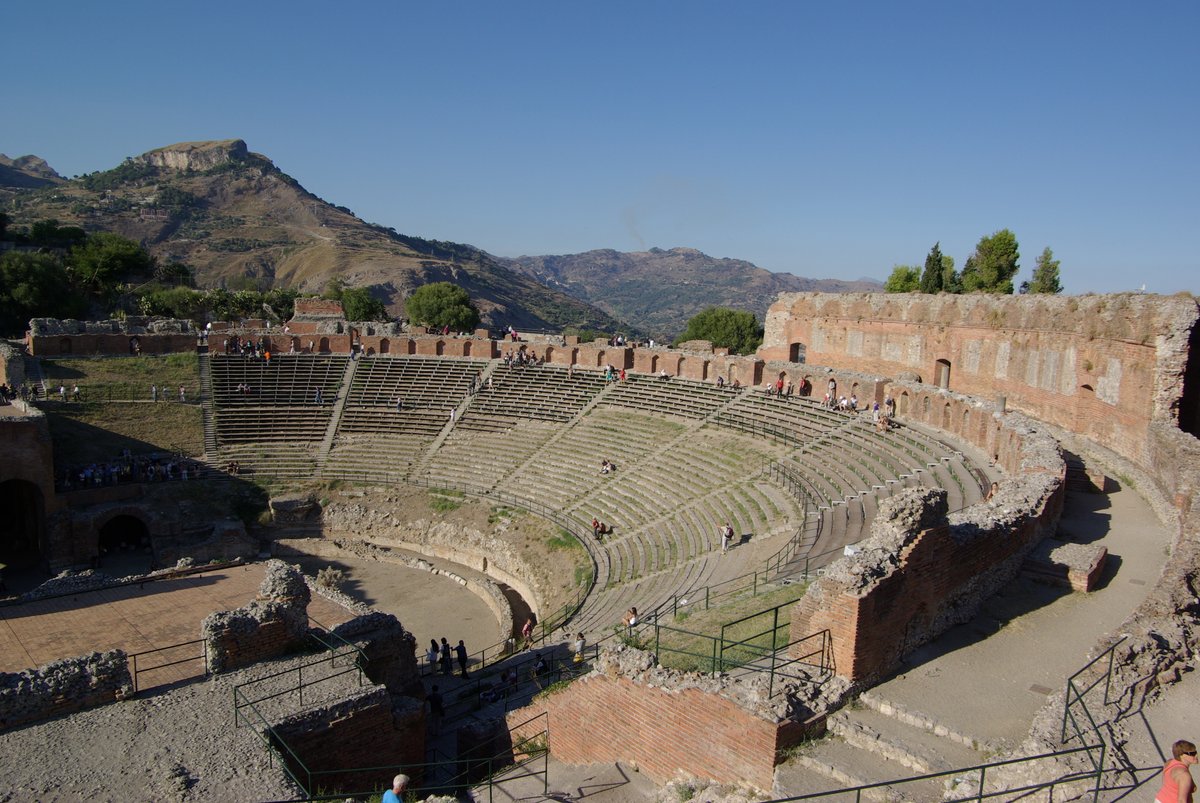
The Teatro Greco di Tindari, located in the provincia di Messina, is a historic monument that dates back to the 4th century B.C. Built in Greek forms, the theatre was later remodeled during the Roman era with new decorations and adapted as a venue for amphitheatre games. During this period, the orchestra was transformed into an arena, and a wall was built to surround the cavea, removing its four lower steps. A portico made of brickwork and a reconstruction of the stage were also added in Roman times.
For a long period, the site remained abandoned and was known only through illustrations from the 19th century. The theatre was built into the natural hollow of a hill, where the seating rows of the cavea were carved out. These seats were 0.40 meters high and 0.70 meters deep, designed to reach a capacity of about three thousand places. The stage was restored in 1939.
Since 1956, the theatre has hosted an arts festival featuring dance, music, and theatre. Since 2001, it has shared the hosting of the Festival del teatro dei due mari with Taormina. More recently, starting in August 2014, the site hosted the Indiegeno Fest, a music festival featuring various Italian artists such as Afterhours and Brunori Sas.
Sources: Wikipedia, OpenStreetMap, Wikidata, Wikimedia Commons
Written by Nicolo Ciampini
Discuss this with the author and others
No comments yet. Be the first to start the conversation.