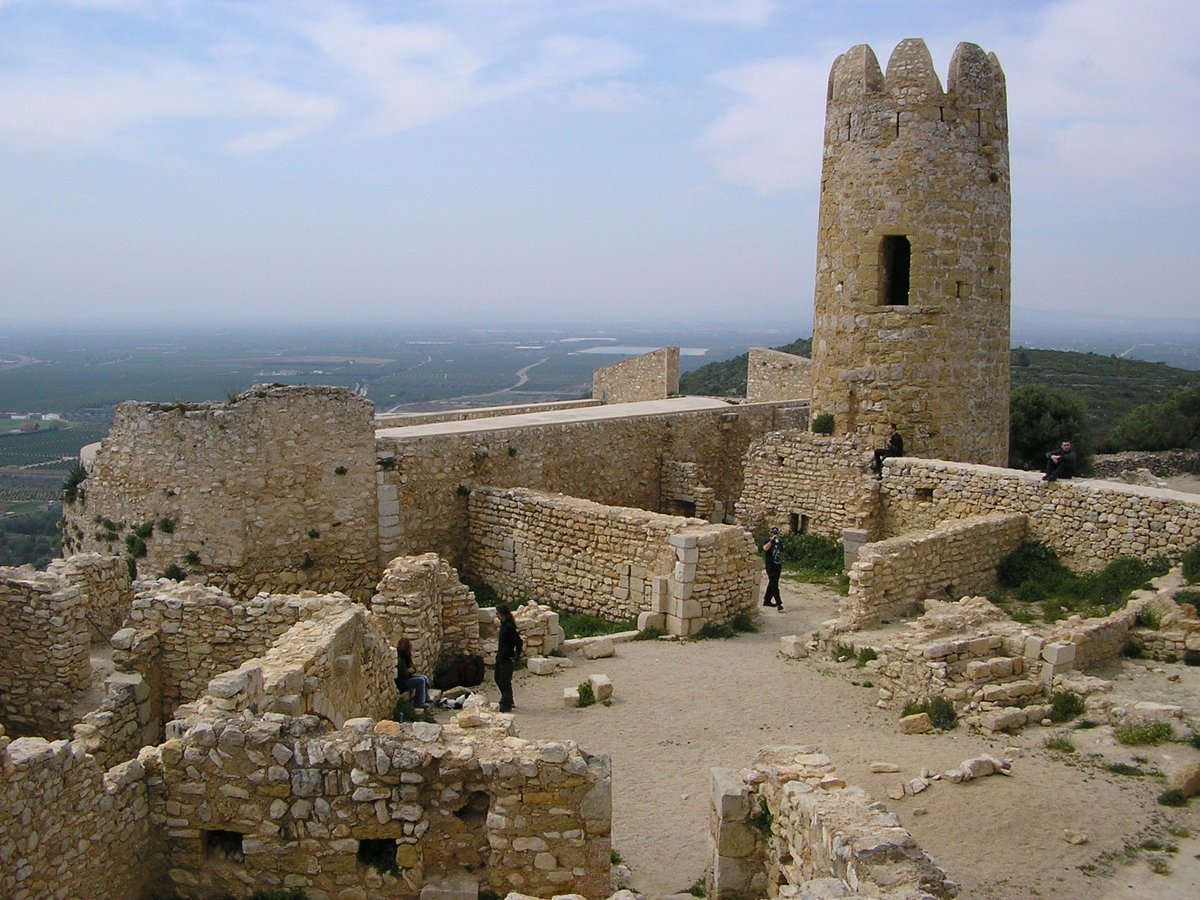

Ulldecona Castle, a cultural heritage site of national interest in Catalonia, Spain, stands as a remarkable example of a fortified complex with a rich history spanning several millennia. Situated on a hill called Puig del Castell in the Serra Grossa mountain range, it occupies a strategic position near the left bank of the Sénia River, historically marking the boundary between Catalonia and the Valencian Community. The castle's origins date back to an Iberian settlement between the 4th and 1st centuries BCE, with a fortress constructed in the 9th century CE during the Arab period.
During the Christian conquest of lands south of the Ebro in 1148, the castle passed to the Montcada family of Tortosa and was subsequently given to the Order of Knights of the Hospital of Saint John of Jerusalem. By the late 13th century, the castle had become the principal commandery of the Hospitallers in the territory surrounding the Ebro River. Today, the castle complex comprises three main surviving structures enclosed by a substantial defensive perimeter wall, and portions of the wall remain on the eastern and southern sides.
Sources: Wikipedia, OpenStreetMap, Wikidata, Wikimedia Commons
Written by Nik Frost
Discuss this with the author and others
No comments yet. Be the first to start the conversation.