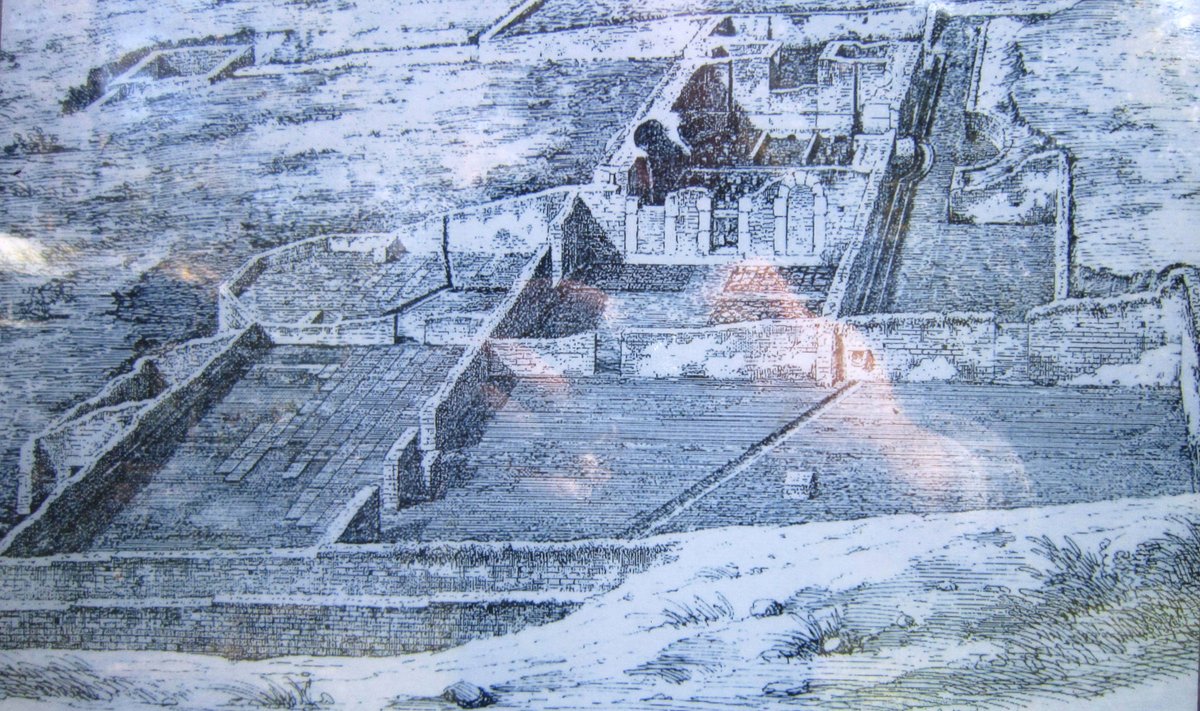

The commune of Vertault, in the Côte-d'Or department of France, was home to the extensive Gallo-Roman site of Vertillum. This archaeological site, excavated over the years, houses many objects found in the Musée du Pays Châtillonnais. One of the most significant artifacts discovered at Vertillum is a bronze statue of Bacchus, known as the 'Bacchus of Vertillum'.
This bronze statue, approximately 40 cm in height, depicts Bacchus as an infant and is adorned with Dionysian motifs, including attributes suggesting revelry and fertility. The statue dates back to the 1st century BCE or early 1st century CE and was originally adorned with gold sheeting and silver inlays for the eyes.
The Bacchus statue was stolen from the Musée du Pays Châtillonnais in 1973 alongside other items. In 2022, it was recovered through the efforts of art detective Arthur Brand and returned to the museum.
Sources: Wikipedia, OpenStreetMap, Wikidata, Wikimedia Commons
Written by Nicolo Ciampini
Discuss this with the author and others
No comments yet. Be the first to start the conversation.