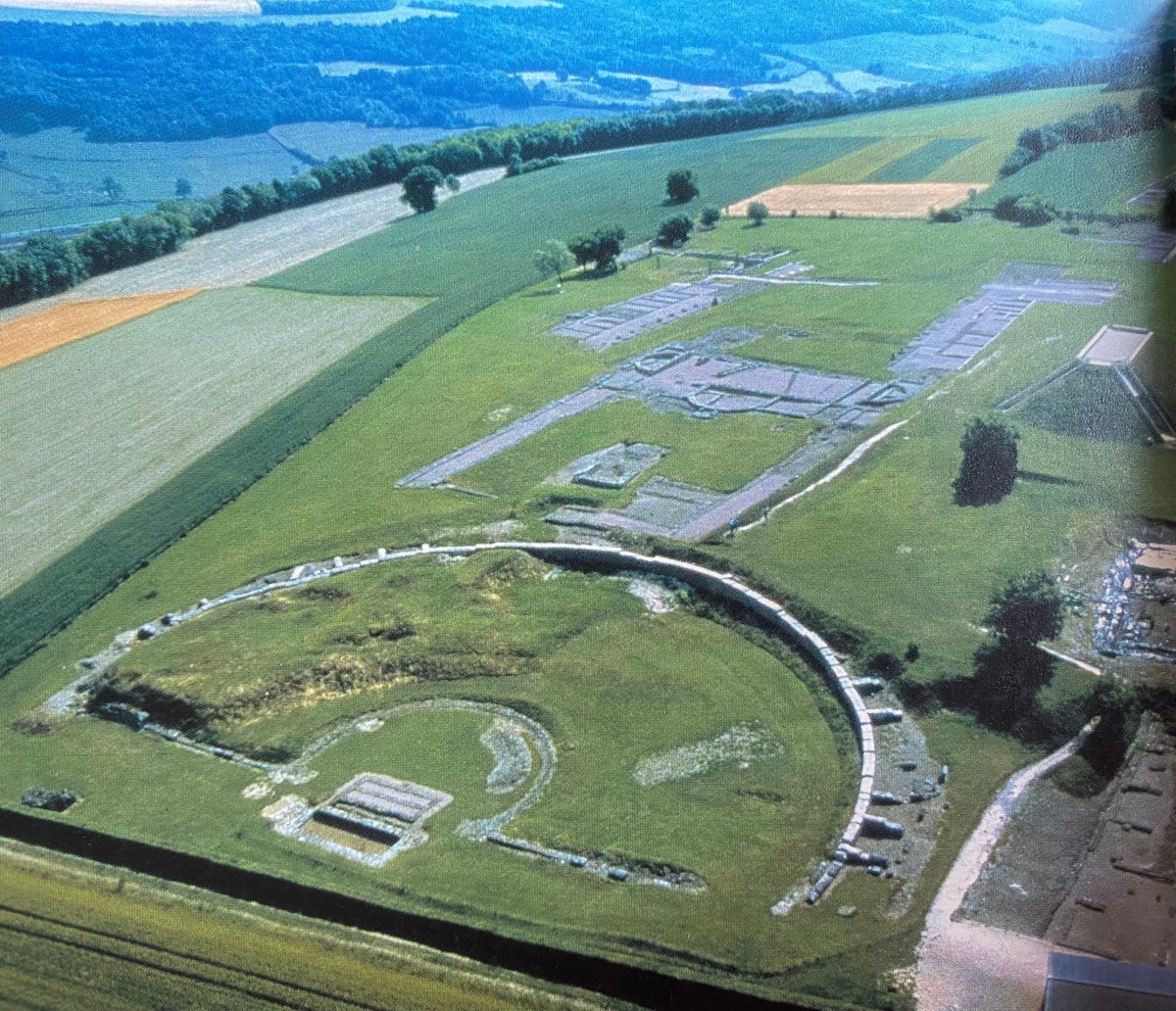

The town of Alesia, nestled in modern-day Burgundy, is famed for the epic Battle of Alesia in 52 BC. However, our understanding of Alesia's history is in a perpetual state of evolution, thanks to archaeological excavations. Recent discoveries have uncovered details about Alesia's beginnings, life as a Gallo-Roman settlement, and the Battle itself with a flicker of doubt still lingering. While much remains shrouded in mystery, the ongoing dig at Mont-Auxois has unearthed intriguing evidence for Alesia's significance in the annals of France and the wider Roman world.
As lore suggests, Alesia was conceived by Heracles. But the evidence dug up tells a more labyrinthine story about its origins. Perched on a precipice, the settlement boasted steep cliffs on three sides, suggesting a strategic design to ward off attack. It also housed an elaborate Gallo-Roman town center, with temples, a forum, and an amphitheater.
The Battle of Alesia, a monumental victory for Julius Caesar over Vercingetorix and the Gauls, transpired on this ground. Caesar's forces constructed a colossal siege line around Alesia to encircle the Gaulish troops. Though the specifics of the battle are elusive, recent archaeological evidence points to Mont-Auxois as the battlefield, hinting that historical Alesia indeed sat atop this hill.
Sources: Wikipedia, OpenStreetMap, Wikidata, Wikimedia Commons
Written by Nicolo Ciampini
Discuss this with the author and others
No comments yet. Be the first to start the conversation.