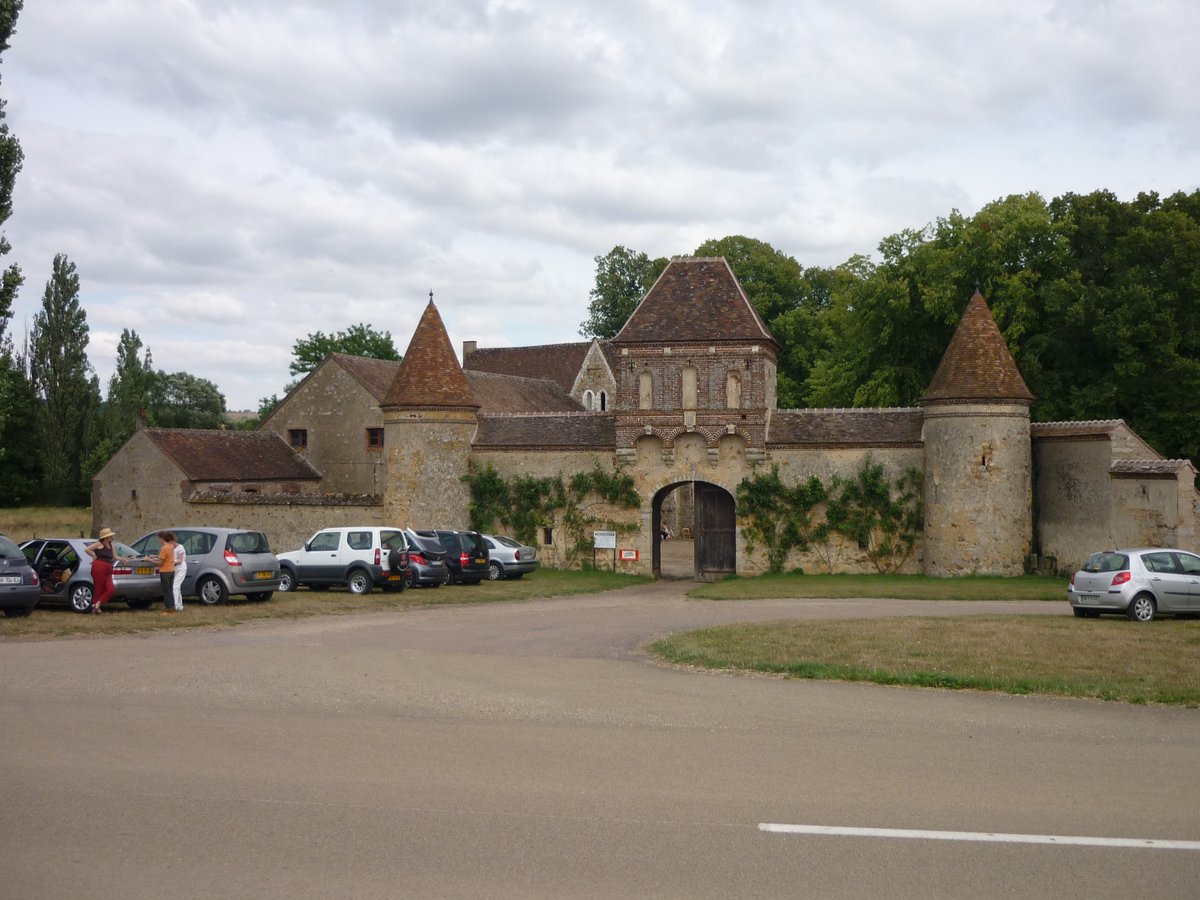

Vauluisant Abbey is a Cistercian abbey located in Yonne, France, founded in 1127 by monks from Preuilly Abbey. The chosen site was a wild, marshy valley between the forests of Othe and Lancy, near the village of Courgenay. The abbey was consecrated by Henri Sanglier, the archbishop of Sens, on 1 April 1129. By 1140, the abbey was fully operational, and the abbey church was consecrated in 1149. During the 12th and 13th centuries, Vauluisant underwent significant expansion, acquiring extensive lands through donations, purchases, and legal settlements from local patrons.
The abbey established granges, including those at Beauvais and Toucheboeuf, to manage its agricultural holdings, operated by lay brothers. During the Hundred Years' War (1337–1453), Vauluisant endured repeated attacks and pillaging by roving bands of soldiers, causing severe damage to its buildings, mills, and surrounding domains. By the mid-15th century, the abbey was described as ruined, with its economic activities disrupted by the widespread insecurity in the region around Sens and Troyes.
In 1634, a major fire struck the abbey, causing significant damage. In December 1636, Cardinal Richelieu aggregated Vauluisant to the reform of strict Cistercian observance, aligning it with the rigorous practices originating from Clairvaux Abbey while refractories withdrew to Septfons Abbey. Today, Vauluisant remains a historical site and is open to visitors Sunday afternoons from April to October.
Sources: Wikipedia, OpenStreetMap, Wikidata, Wikimedia Commons
Written by Nicolo Ciampini
Discuss this with the author and others
No comments yet. Be the first to start the conversation.