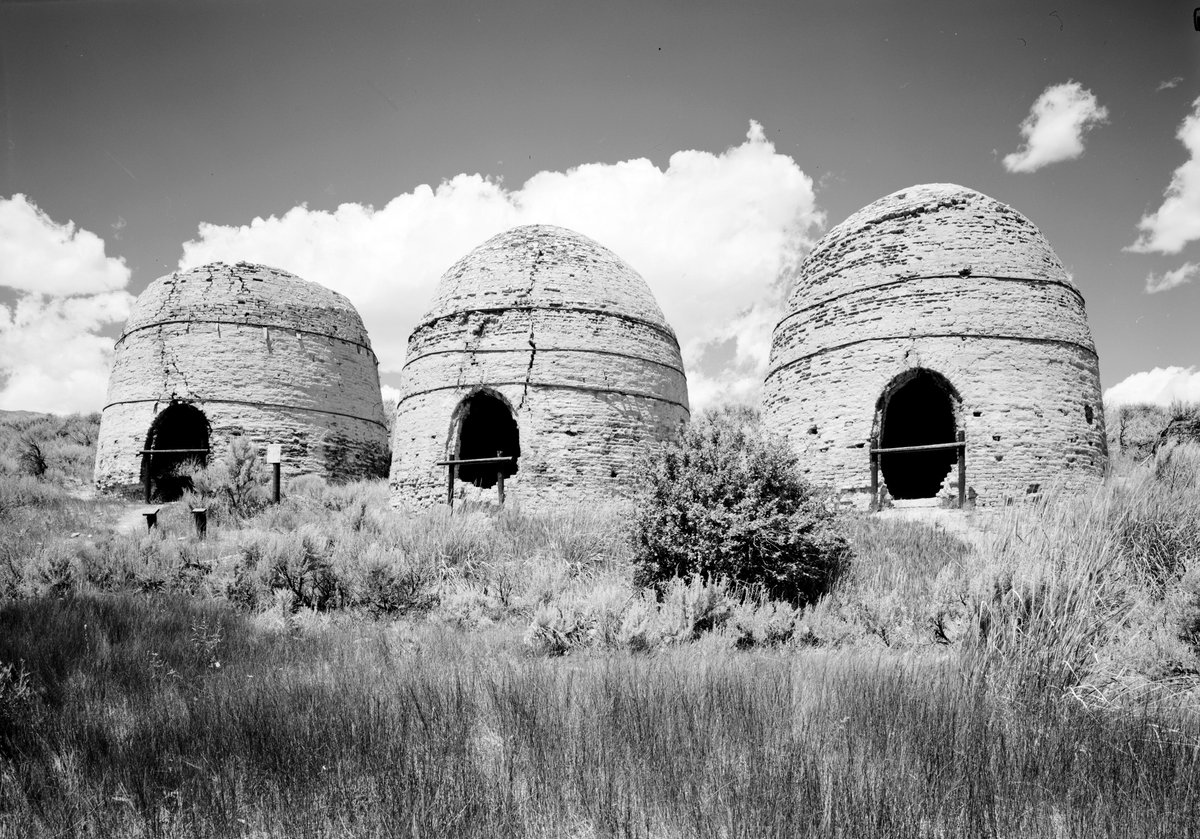

The Birch Creek Charcoal Kilns were built in 1886, right smack in the Caribou-Targhee National Forest, not too far from Leadore, Idaho. These were meant to crank out charcoal for a smelter in Nicholia, where ore from the Viola Mine, about 10 miles east, was being worked. After 1888, when the price of lead took a dip and the vein ran dry, the mining operation closed up shop.
Old Warren King, a man from Butte, Montana, set them up, fashioning 16 of them from bricks made from local clay, possibly obtained from Jump Creek. Each of these beehive relics stands around 20 feet high and 20 feet wide. When operating, each kiln used 30 to 40 cords of Douglas fir wood per load to produce charcoal.
Remarkably, four of these clay kilns are still standing today, and the Forest Service keeps them preserved as a public interpretive site. The operation lasted for less than three years, employing 150 to 200 people at its peak. The site was listed on the National Register of Historic Places in 1972.
Sources: Wikipedia, OpenStreetMap, Wikidata, Wikimedia Commons

Written by Friendly Jane
Discuss this with the author and others
No comments yet. Be the first to start the conversation.