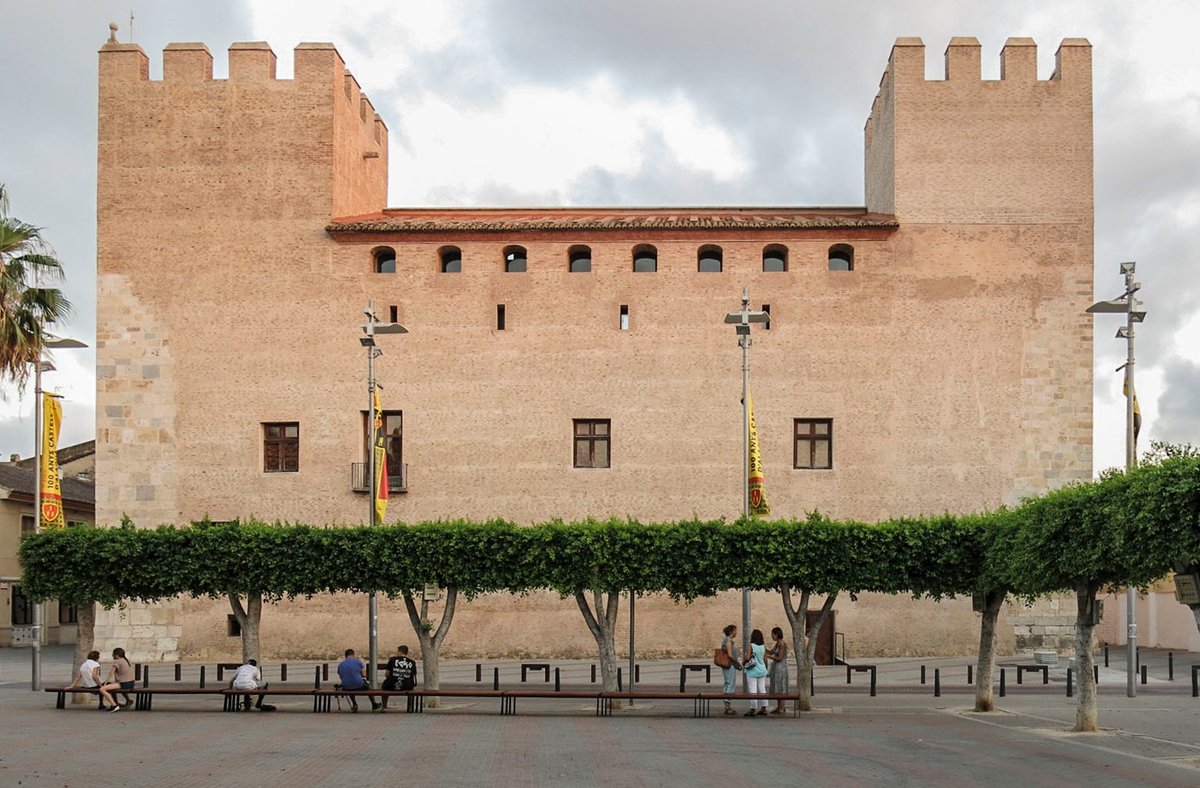

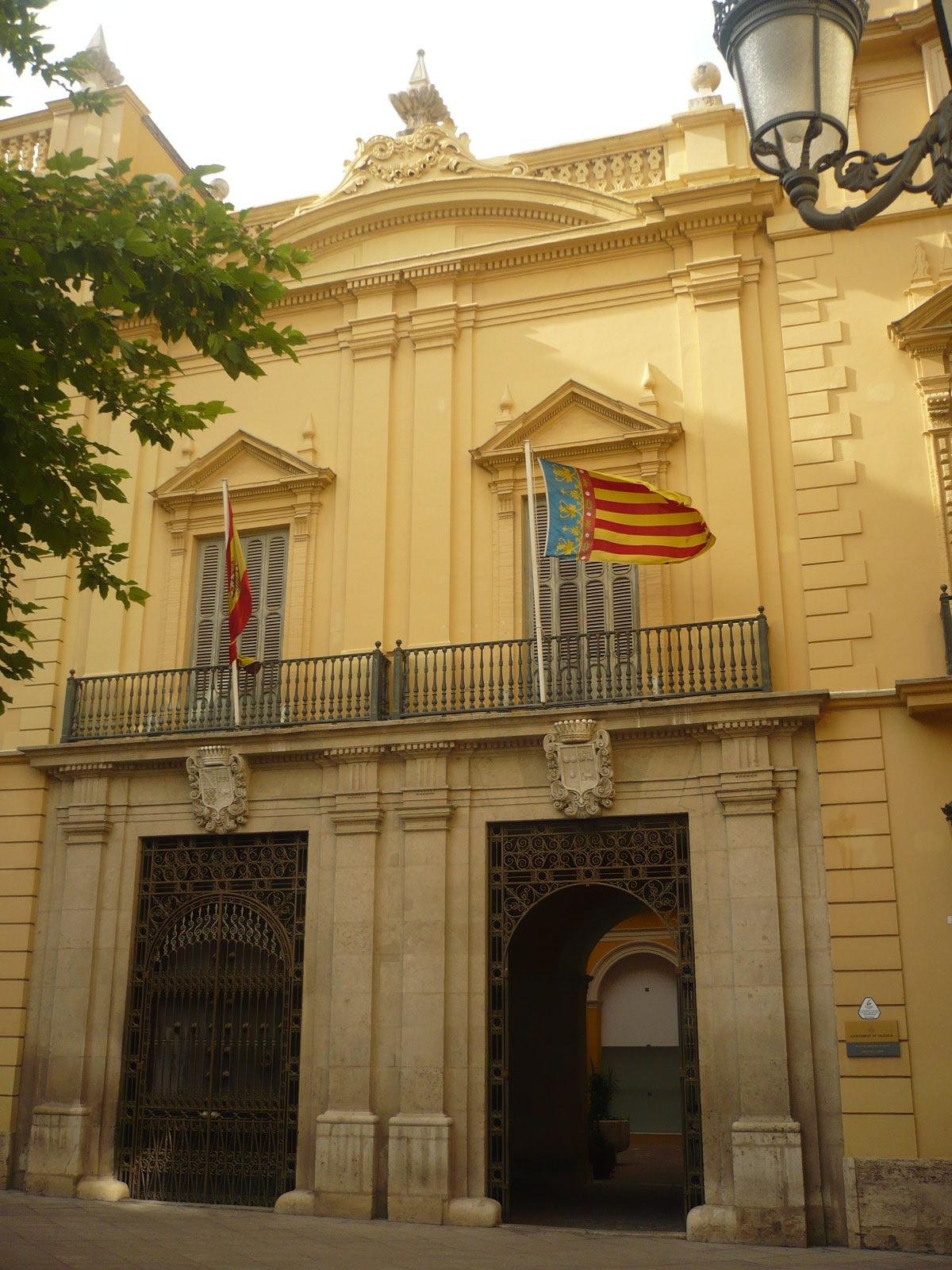
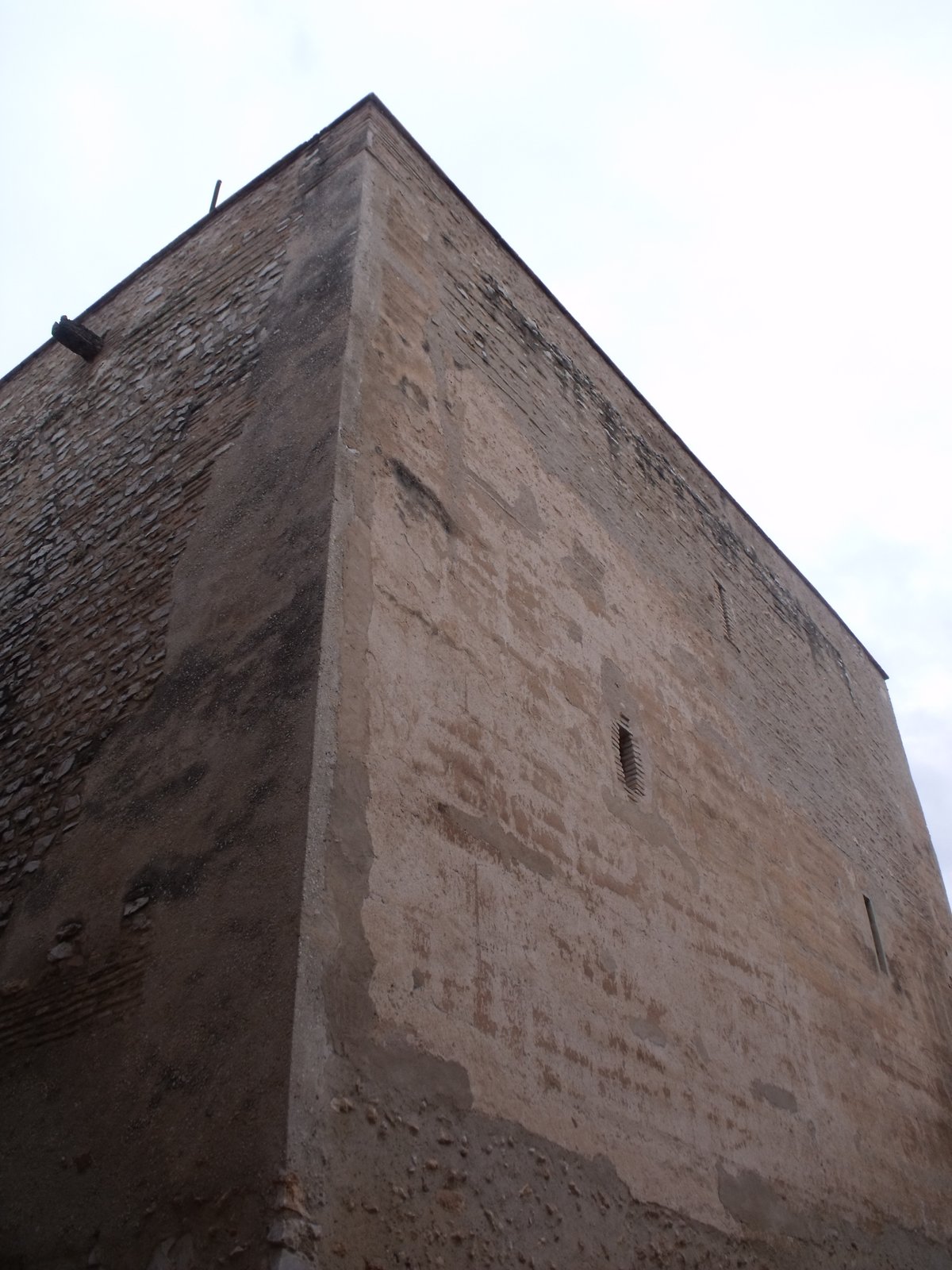
The Palau-Castell d'Alaquàs, also known as the Castell d'Alaquàs or Palacio de los Aguilar, is a noble mansion dating from the period of feudal decline in the 16th century. It features significant architectural elements that announce the Renaissance. Located in the town of Alaquàs, it serves as a residence with magnificent woodcarvings, tile work, and ornamental arrangements, though it lacks the external signs of a fortress or defense typical of its era.
The site has a long history of ownership, with the Vilaragut family holding the lordship since 1373. In 1501, Jaime Garcia d'Aguilar took possession of the site. During the 16th century, his family's wealth allowed for the construction of the Castell-Palau dels Aguilar, which established the general design of the structure seen today. Following his death, the property passed to his heirs, including Lluís Pardo de la Casta.
In 1918, a call was made to artists and architects to collect data and drawings to prevent the building's demolition. This effort led to the 1921 publication of a study on the building and eventually a Royal Order that declared it a National Historic-Artistic Monument. After centuries of private ownership, the local government took over the monument in 2003. Since 2003, the castle has been open to the public for cultural activities, including concerts and exhibitions, and currently serves as a cultural center housing a library and an adult education center.
Sources: Wikipedia, OpenStreetMap, Wikidata, Wikimedia Commons
Written by Nicolo Ciampini
Discuss this with the author and others
No comments yet. Be the first to start the conversation.