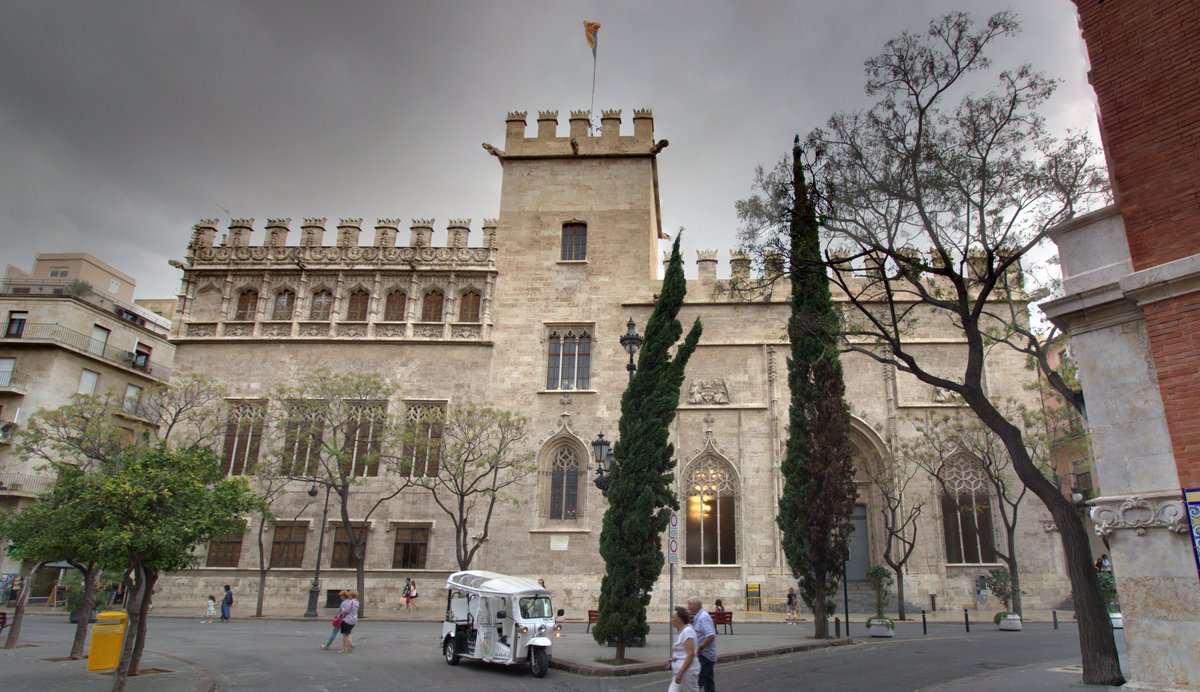

Built between 1482 and 1533, the Lonja de la Seda in Valencia, Spain, stands as a remarkable example of the La Lonja style, a late Valencian Gothic architectural style. It served as the primary financial center of the city, a bustling hub for trade in agricultural oils and tools, including a unique type of silk called perxal. The building is composed of three parts: the Trading Hall, the Consulate's Pavilion, and the central tower. For five centuries, the Trading Hall has been a lavishly decorated space, with twisted columns and an inscription that champions honesty and good trade.
A notable feature of the Lonja de la Seda is the inscription that runs around the main contract hall. The inscription, roughly translated, reads: 'This splendid house has been built in fifteen years. Taste and see that a good trade is acknowledged, which does not deal in deceit with the tongue, which swears to a neighbor and does not fail, which does not lend money on usury. The merchant who acts thus will accumulate wealth, and in the end will enjoy eternal life.'
According to local scholars, this inscription is a testament to the importance of ethical trading in the Levantine region, where Valencia prospered as a leading Mediterranean mercantile city. In 1996, the Lonja de la Seda was listed as a World Heritage Site by UNESCO and remains a key tourist attraction in Valencia, Spain.
Sources: Wikipedia, OpenStreetMap, Wikidata, Wikimedia Commons
Written by Nicolo Ciampini
Discuss this with the author and others
No comments yet. Be the first to start the conversation.