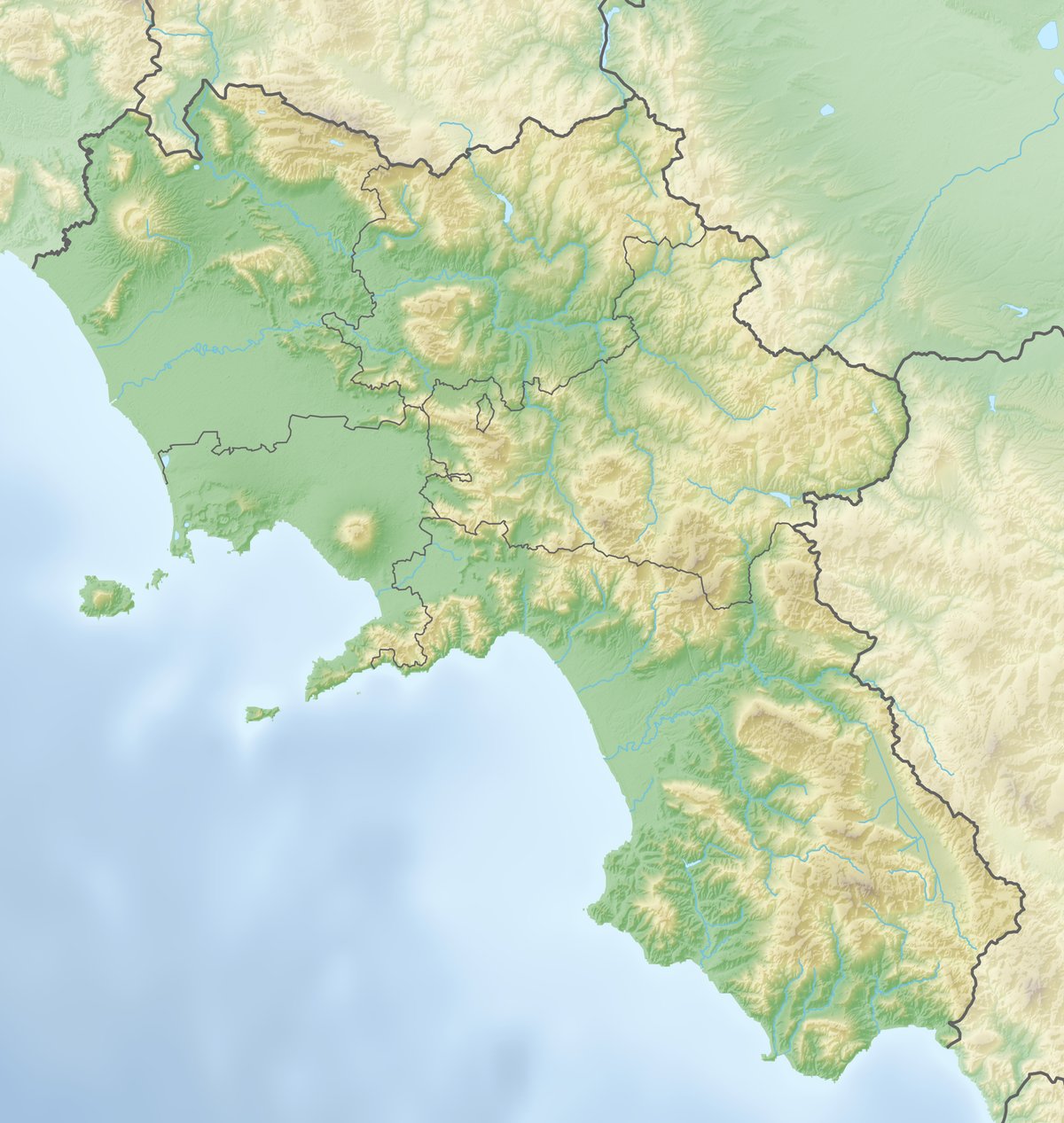

Under the hill of Cuma lies the Crypta Romana, a tunnel carved into the tufa spanning from east to west. The gallery passes under the Temple of Apollo, connecting the area of the acropolis with the sea. It was built in 37 BC as part of a military reinforcement project commissioned by the strategist Marco Vipsanio Agrippa and designed by Lucio Cocceio Aucto.
The tunnel was intended to connect the new Portus Iulius with the port of Cuma via the Grotta di Cocceio and the Crypta Romana itself. This military interest ended around 12 BC when the fleet was moved to the port of Miseno, and again after the civil war between Octavian and Mark Antony ended in 31 BC.
During the Christian era, the tunnel was used as a cemetery area. In the 6th century, the Byzantine general Narsesus attempted to use it to reach the city during the siege of Cuma, but the new tunnels he dug weakened the structure, causing a large section of the vault to collapse. The gallery was rendered impassable and forgotten until it was rediscovered by the archaeologist Amedeo Maiuri between 1925 and 1931.
Sources: Wikipedia, OpenStreetMap, Wikidata, Wikimedia Commons

Written by Nicolo Ciampini
Discuss this with the author and others
No comments yet. Be the first to start the conversation.