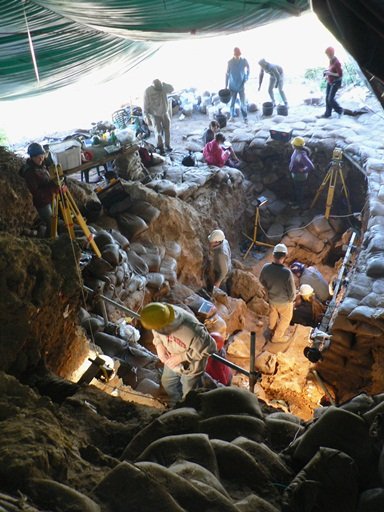

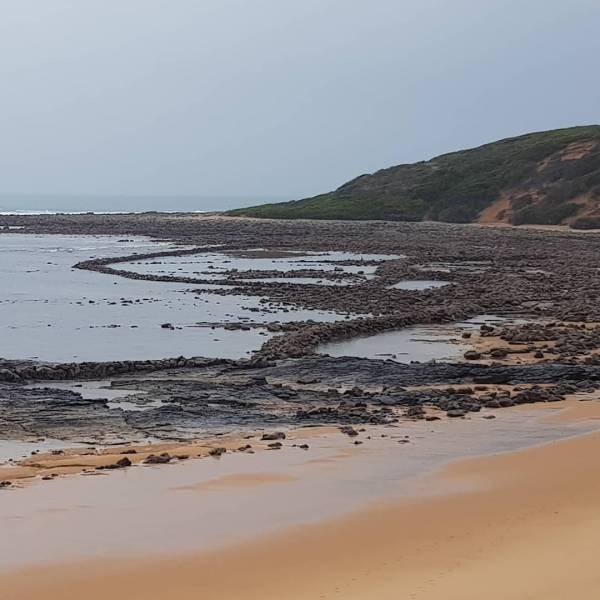
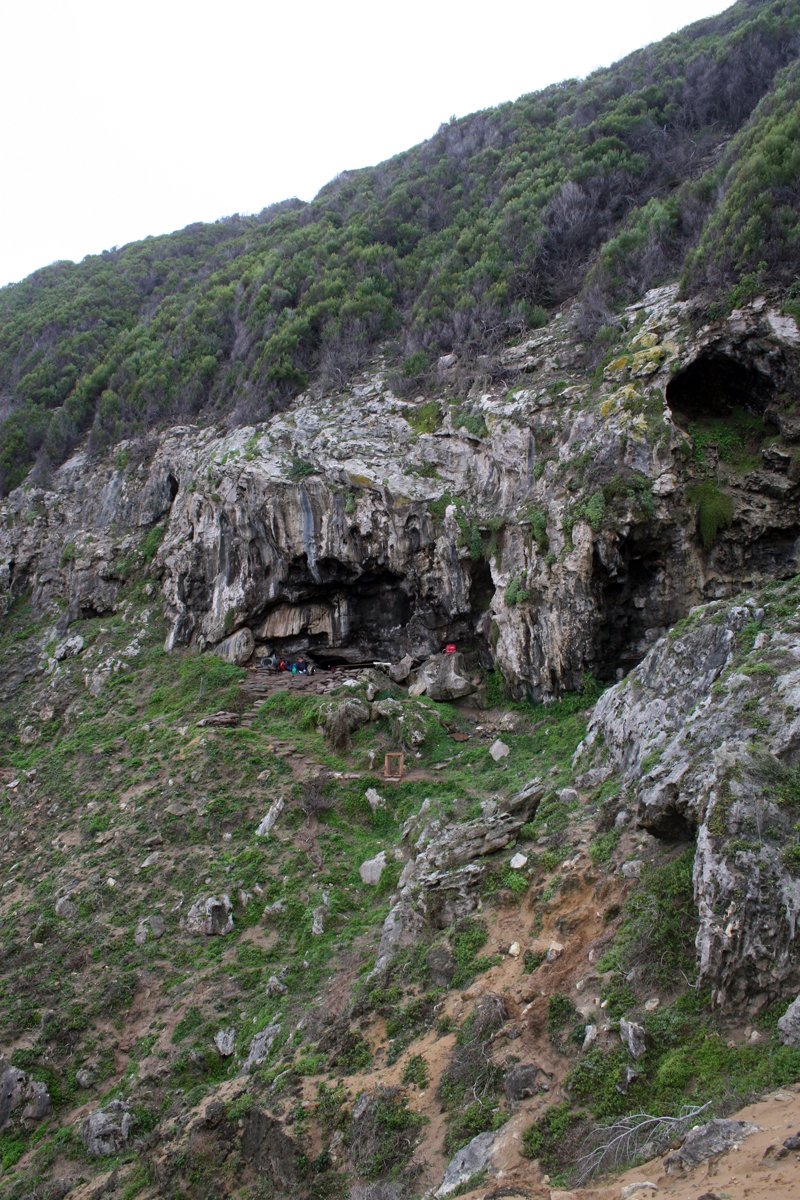
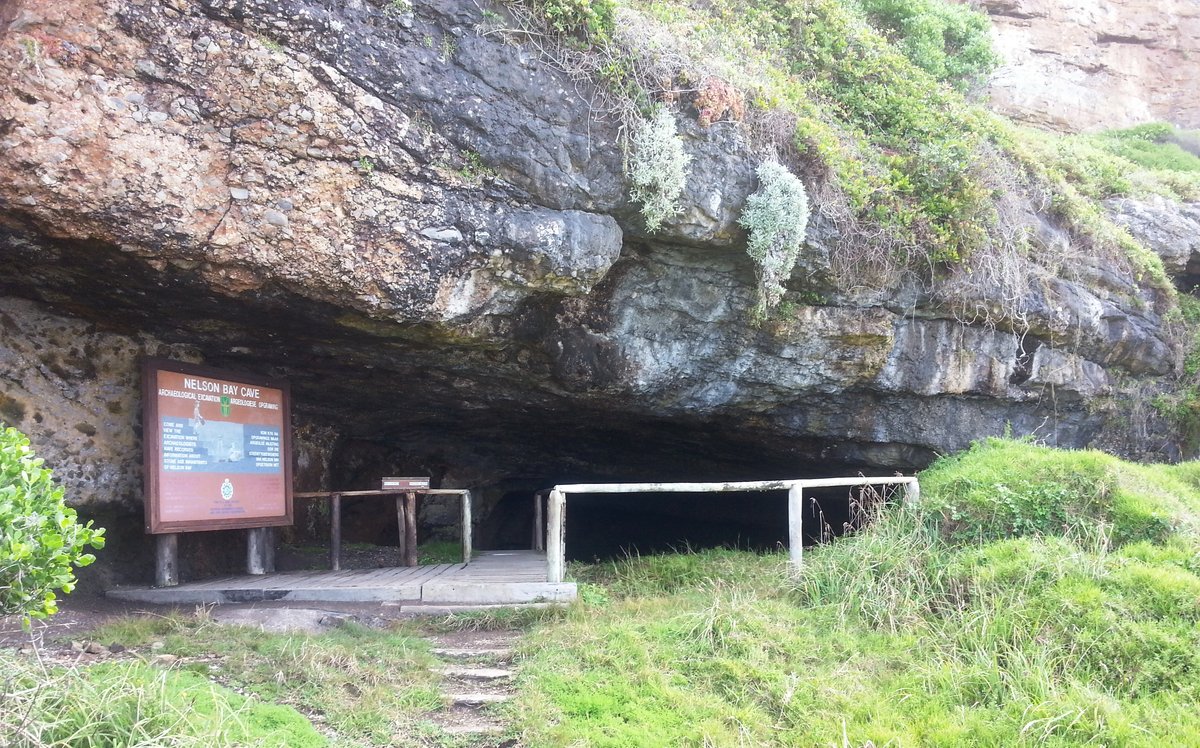
Nestled along the shores of Mossel Bay, South Africa, is Pinnacle Point, a small promontory featuring a series of caves first recognized by archaeologists in 1997. Excavations at the site have revealed that Middle Stone Age people occupied the area between 170,000 and 40,000 years ago. The primary focus of these excavations is Cave 13B (PP13B), where researchers have documented the earliest evidence for the systematic exploitation of marine resources, such as shellfish, and symbolic behaviour.
At PP13B, the evidence for symbolic behaviour includes scraped and ground ochre, which may have been used as a pigment for body painting. These discoveries contradict the hypothesis that modern behaviour emerged only 40,000 years ago. Additionally, at Pinnacle Point Cave 5–6, researchers found the oldest evidence for the heat treatment of rock to make stone tools. The site also contains an anomalous quantity of tree leaf phytoliths in 90,000-year-old sediments, which may indicate a history of wood burning in hearths.
In 2024, the Pinnacle Point Site Complex became a part of the World Heritage Site of Pleistocene Occupation Sites of South Africa. The site is protected under South African heritage law and remains a key location for understanding how early humans adapted to harsh climates by moving to the shore to hunt seals, whales, and gather shellfish.
Sources: Wikipedia, OpenStreetMap, Wikidata, Wikimedia Commons




Written by Mutabor
Discuss this with the author and others
No comments yet. Be the first to start the conversation.