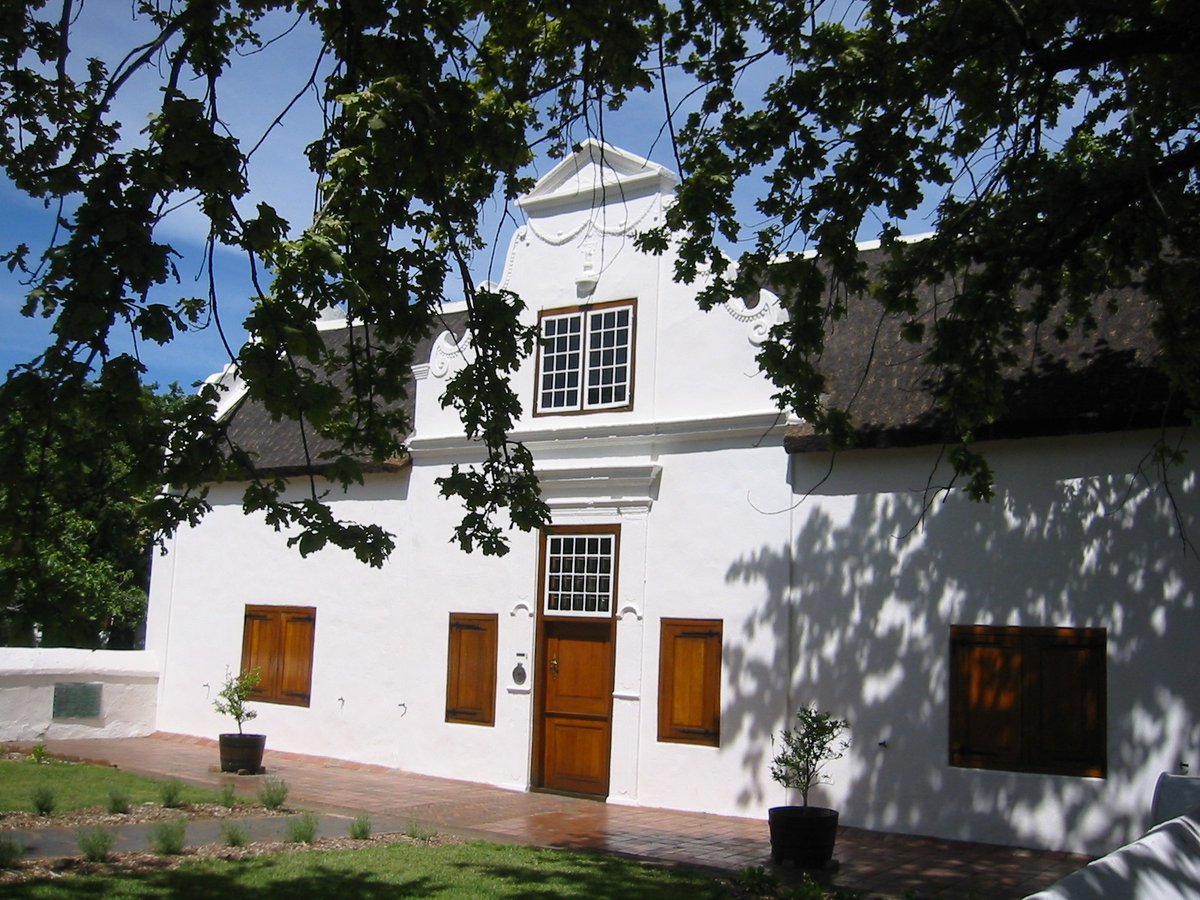

Die Burgerhuis is located on Alexander Street in Stellenbosch. Built in 1797 by Antonie Fick as a family home, it was purchased in 1808 by the then-landdrost of Stellenbosch, R.J. van der Riet, to serve as a residence for his sister-in-law. In 1839, the property became the property of ds. P.D. Lückhoff of the Rynse Sendinggenootskap. Upon his retirement, the society purchased the house from him to use as a parsonage.
The house was declared a national heritage site in 1961. It is recognized as an outstanding example of the Kaaps-Hollandse building style, and the building's layout is noted for its H-shaped plan, which offers an unobstructed view from the front door to the back door. The front gable features a triangular cap, while the side gables are of the concave-convex type. The architrave around the front door is one of the earliest known examples made of brick and building clay rather than kiaathout, featuring pillars of three panels each characteristic of the old Cape Baroque style.
In 1952, the house became state property, and in 1959 it was transferred to the Stellenbosch Municipality. The Rembrandt Group now leases the house to cover restoration and maintenance costs. Today, the house houses a VOC museum, furnished in a style appropriate to the house's era, and serves as the headquarters for the Historical Houses of South Africa.
Sources: Wikipedia, OpenStreetMap, Wikidata, Wikimedia Commons
Written by Mutabor
Discuss this with the author and others
No comments yet. Be the first to start the conversation.