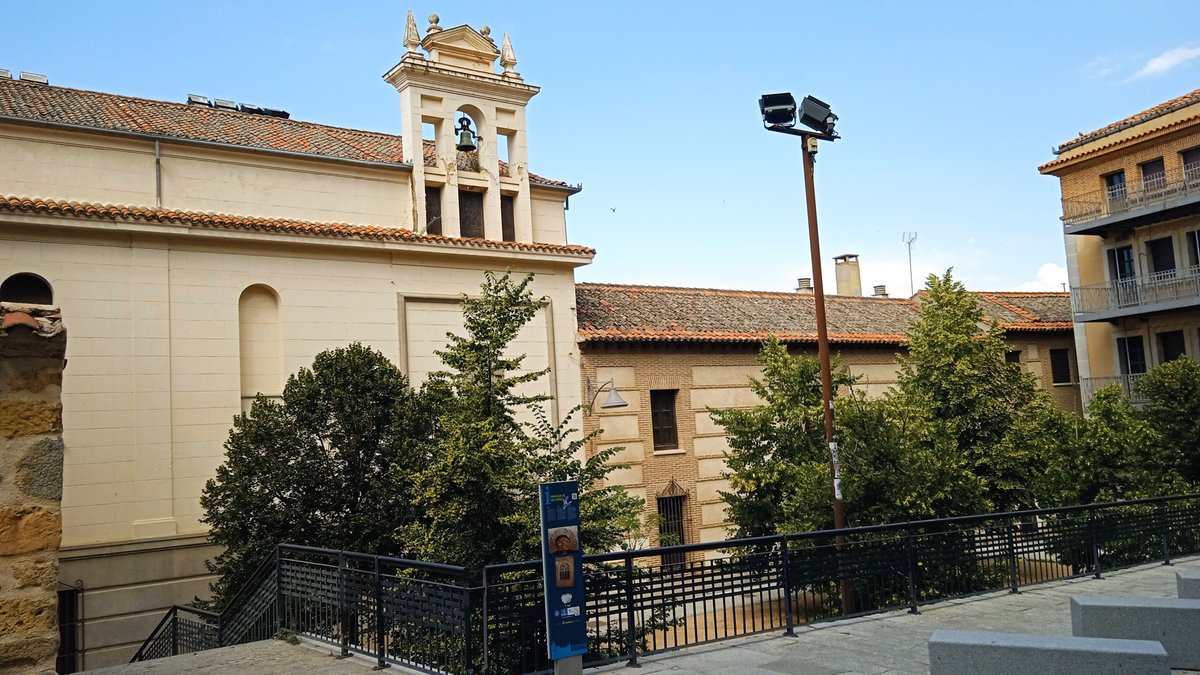

The Sinagoga de los Ibáñez, nestled between Calle de Barrionuevo and Calle de San Geroteo in Segovia, is believed to have been constructed during the first half of the 15th century. Despite extensive research, the exact construction date has yet to be discovered. Initially a place of Jewish worship, it was taken by the Catholic authorities following accusations of sacrilege, with the Main Synagogue's renamed. On July 6, 1492, just before the Edict of Granada's deadline for Jews to leave Castilla, the building was sold to the Cathedral Chapter of the city.
Through the 19th century, the Ibáñez family owned the property, until it was acquired by the Catholic Church. Early renovations in the 1980s uncovered a miqwab. Further renovations in the upper floor revealed various Mudéjar remnants, such as two arched windows, a bull's eye adorned with an eight-pointed star, and other decorative elements reminiscent of Henry IV’s palace portal. The number of these stars repeats up to ten times, hinting at a deeper connection between the structures.
Sources: Wikipedia, OpenStreetMap, Wikidata, Wikimedia Commons
Written by Nik Frost
Discuss this with the author and others
No comments yet. Be the first to start the conversation.