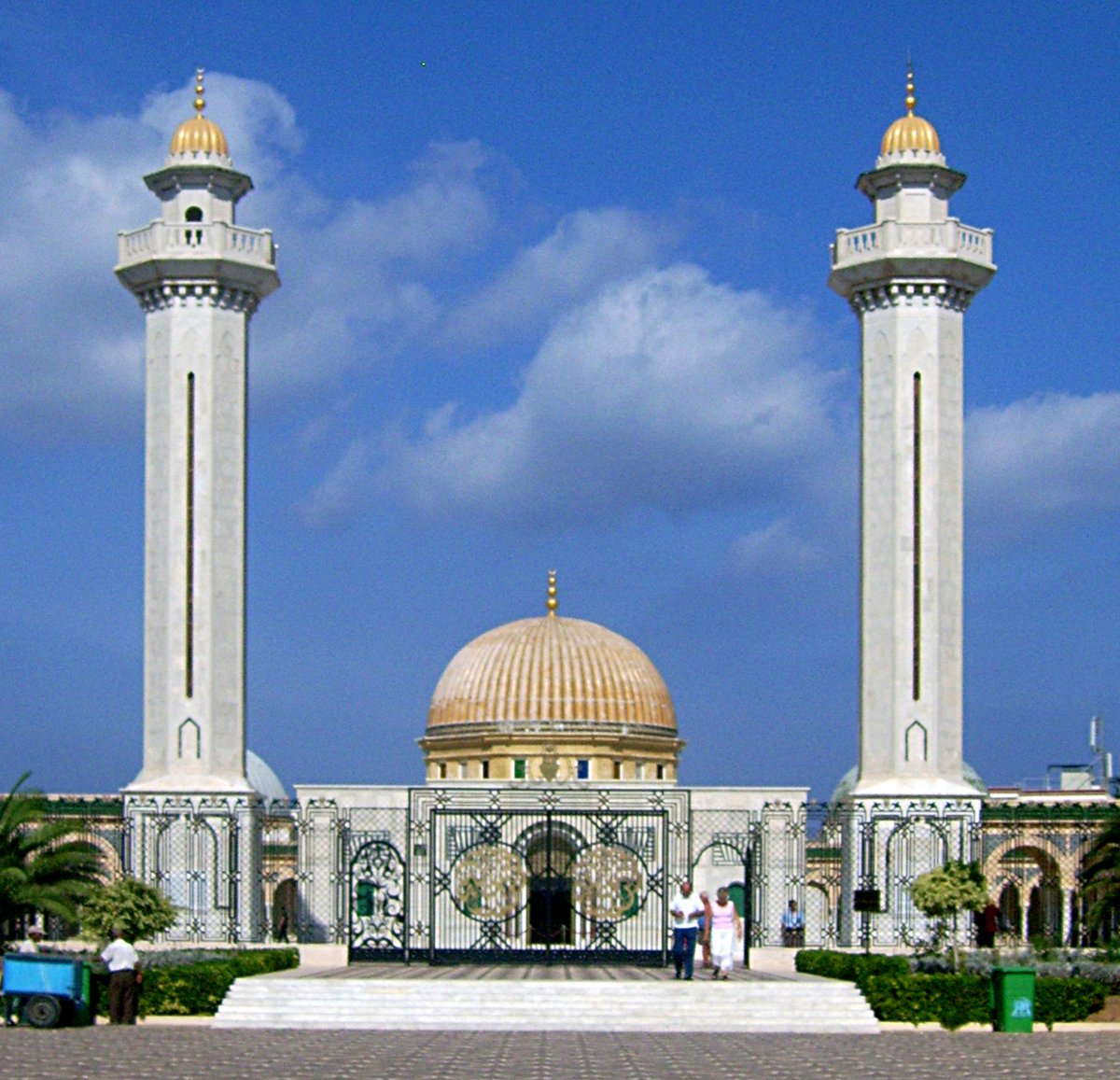

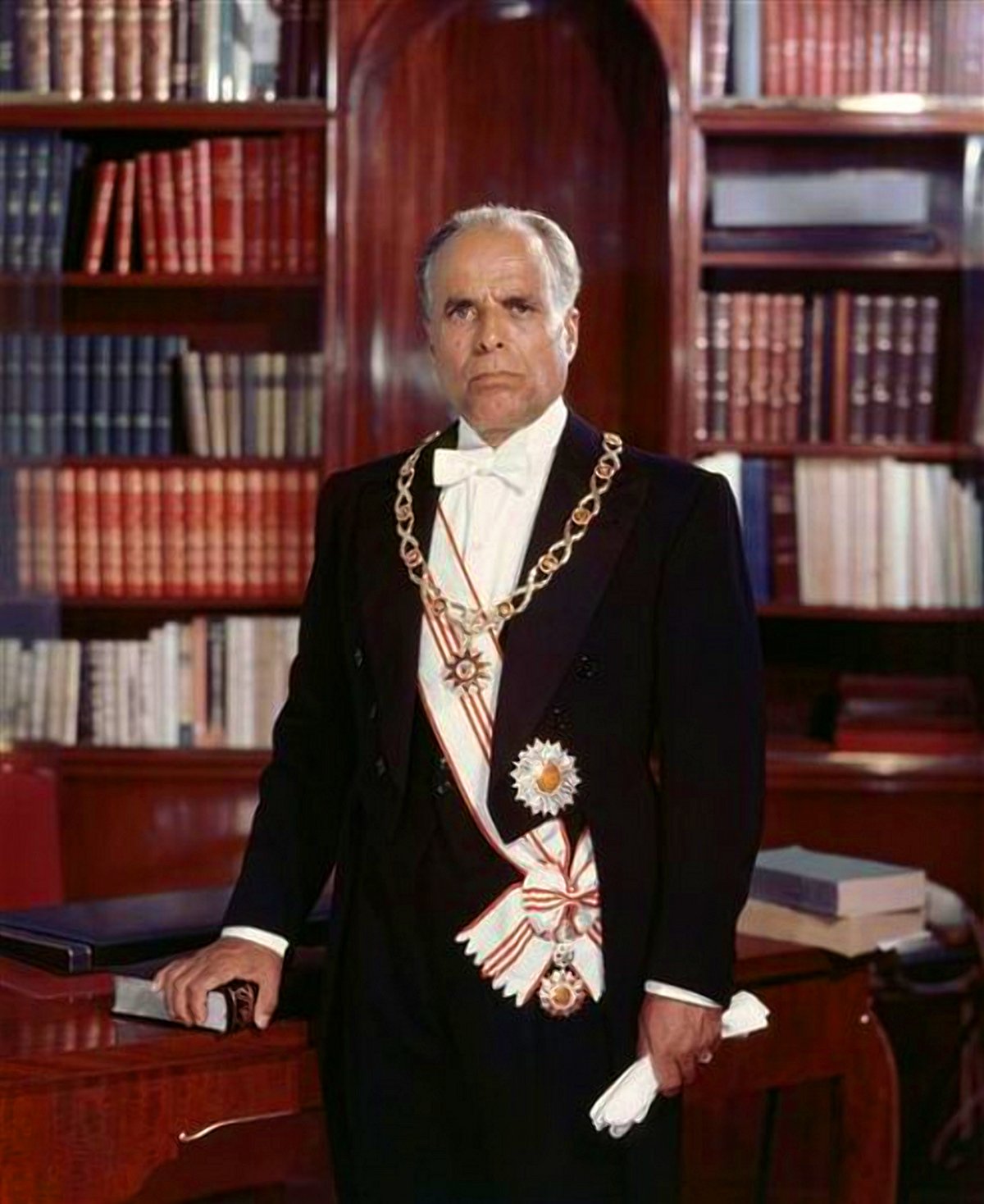
In the city of Monastir, Tunisia, stands the Habib Bourguiba Memorial, a monumental grave containing the remains of former president Habib Bourguiba, the father of Tunisian independence, who died on April 6, 2000. The mausoleum was built in 1963 while Bourguiba was still alive, designed in a modern Arab-Muslim style. It is situated in the western part of the Sidi El Mézeri cemetery, at the end of a main alley that is approximately 200 m long and 30 m wide.
The building is flanked by two 25-metre-high minarets and topped by a golden dome situated between two green domes. The entrance gate and the gate separating the memorial from the rest of the cemetery serve as examples of Tunisian art. In addition to the former president and his first wife, Mathilde, the mausoleum houses the bodies of his parents, his siblings, and other members of his family in two other halls. The structure was expanded in 1978.
Inside the mausoleum, a small museum houses some of president Bourguiba's personal belongings. These items include his desk from the presidential palace of Carthage, his pens, passports, and identity card, as well as his glasses, photos, and clothes. Visitors can see both Western and traditional garments, such as the jebba, chéchia, and fez, which provide a glimpse into the personal life of the former leader.
Sources: Wikipedia, OpenStreetMap, Wikidata, Wikimedia Commons
Written by Mutabor
Discuss this with the author and others
No comments yet. Be the first to start the conversation.