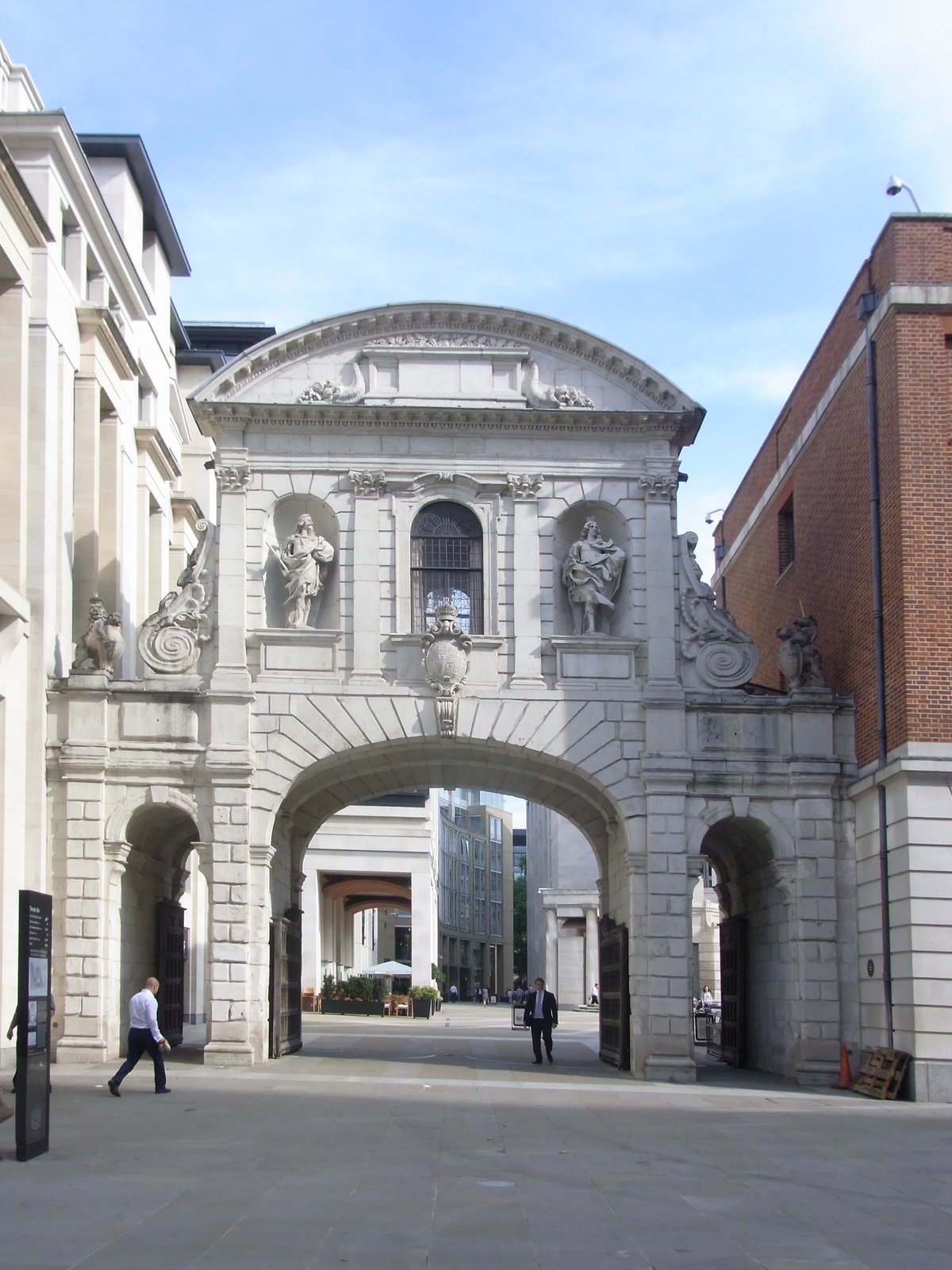
The Temple Bar Gate, the principal ceremonial entrance to the City of London, has quite an unusual history. Originally, a physical barrier was erected across a thoroughfare to regulate trade into the city, located adjacent to the area known as the Temple. It was strategically situated on the historic royal ceremonial route between the Palace of the Tower of London and the old Palace of Westminster, and from Westminster to St Paul's Cathedral. The road east of the bar within the city was Fleet Street, while the road to the west, in Westminster, was The Strand.
Through various periods, Temple Bar was associated with different structures. In the Middle Ages, it was probably only a chain or bar between posts. More substantial structures with arches followed. Unfortunately, the records from those times are scant, and it is difficult to determine the exact nature and appearance of those early bars. However, it is known that by 1351, Temple Bar housed a small prison. The earliest document supporting this is from 1327.
In 1669, after the Great Fire of London, the Gate was rebuilt and commissioned by King Charles II, attributed to Sir Christopher Wren. The Gate was overseen by Thomas Knight and Joshua Marshall, and John Bushnell carved the statues on the Gate. The Gate is a two-story structure with one wide central arch for road traffic and narrower arches for pedestrians. The statues on the Gate celebrate the 1660 Restoration of the Stuart monarchy. During the 18th century, the heads of convicted traitors were displayed on the Gate's roof.
After Wren's gateway was removed in 1878, the Temple Bar Memorial (with a dragon symbol of London and containing statues of Queen Victoria and Edward VII) was erected to mark the location. Wren's archway was preserved and was re-erected in 2004 within the City of London, in a redeveloped Paternoster Square next to St Paul’s Cathedral.
In September 2022, the preserved Wren gateway and an adjacent building were officially opened by the Duke of Gloucester as the home of the Worshipful Company of Chartered Architects.
Sources: Wikipedia, OpenStreetMap, Wikidata, Wikimedia Commons
Written by Nicolo Ciampini
Discuss this with the author and others
No comments yet. Be the first to start the conversation.