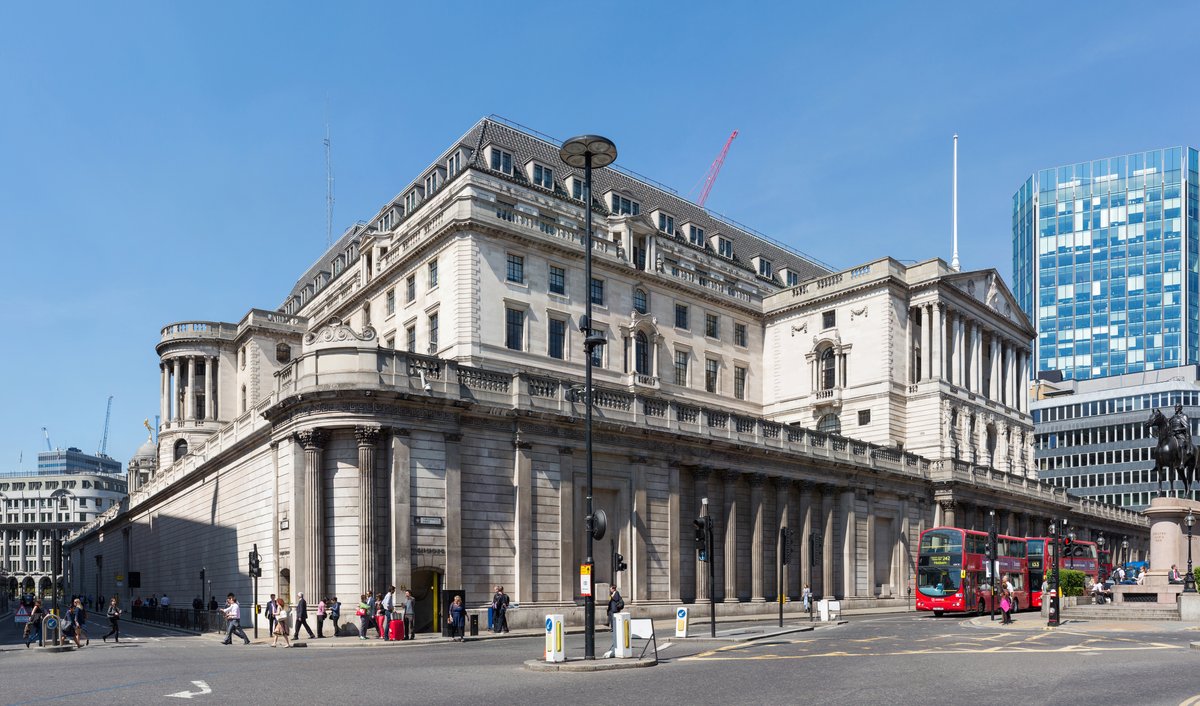

The Bank of England has been located in London's main financial district since 1694, moving to Threadneedle Street in 1734. It is sometimes known as the Old Lady of Threadneedle Street, a name derived from a satirical cartoon by James Gillray in 1797. Established in 1694 to act as the English Government's banker and debt manager, it is the world's second oldest central bank, after Sweden's.
The bank was privately owned by stockholders from its chartering until it was nationalised in 1946 by the Attlee ministry. In 1998, it became an independent public organisation wholly owned by the Treasury Solicitor on behalf of the government. Its core purpose is promoting the good of the people of the United Kingdom by maintaining monetary and financial stability, which includes acting as a statutory regulator and a model for most modern central banks.
To maintain monetary stability, the bank aims to meet a 2% inflation target by adjusting the base interest rate, known as the bank rate. It also holds a monopoly on the issue of banknotes in England and Wales. In 2024, the bank was settling around £500 billion worth of payments between banks each day. As a regulator, it supervises major banks, building societies, and investment firms while also providing wholesale banking services to the UK Government and over a hundred overseas central banks.
Beyond its regulatory role, the bank manages the country's foreign exchange reserves and acts as the custodian of the United Kingdom's gold reserves. Because commercial banks customarily keep a sizeable proportion of their cash reserves on deposit at the Bank of England to settle payments with one another, it is sometimes called the bankers' bank. While it no longer offers consumer banking services, it continues to provide liquidity support and act as a lender of last resort in exceptional circumstances.
Sources: Wikipedia, OpenStreetMap, Wikidata, Wikimedia Commons


Written by Nicolo Ciampini
Discuss this with the author and others
No comments yet. Be the first to start the conversation.